
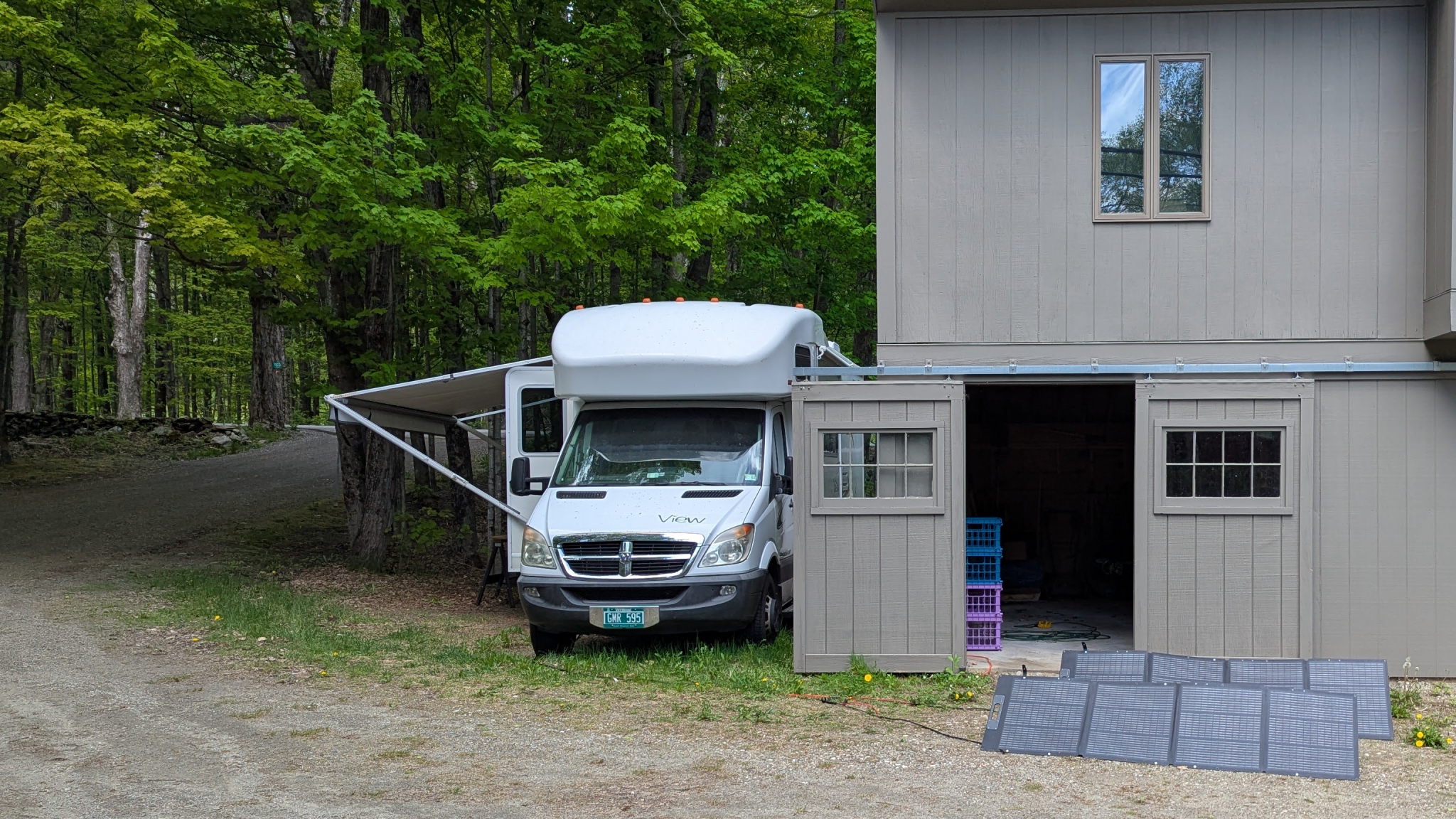
Our motorhome is 18 years old! Last year‘s travels began with new tires all around, new leaf springs, and some heavy-duty rear shocks, then out on the road we got a new engine control module and starting battery, also a new water pump for the living quarters when the original one failed. This post reviews a couple of significant updates and upgrades we made in preparation for this year’s travels.
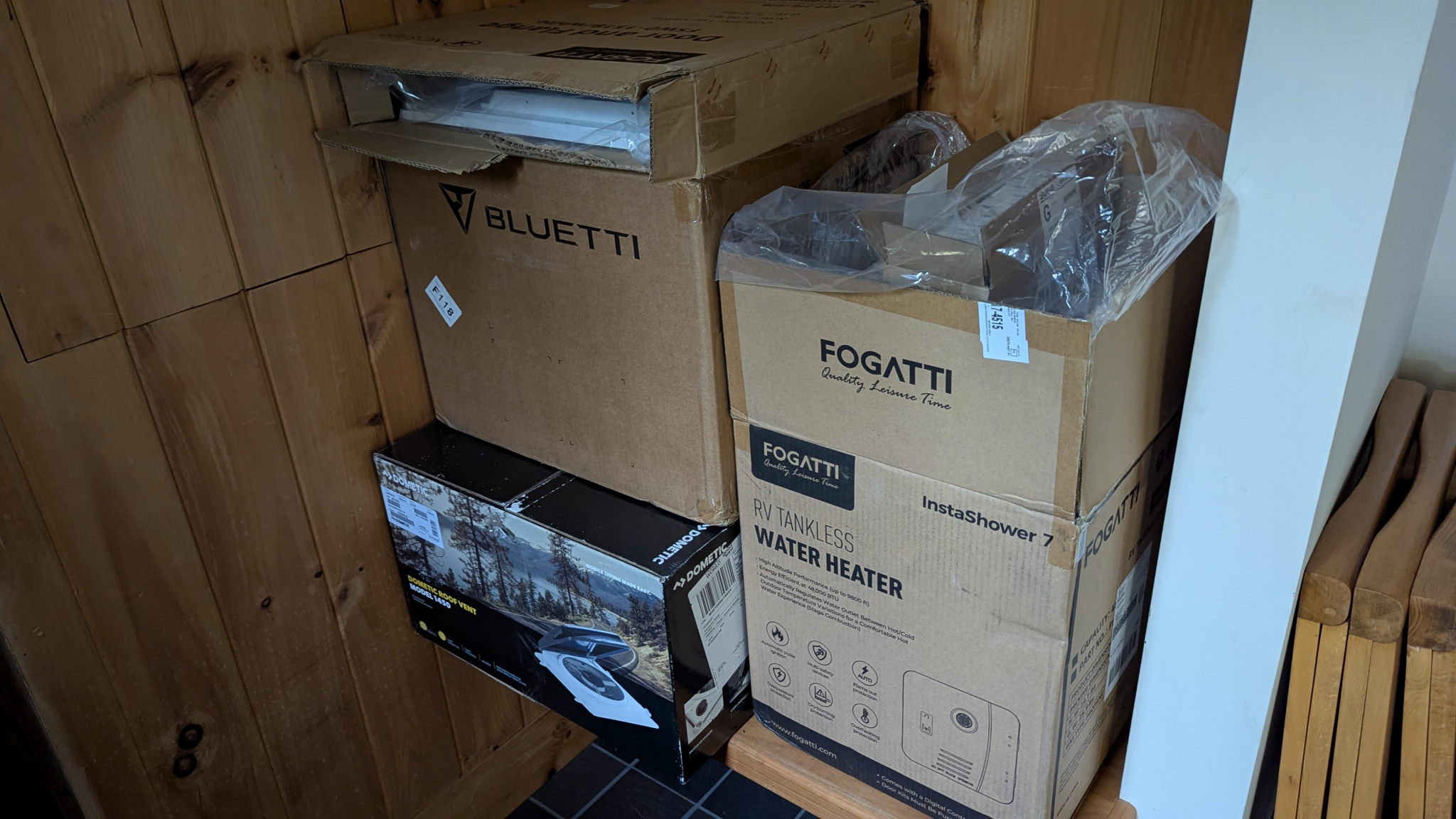
Batteries out, power station in
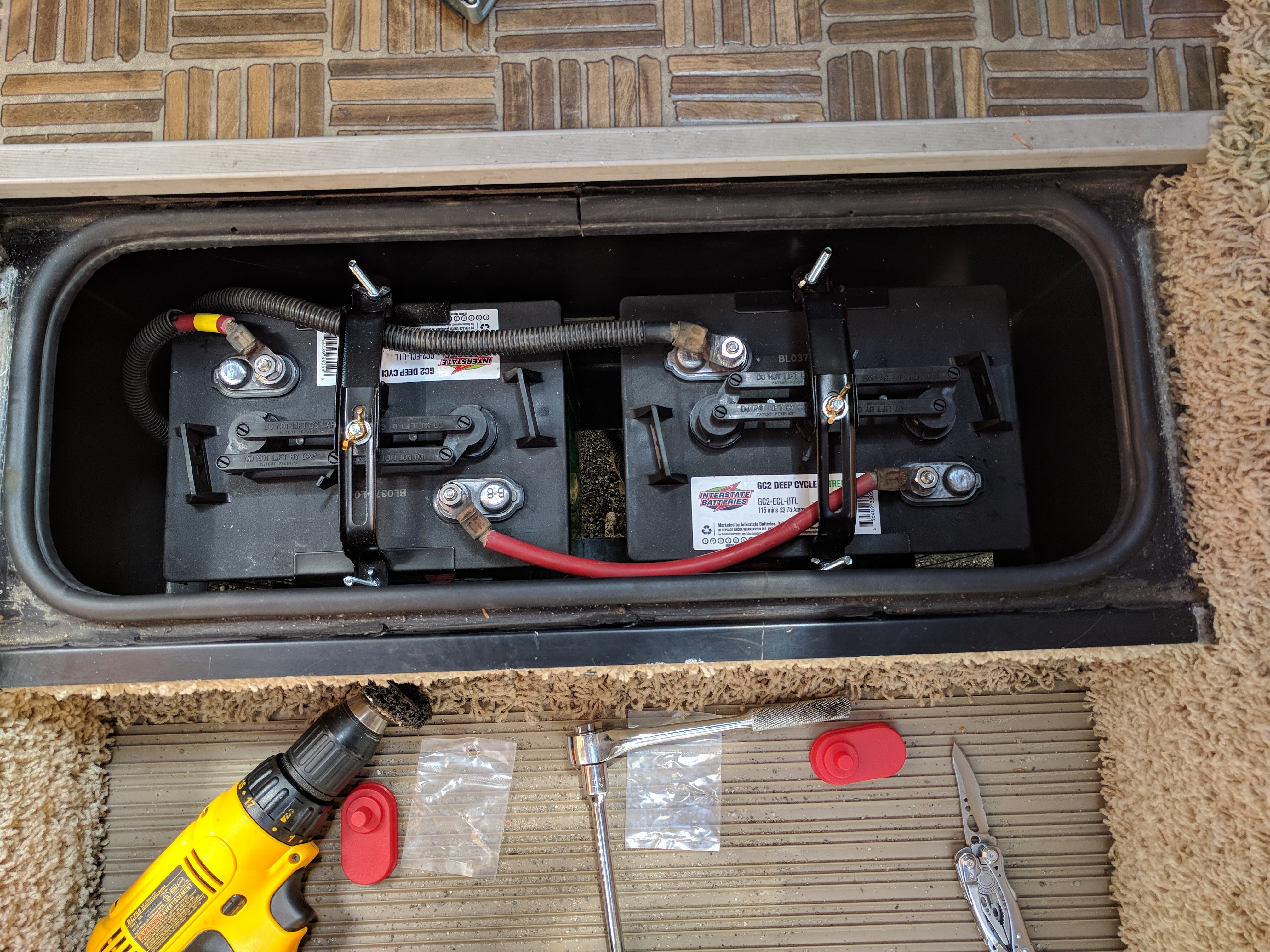
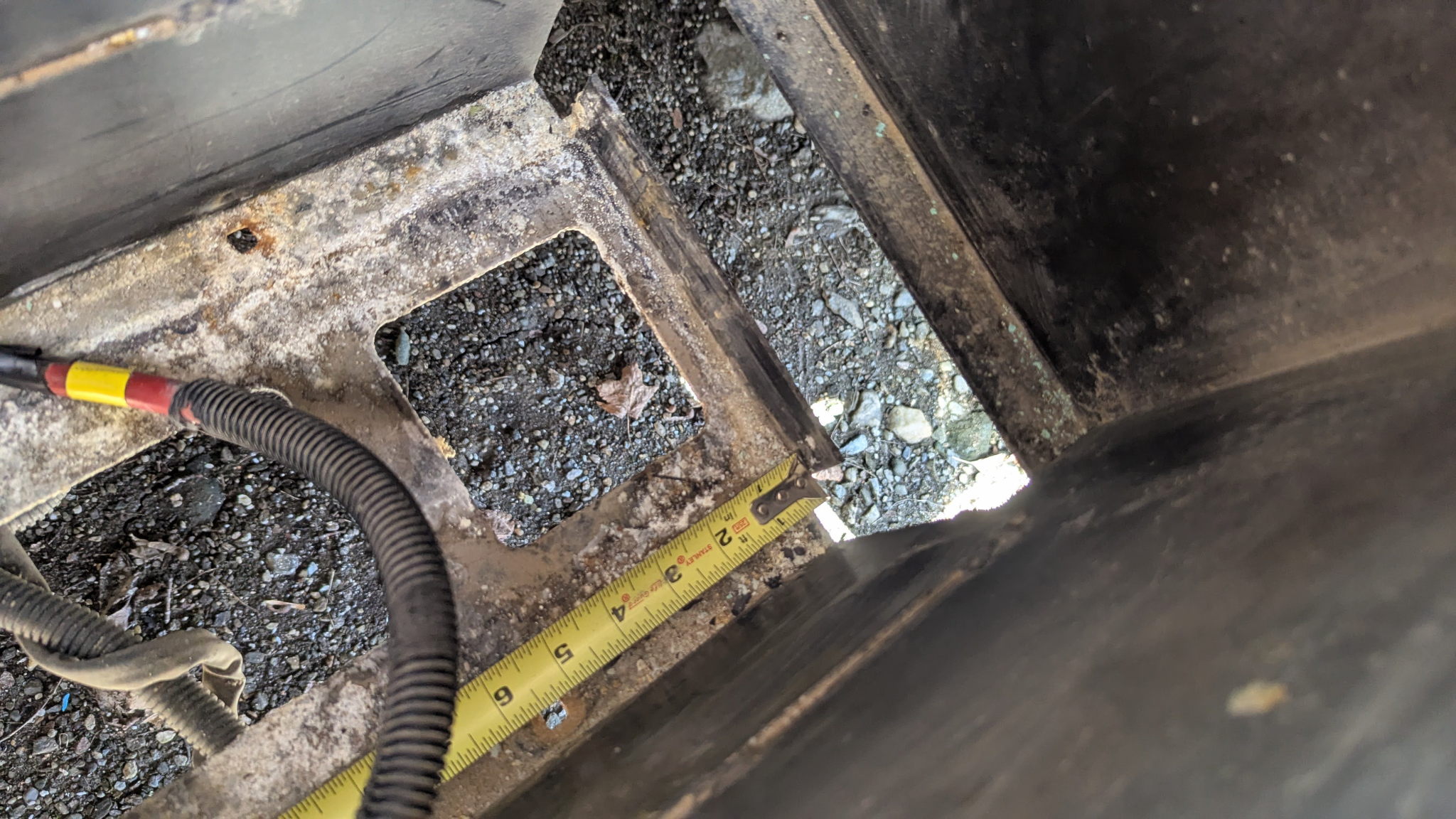
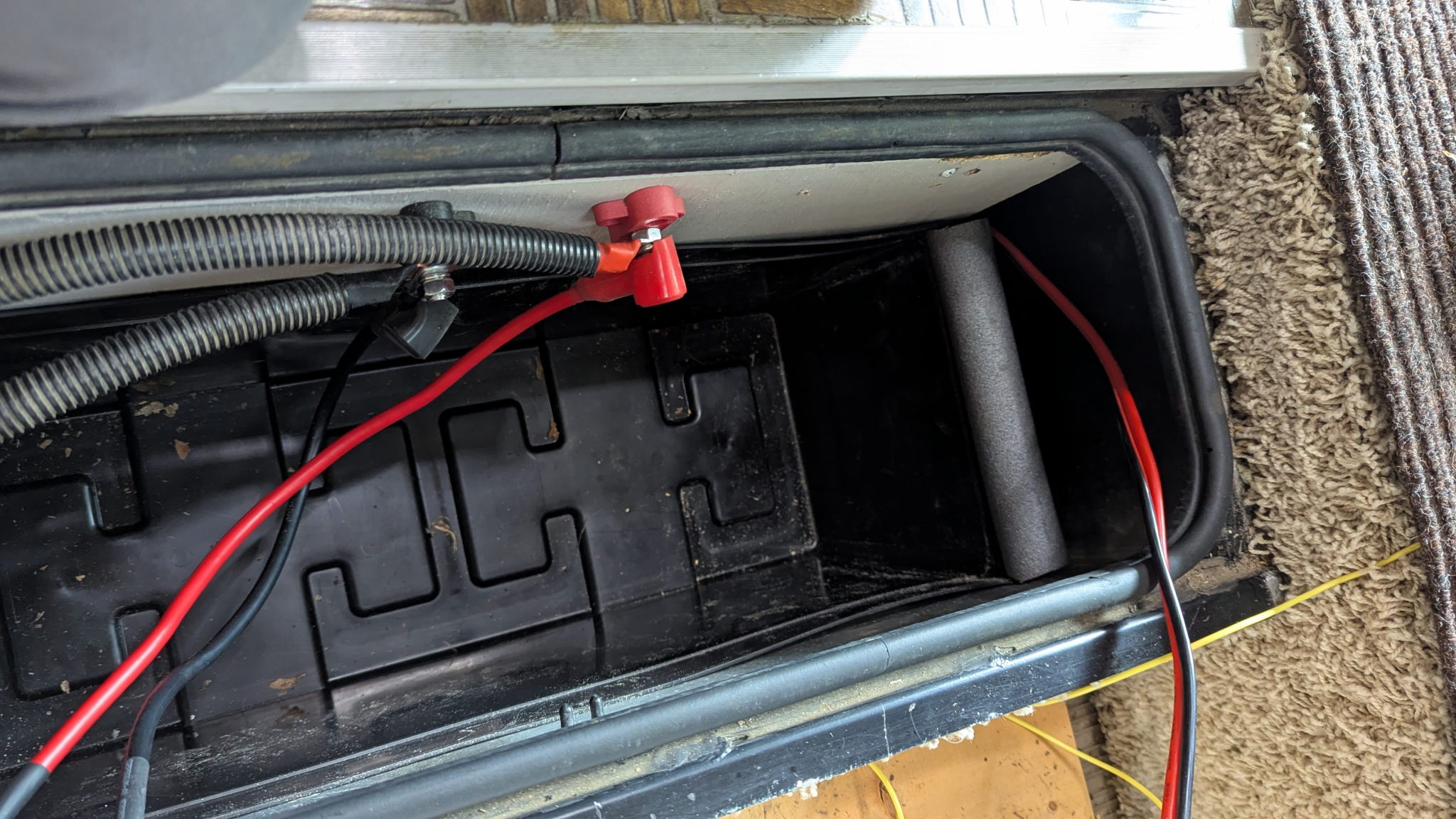
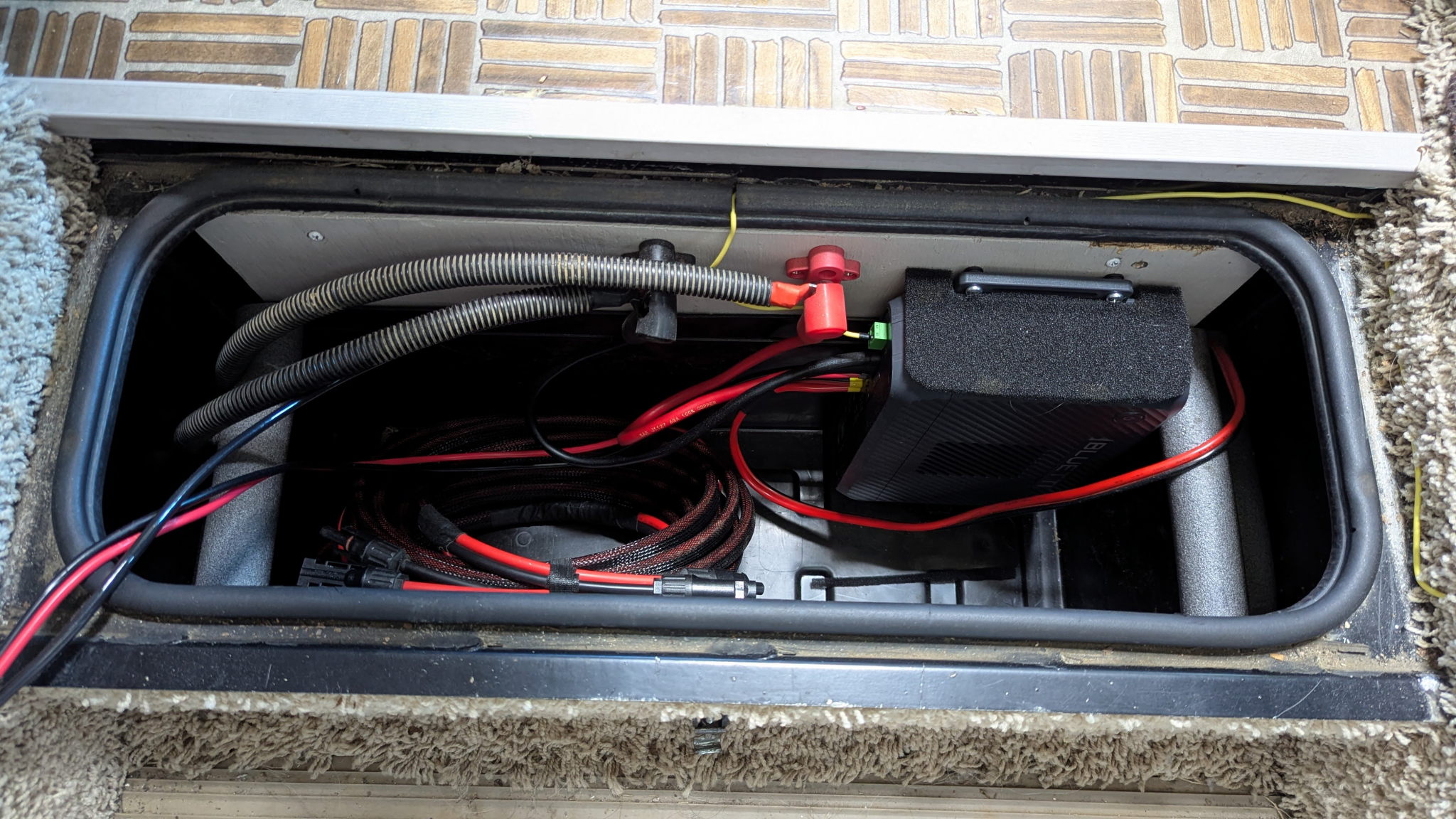
The electrical system for the “house” is separate from the “coach.” One of our early upgrades was to replace the standard 12V house batteries with a pair of 6V golf cart batteries that gave us more capacity than the original 12V RV/marine batteries, so we could spend more time off-grid without recharging. By design, the house batteries charge from the alternator when the engine is running, or from the original built-in charger/converter when we’re plugged in to the grid (on “shore power”) or running the generator. We’ve also been carrying a 200W solar panel and controller for off-grid charging without the generator.
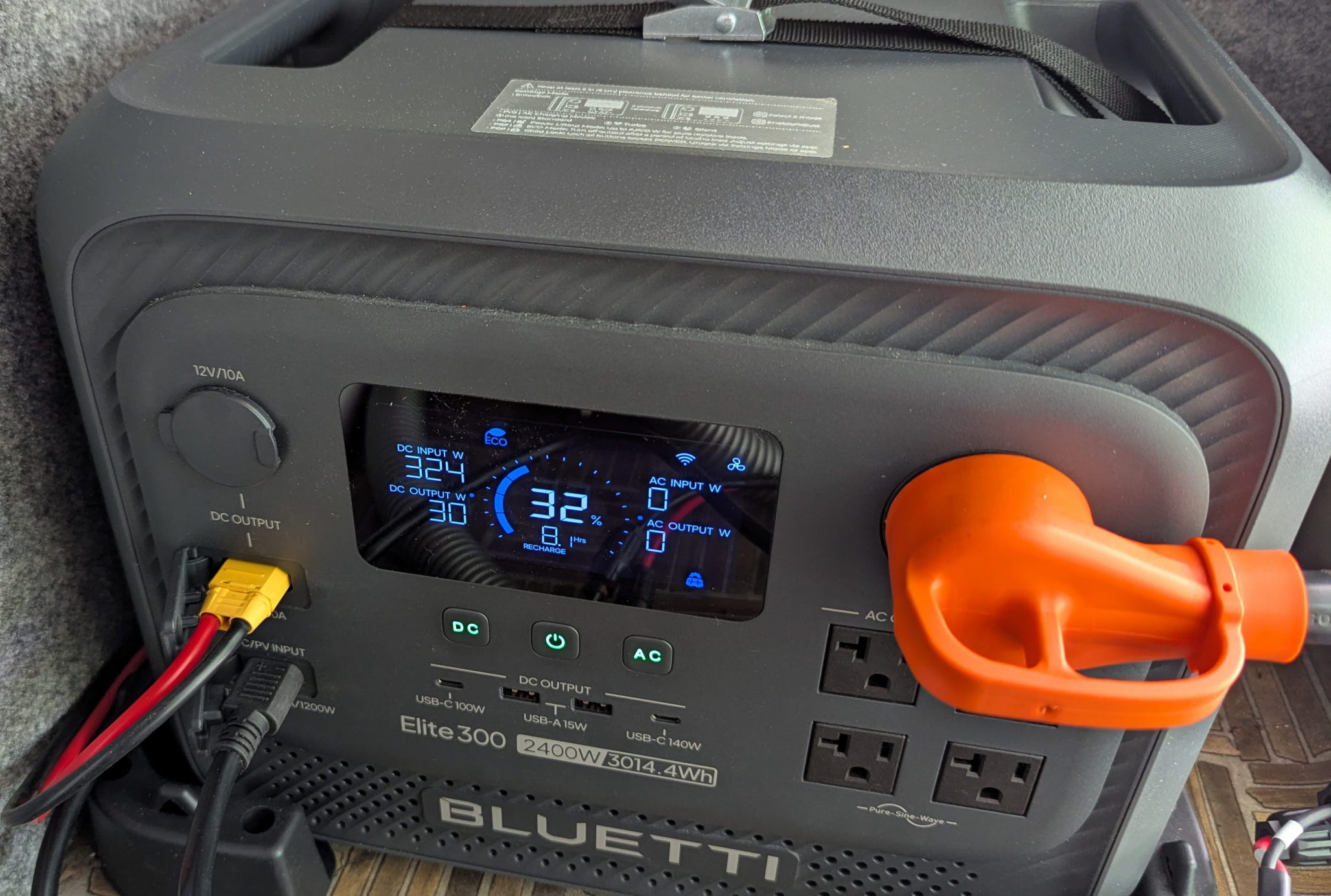
That’s “old school” technology, though. Lead-acid batteries are heavy and they have much lower storage capacity than the LiFePO4 batteries that are the state of the art for RV power systems at this moment. Unsurprisingly, our old electrical system does not allow for a straightforward replacement of our old batteries with new lithium ones. As I was researching what it would take to put such a system in our rig, I ran across a self-contained power station with built-in lithium batteries and more than double the capacity of our old system. It has a built-in 2000W inverter – enough to power all of our 120VAC appliances – and a 12VDC/30A output that can run everything else. The unit weighs a few pounds less than one of our old batteries! It’s small enough to fit into several possible locations, and it can be charged from the alternator, from solar panels, or by plugging into the grid.
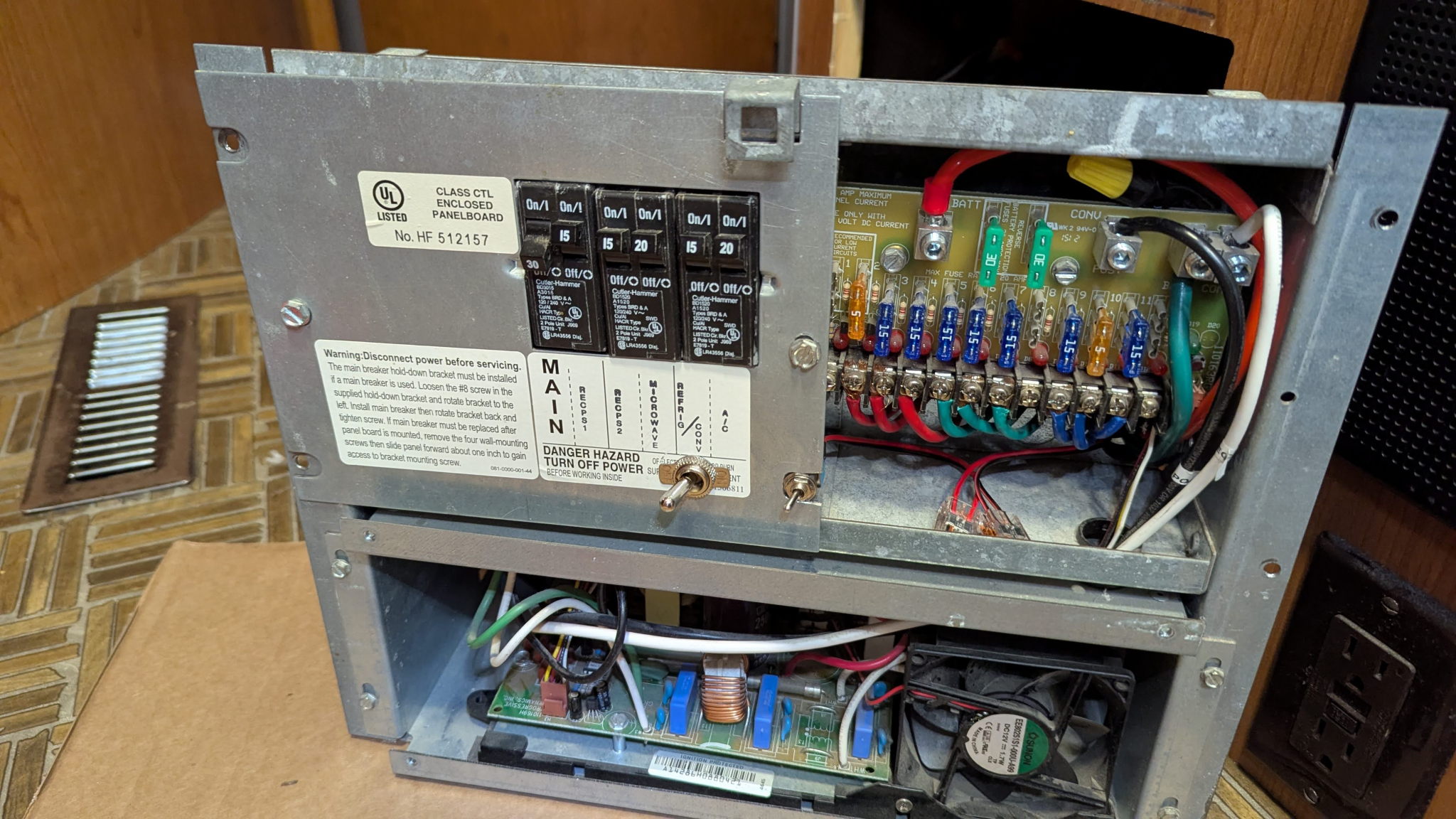
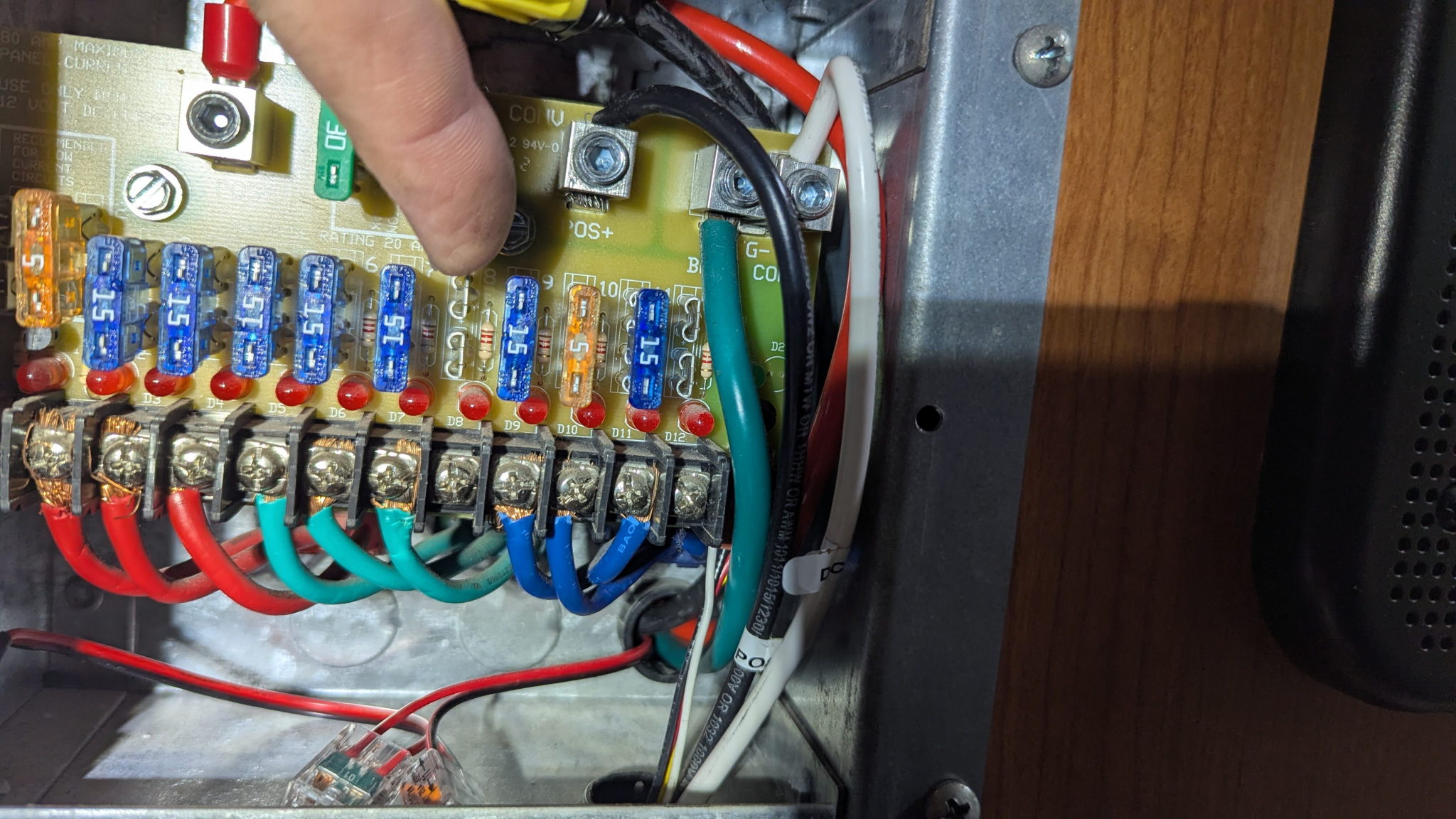
These power stations are designed to be self-contained and portable. I was looking to integrate ours into the RV to completely replace the house batteries – at half the weight and providing twice the usable energy capacity. I wanted to connect the power station directly to the existing DC fuse panel to run the 12V systems, while using its built-in inverter to power the 120VAC breaker panel, and avoid rewiring the existing house power distribution setup. We would charge the power station from the alternator and/or 400W of new portable solar panels (replacing the previous 200W setup). I added a 120VAC/20A input port in the outside electrical box so we could plug the rig into a 15- or 20A wall outlet with a regular extension cord to keep the power station charged while it runs the house. I also kept the original 30A shore-power connections, adding a transfer switch to bypass the power station and run the rig on shore power or the generator as before, in case we need or want to do that for some reason.
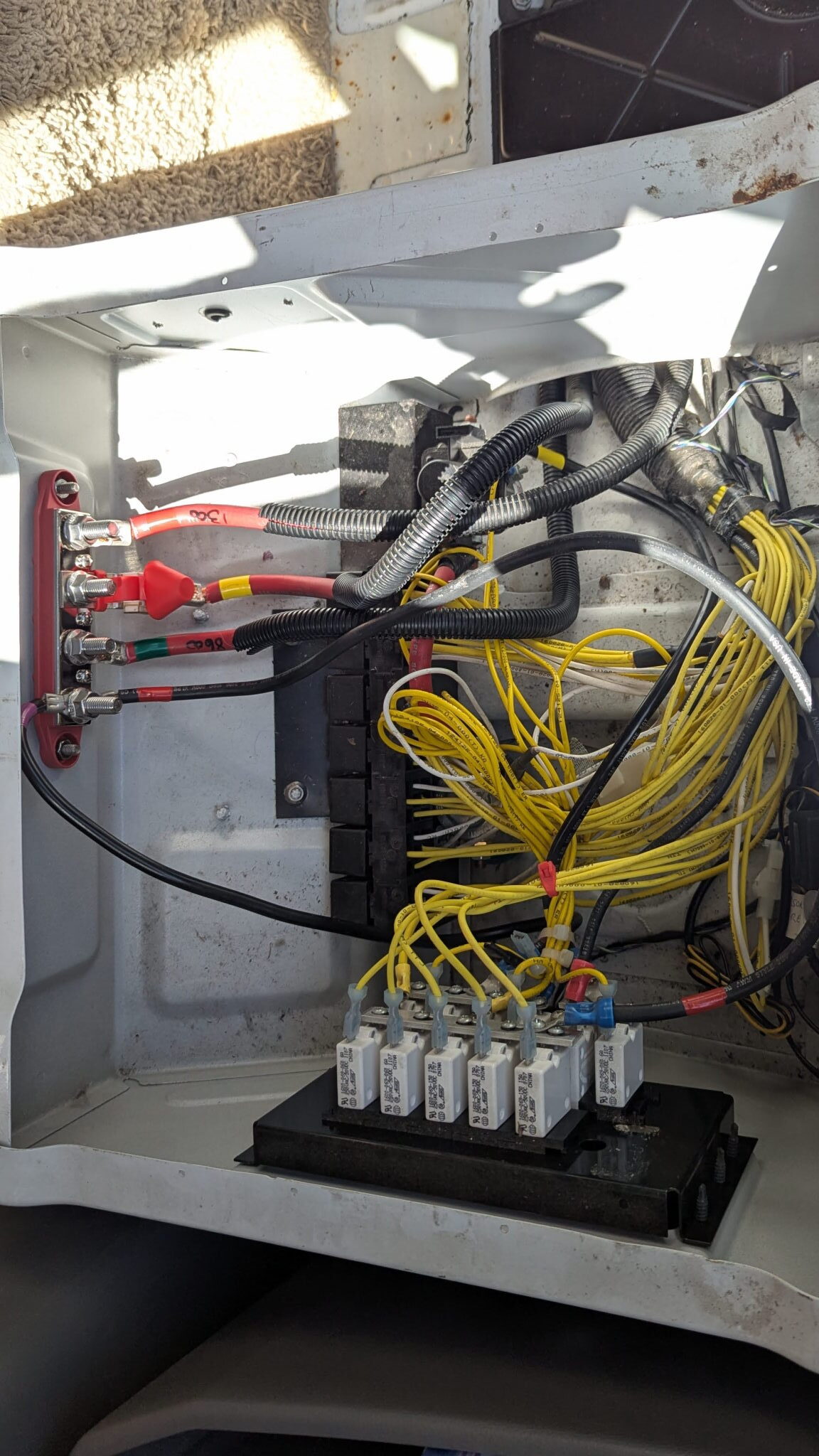
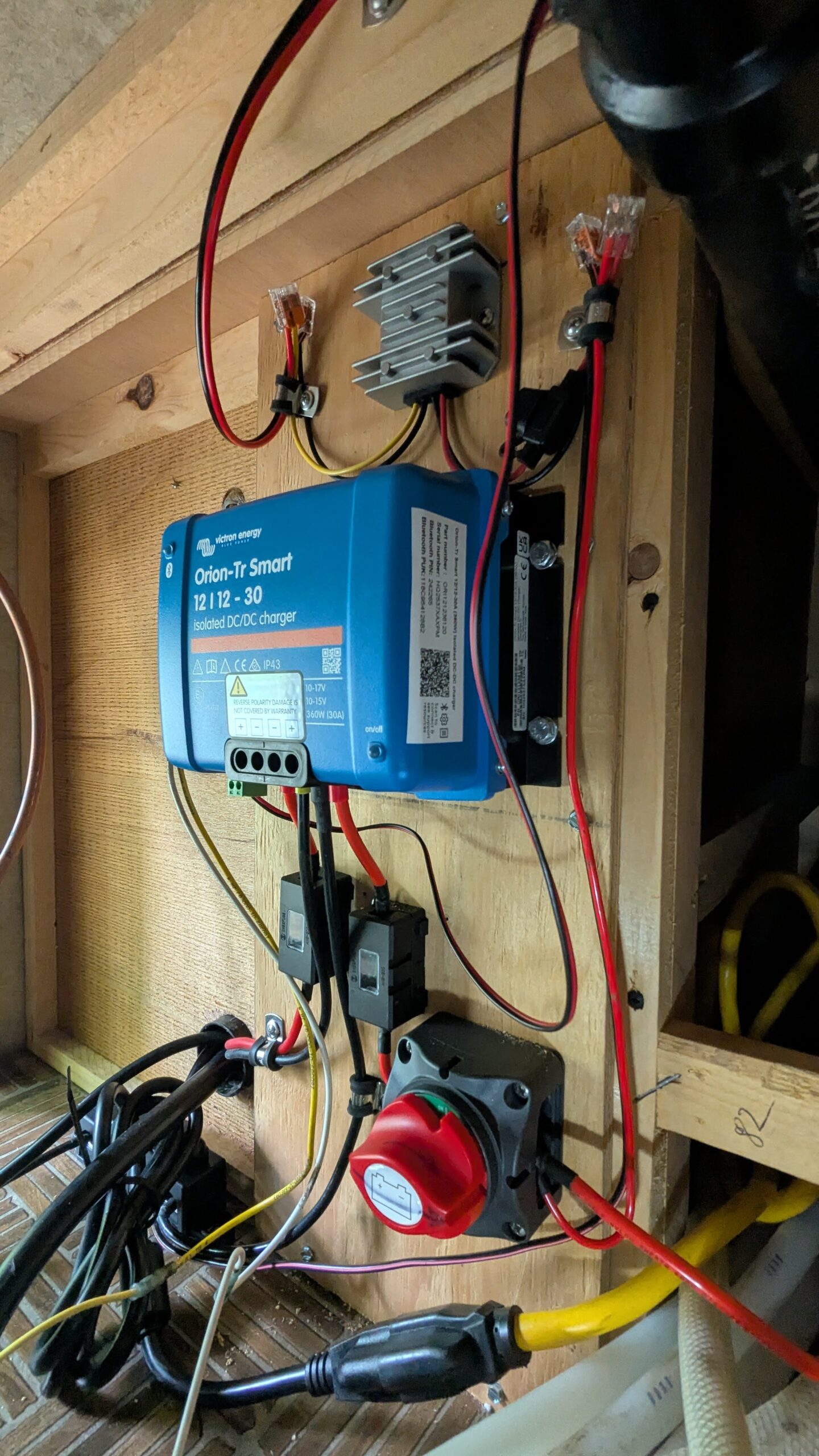
It got a little complicated, but eventually I got it sorted out and it’s all been working pretty well.
On-demand water heater
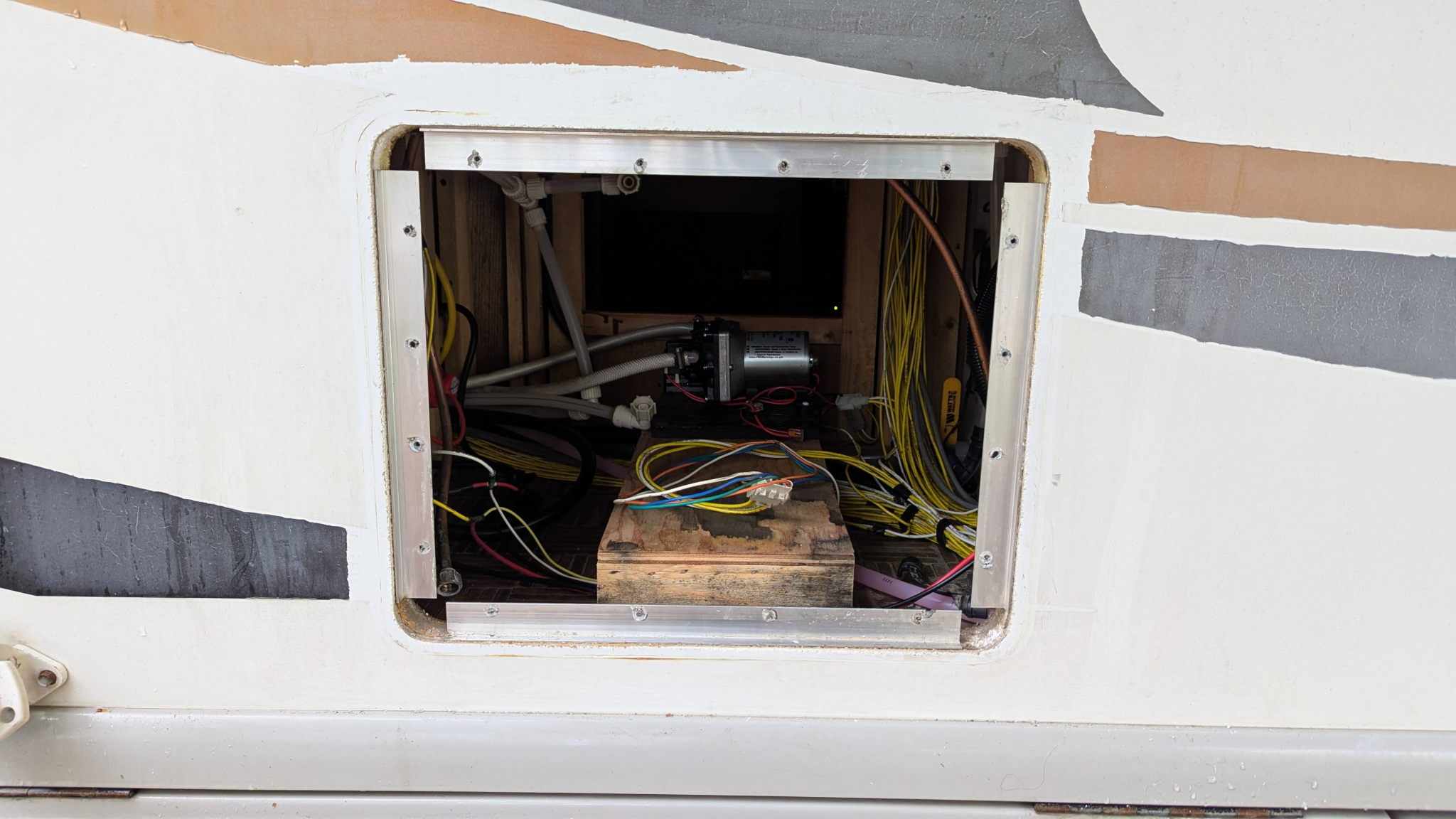
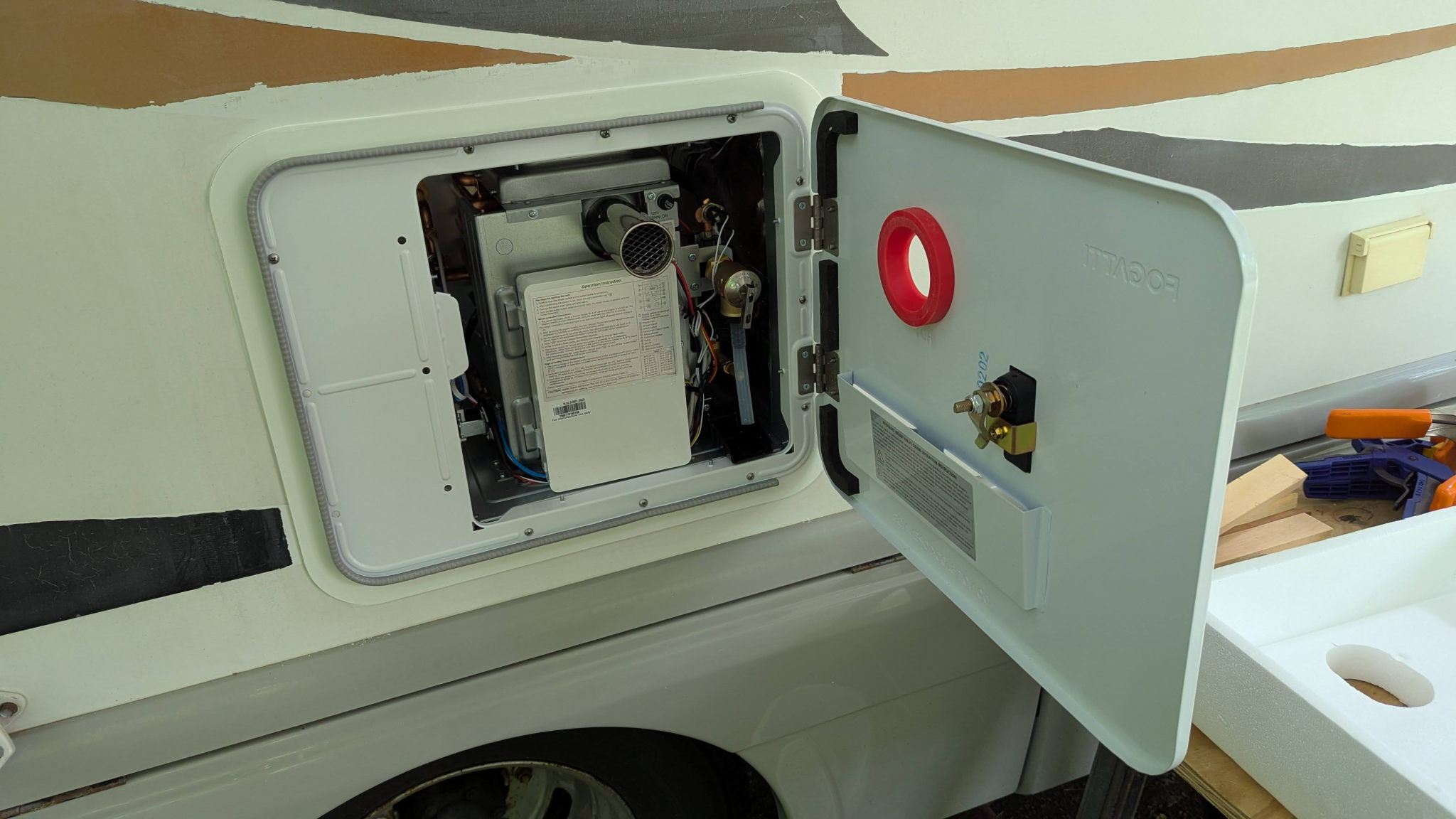
The water heater in our rig used either propane or 120VAC electricity to heat the water in its 6-gallon storage tank. We had some electrical problems related to the wiring for that unit and the microwave, which shared a 20A 120VAC breaker via a “smart” relay that slowly lost its mind and tried to set our rig on fire. Since then we’ve been running the water heater only on propane. Firing it up was getting finicky as the unit got older, and it was always kind of a pain to drain and winterize the tank and even more so to flush it out periodically, which it needed often. We replaced it with an on-demand, tankless, propane-fired unit. The new one is a bit smaller and lighter to start with and it doesn’t have a tank holding almost 50 lb of water, so the weight saved is significant, and of course it doesn’t require pre-heating to bring all that water up to temperature before we can use it, so we should wind up saving some energy, as well. Tweaking the existing opening to accommodate the new unit turned into a bigger project than I expected, and there are a few quirks to using it that we’re still figuring out, however so far it seems like a big improvement that makes it far easier and quicker to have hot water.
Vent fan
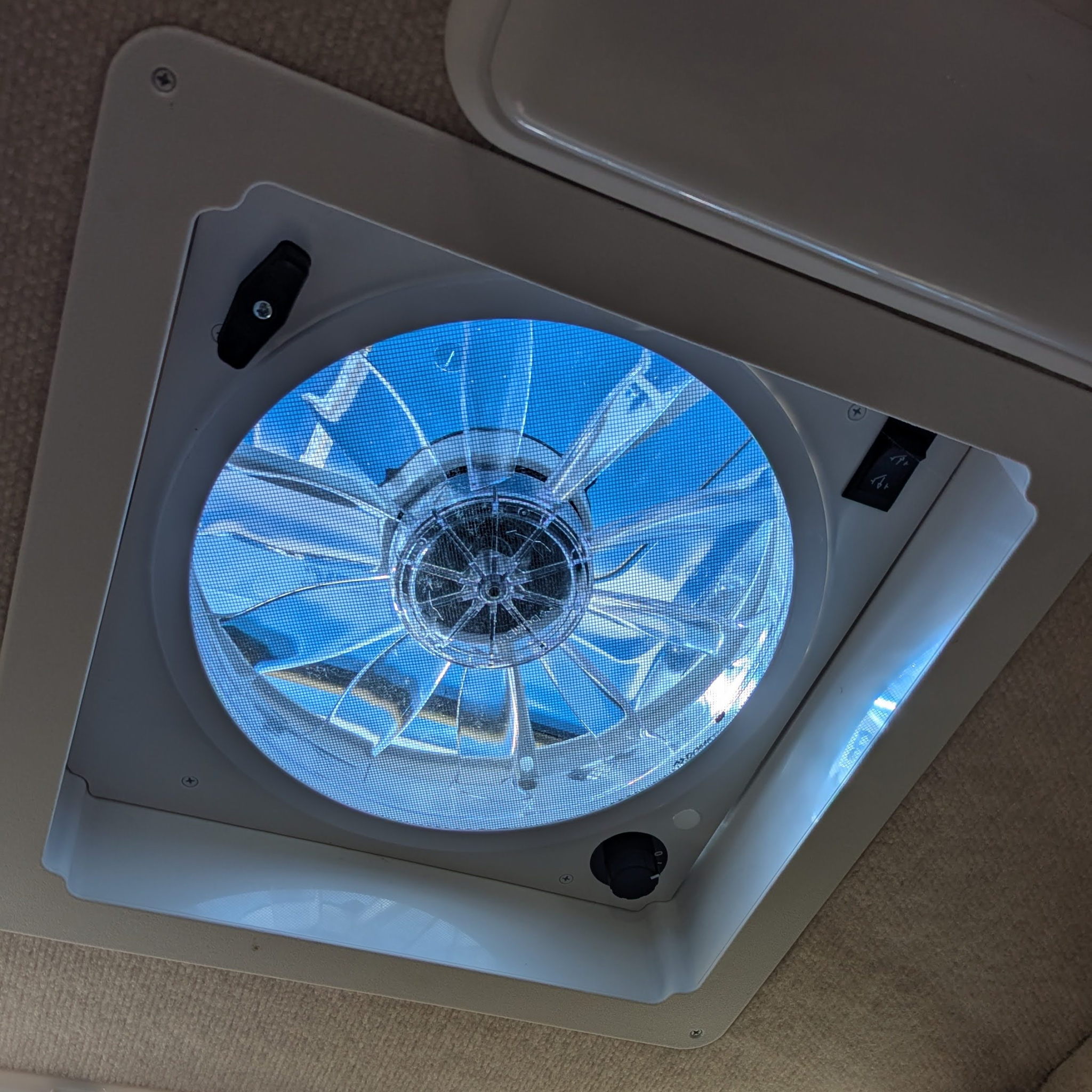
The original vent fan in the bathroom has seen the last of its days. The opening hardware to crank the cover up and down was seriously rusted, the locking mechanism had broken, most of the screws holding the insect screen in place were rusted and the screw holes stripped. We’d done as much de-rusting, refinishing and repairing as we could, and we found that replacement parts are unavailable. With the roof caulking around the fan showing signs of an impending loss of integrity, it was an easy decision to replace the unit. The vent fan is a critically important component of our life-support systems, providing a tolerably quiet and low-power way to establish airflow for ventilation and temperature control which has made it possible for us to almost never fire up the rooftop A/C.
The replacement unit has a different cover design that should allow it to remain slightly open without letting rain in, potentially a huge advantage over the old one. The airflow is also reversible, a feature the old one lacked, albeit one that we’ve never pined for, but perhaps it will be useful – time will tell.
Travel map

The “underbelly” door we installed on our large rear storage compartment a couple of years ago is solid white, lacking the original stick-on decorations. Sue has held a lifelong, innate fascination with maps and geography and she has long admired the map decals some RV’ers display to keep track of (and, yes, show off) where they’ve been. She found and procured for us a very nice tracking kit made by a small business called Shraderland Designs. Straightforward and simple, our map found its way onto our otherwise pristine door on our first rest day. (If you’re interested, here is a link to the version we have.)
There are some more photos and a lot more details in these flickr albums: Electrical, Water Heater, Misc