Cathy and I were colleagues at Ernst and Young in the 90’s. With her guidance and mentorship, I learned skills that prepared me well for launching my own consulting firm in the early aughts. Cathy, too, moved on to her next professional role at about the same time. And although we’ve stayed in touch over the years, neither of us could remember the last time we got together live – we suspect that was also in the early aughts.
We both retired in 2016 and have since been quite busy sculpting the next chapters of our lives.
In the cover photo on the post from our first stop of this year’s grand tour (at the Bates College Class of 1976 50th Reunion), the gentleman on my immediate left is my friend Fred. Fred also appeared in a photo or two in the 40th Reunion post (though if you click that link, be aware that this blog was just a few weeks old back then and I had not reached full verbosity as a raconteur).
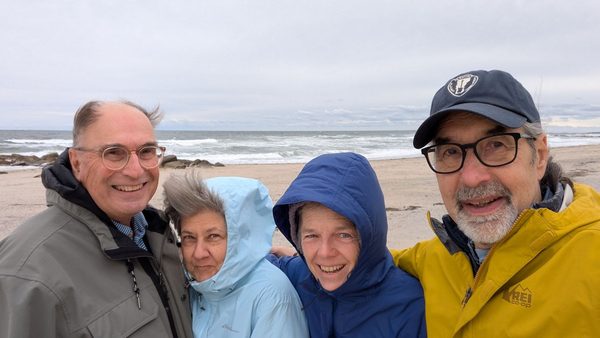
Fred has long been proactive about staying in touch. He came to see Sue and me in Troy when we moved there. He later introduced us to his lovely fiancée Barbara, and we attended their wedding not long thereafter. When we lived near Hartford, Sue’s official office was in Boston. She went to the office rarely but regularly, so she got together there a few times with Fred and Barbara because, well, that’s where they lived. And now they live in Truro, MA.
My old friend Lee and I spent our first two years of college living on the legendary (if not, infamous) 3rd floor of the Middle section of Smith Hall at Bates College. We became close friends and that friendship kept going right through our graduation. A few years later, we were into careers, travel, families – and all of that adds up, right? We kept in touch, to be sure, but after the first few years somehow we didn’t manage to get together very often. I’d last seen Lee 15 years ago at our 35th college reunion.
Robert and I crossed paths twice during our respective careers, first at the Travelers and later at Ernst & Young. Toward the end of my time with E&Y, I had the pleasure of actually working with Robert. With a family of skiers/snowboarders, he took an interest when Doug and I bought our VT house, initially intended to be a ski house. He, his wife Kassie and 3 young (at that time) kids visited and were quite taken with the area and Sugarbush. Soon after, they bought a condo nearby which afforded us more time to connect socially and become better acquainted as friends.
As the kids got older and started favoring skiing in the west, family trips to Sugarbush became increasingly rare, and Robert and Kassie sold the condo. With their now-grown and married children (and grandchildren) all living in Colorado or Utah, we haven’t seen each other in 10-12 years. When they’re not visiting the kids or traveling the world, Robert and Kassie split their time between Rhode Island and Florida – so we were delighted to learn they’d be in RI in mid-October. Yay!
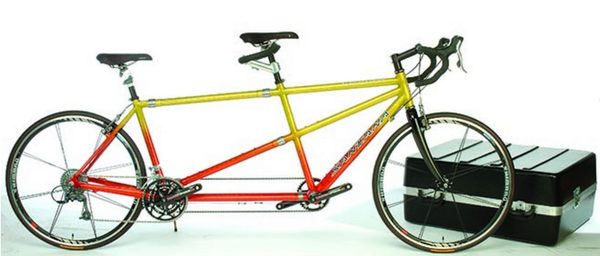
A coupling (dissasembling) travel tandem bicycle (Photo courtesy of Santana Cycles)
We met Steve and Marie about 40 years ago. We had just bought ourselves a tandem bicycle as a wedding present, a couple of months in advance of our wedding, in order to attend our very first Eastern Tandem Rally in the Finger Lakes Region of upstate New York. At this rally, with compatible styles and a similar pace, we kept running into another pair of first-timers, Steve and Marie from southern New Jersey, near Philadelphia. At this same rally, the four of us first ran into two more experienced tandem teams, also from South Jersey – our soon-to-be friends (as well as heroes and mentors), Sue and Al and Malcolm and Judy. We enjoyed multiple tandem meetups with this 8-pack (and various sub-sets thereof) over the next 15 or so years.
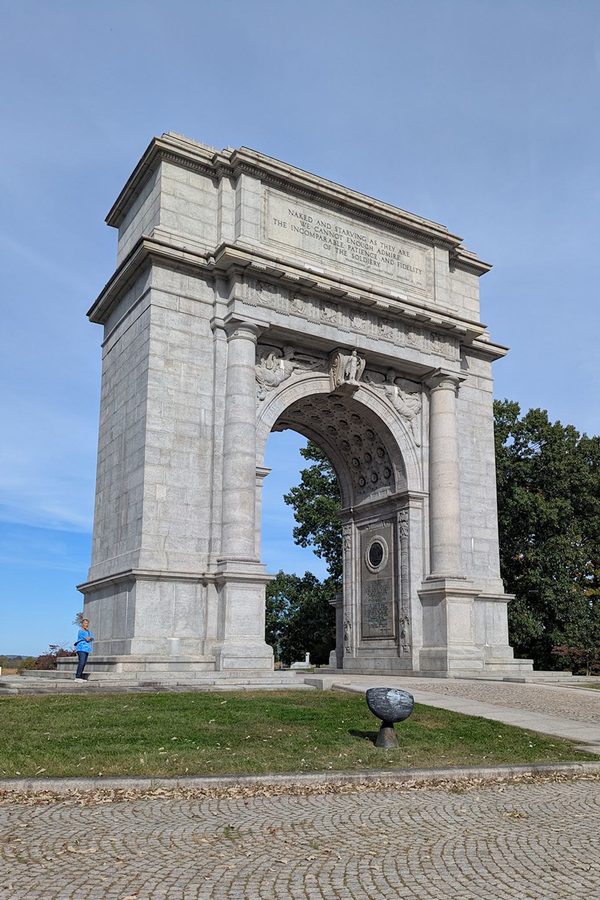
We could see Valley Forge from the hotel that hosted our BGU event. Several of our fellow musicians took breaks to visit the site, all sharing that it was worth seeing and there were some very pleasant walking trails. After 5 days in the music room, we were ready for a walk so we made time for a stop on our way out of town.
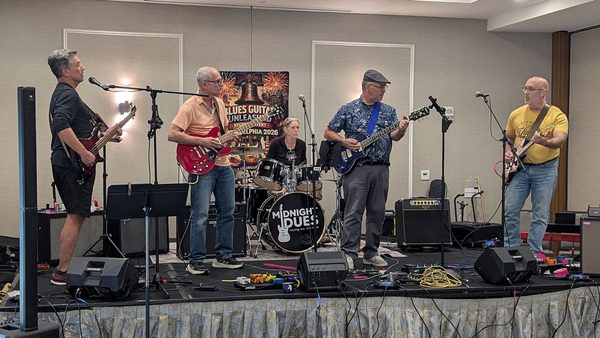
This post is about the blues jam we’ve been talking about ever since we left home in June. People ask us all the time where we’re headed, and on this trip the answer has always been ‘Philadelphia.’ That answer raises a few eyebrows. From our home in Vermont we went first to Maine, then continued east into New Brunswick and spent the rest of the summer touring eastern Canada, right into the fall. Two weeks ago, we turned to the south from Montreal, aimed for the City of (Blues)-Brotherly Love, and at this point the Epic BGU/PHL Blues Jam of 2026 is history.
Our current excursion began almost 4 months ago with my 50th Bates College reunion. When I wrote about that, I mentioned that I enjoyed hanging out with a small cohort of classmates with whom I’d spent a lot of time hanging out while we were students 50 to 54 years earlier. One of those classmates is my friend Martha.
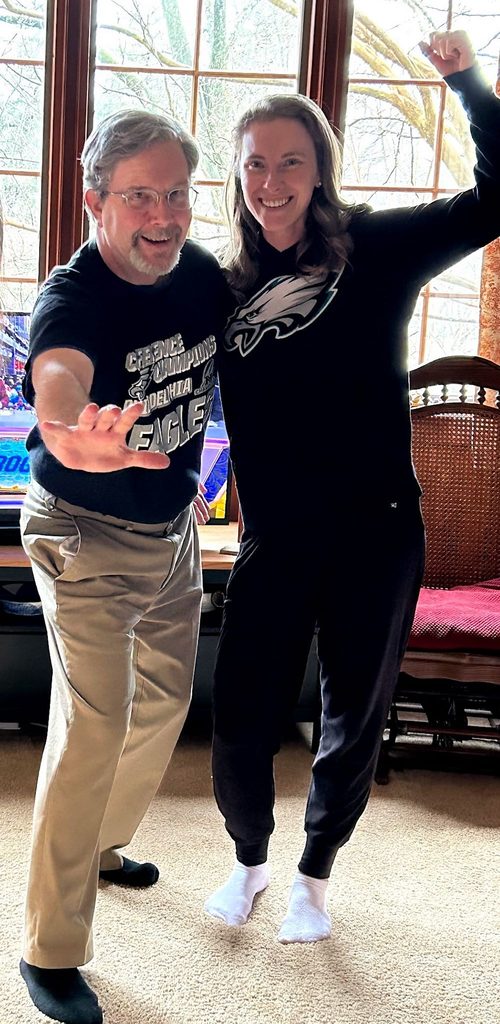
Evan and Sarah doing an Eagles happy dance (photo courtesy of Evan and Sarah)
At the start of our 3rd year at St Anselm College, my roommates Nancy and Joan and I moved off-campus to an apartment in renovated textile mill housing in downtown Manchester, NH, overlooking the Merrimac River. Soon after we got settled, someone moved into the apartment across the hall from us and we began to hear a piano being played inside. We introduced ourselves to our new neighbor Evan, who had just graduated from college and moved to NH for his first job. Soon we all became fast friends.
When my roommates and I graduated, we all went our separate ways. Evan and I have stayed in touch, so I knew he had become a psychiatrist and lived near Philadelphia with his family, however we’d not seen each other for about 25 years when I stopped by while on a business trip to Philadelphia. We got together for the third time in 46 years, just a few days before the start of Doug’s blues jam.
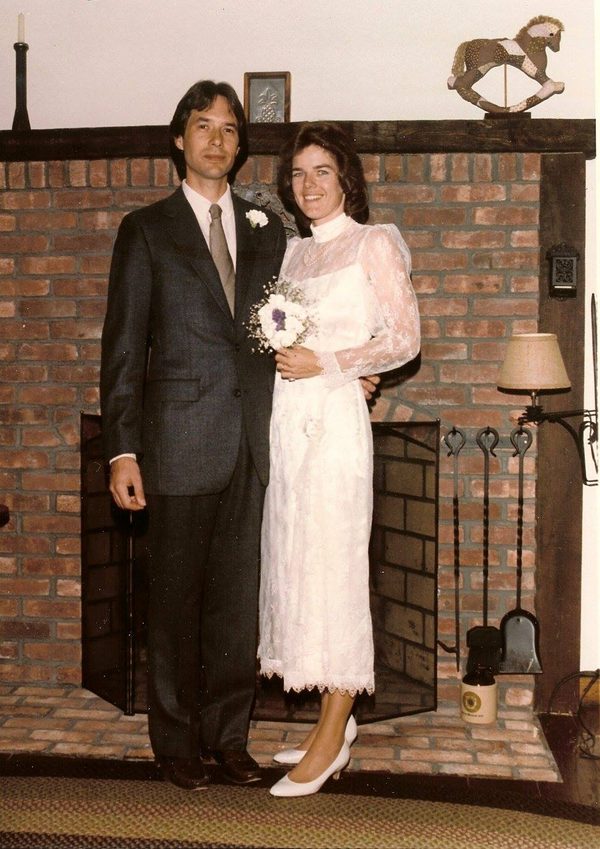
We got married in the living room with the delightful fireplace at the Gregory House Inn in Averill Park, NY. We and our guests (all 14 of us) then enjoyed a fine dinner in one of the inn’s private dining rooms. Our families stayed at the inn. We went back to our house in Troy, rejoining our guests in the morning for brunch at the Gregory House before heading out on a week-long, fall bicycle tour of New England on the tandem bicycle we’d given ourselves as a wedding present. My parents drove our car to their home in NH, and when we arrived at the end of the week, they hosted an outdoor party for more friends and family, then we drove back to Troy. It was exactly the simple wedding we had hoped for.