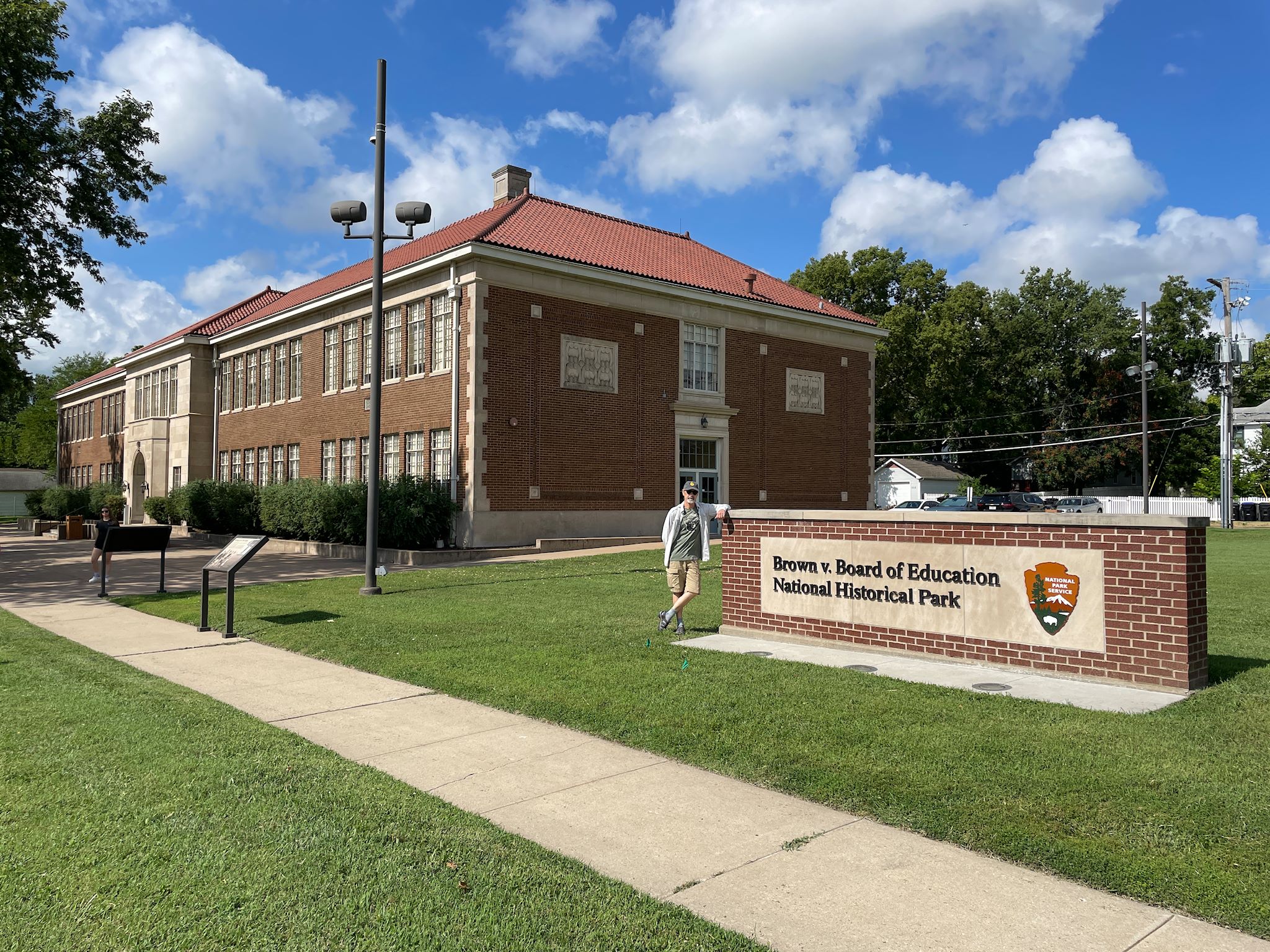
On our last trip through Kansas (nine years ago!), we wrote that Kansas had no national parks for us to see. That changed in 2022 – and that change has (so far) withstood our government’s renewed scrutiny of National Park Service facilities.
In May 1954 the United States Supreme Court ruling on Brown v. Board of Education of Topeka upended the “separate but equal” doctrine of Plessy v. Ferguson and banned school segregation. Monroe Elementary School in Topeka, KS, where Linda Brown was a student (and whose father, Oliver, was the lead plaintiff in the consolidated class-action case), was purchased by a non-profit organization in 1990 and designated a National Historic Landmark. Over the next couple of years the property was conveyed to the National Park Service and opened as a museum and visitor center called the Brown v. Board of Education National Historic Site. In 2022, President Biden signed the Brown v. Board of Education National Historical Park Expansion and Redesignation Act, which “upgraded” the Brown v. Board center in Topeka from a historic site to a historical park and expanded the park to include sites related to the four other cases consolidated before the Supreme Court under Brown v. Board of Education of Topeka.
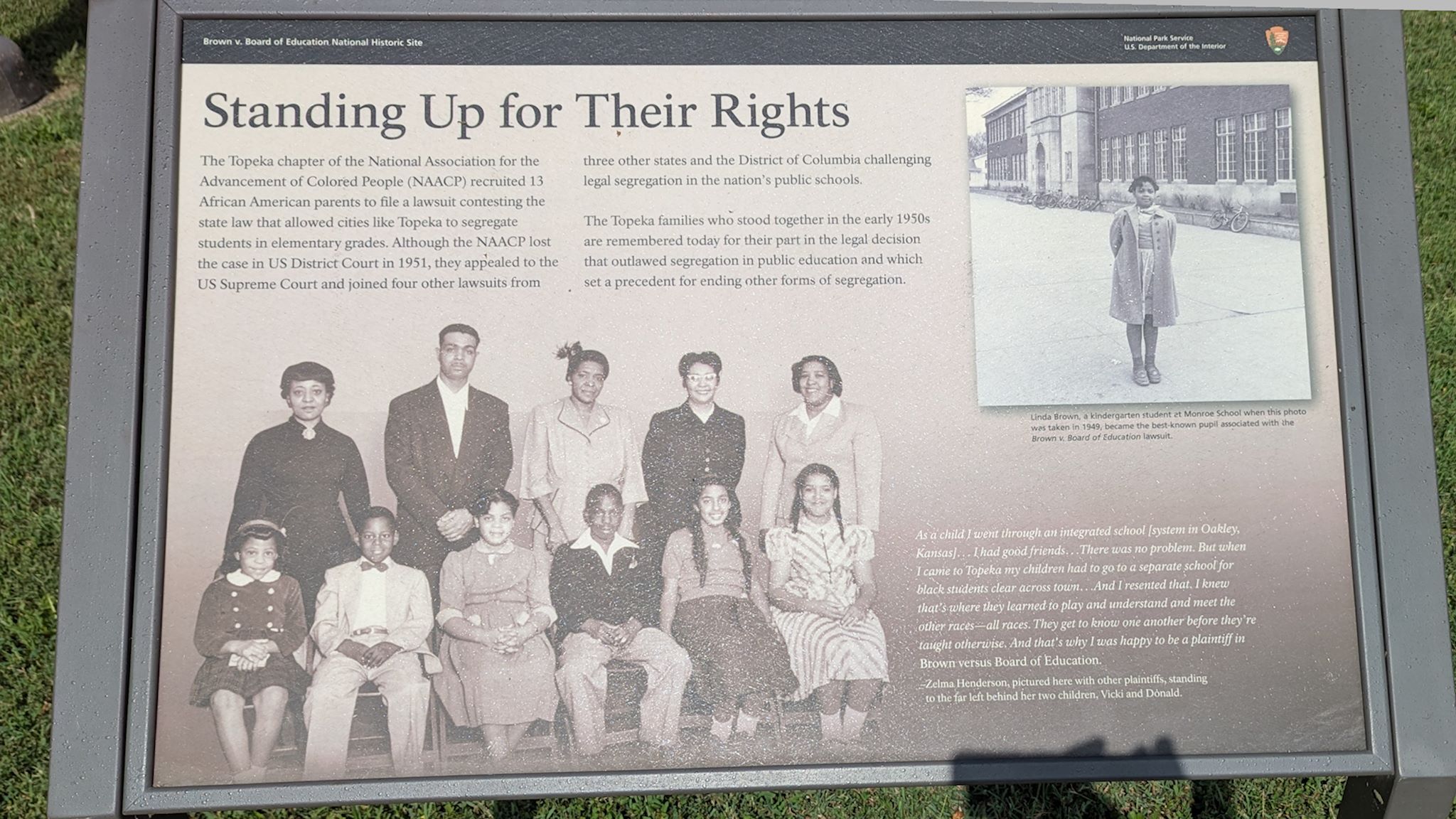
The exhibits at the museum are extremely informative, including details and subtleties of the lawsuits and the planning that went into them that were not made clear when we learned about this in school. The focus at the time was straightforwardly on the outcome of the case – that true equality of opportunity was the desired outcome, indeed the law of the land, and that segregation was not a way to achieve this. However, the strategies and coordination of resistance going back to the founding of the NAACP in 1909, the careful identification of “separate but equal” situations that would be particularly illustrative of the failures of segregated schools to achieve equality, all of these were very clearly laid out here. It took a lot of coordinated hard work by a lot of dedicated people over a long period of time, and it was effective.
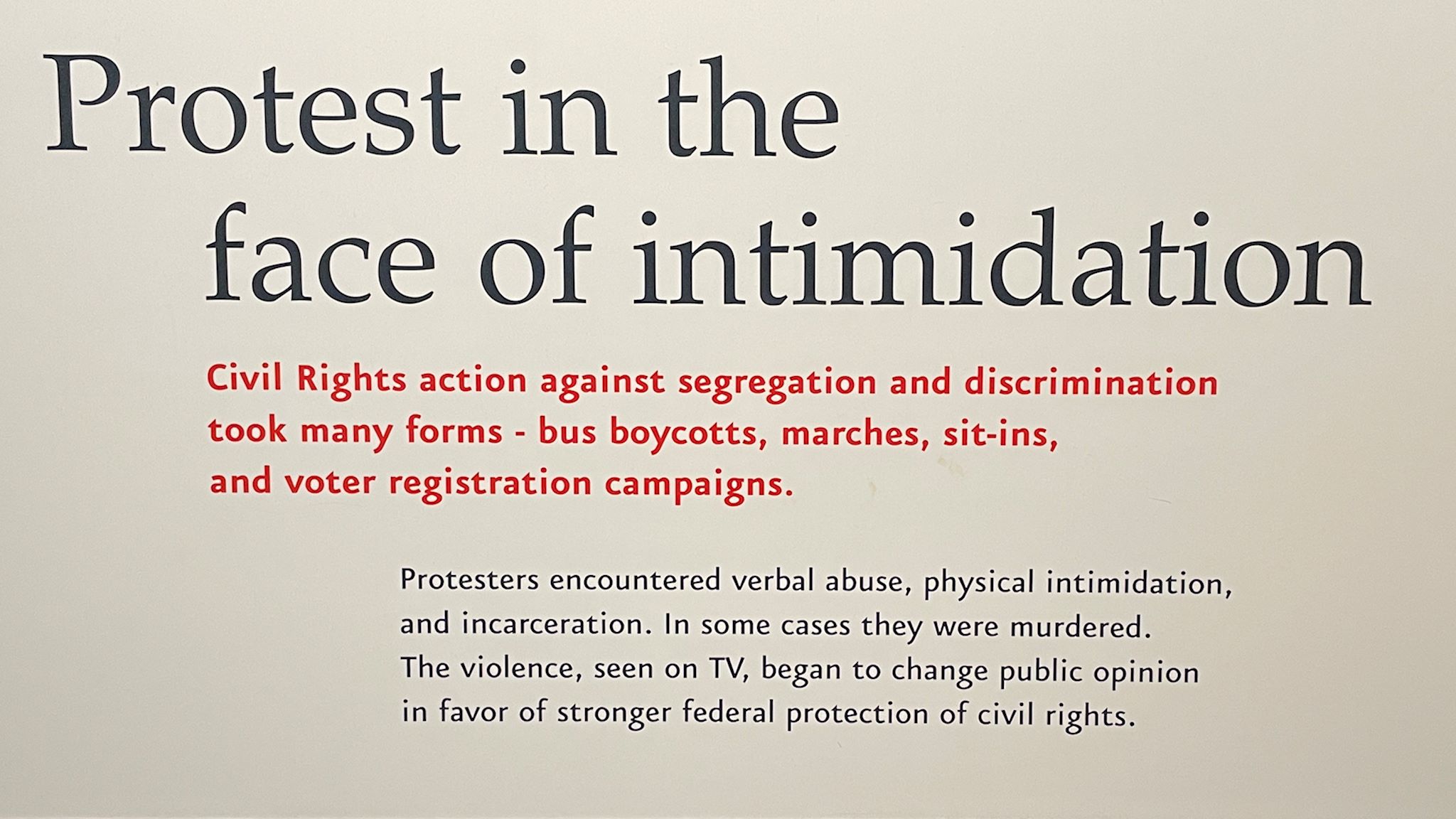
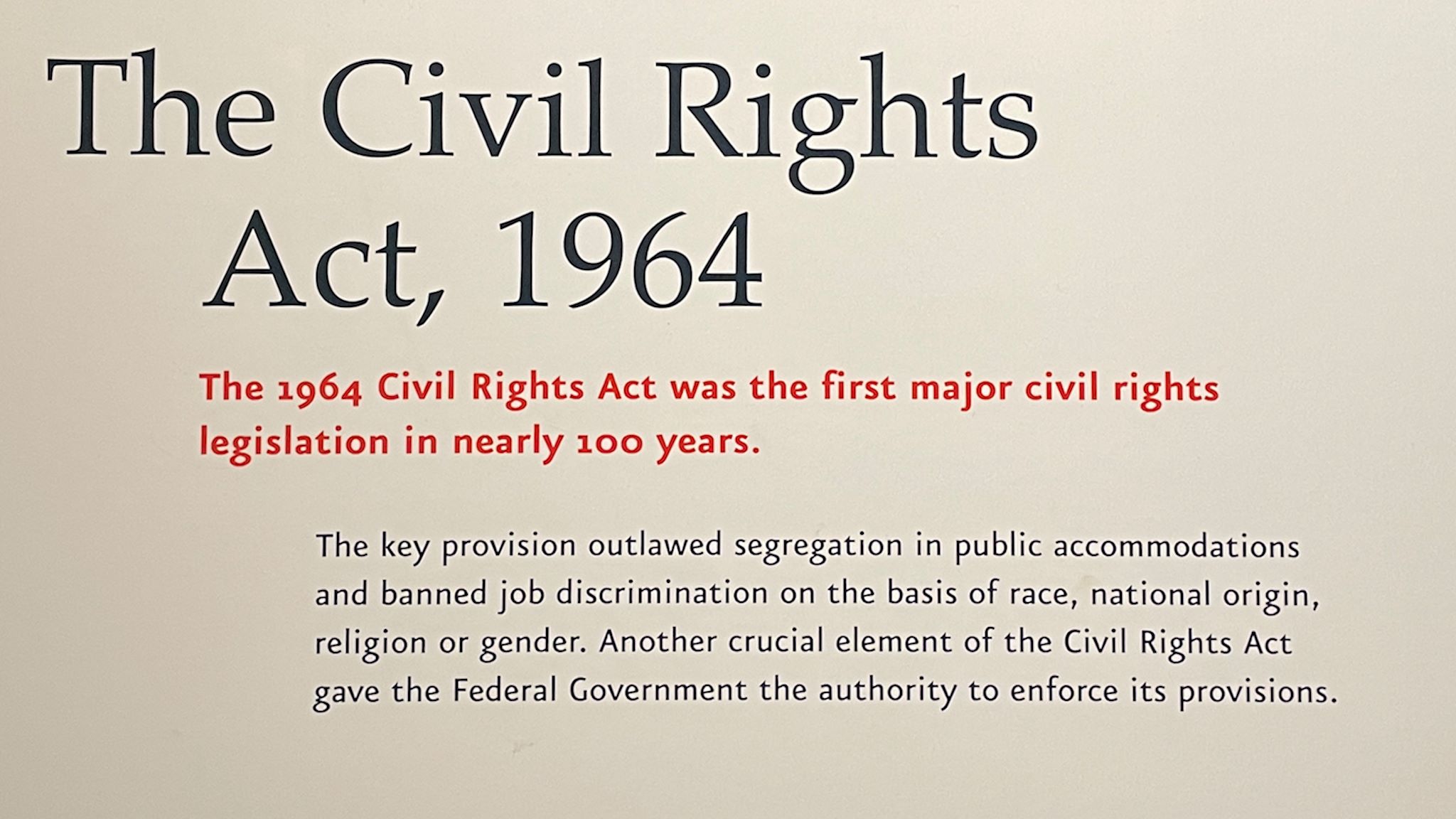
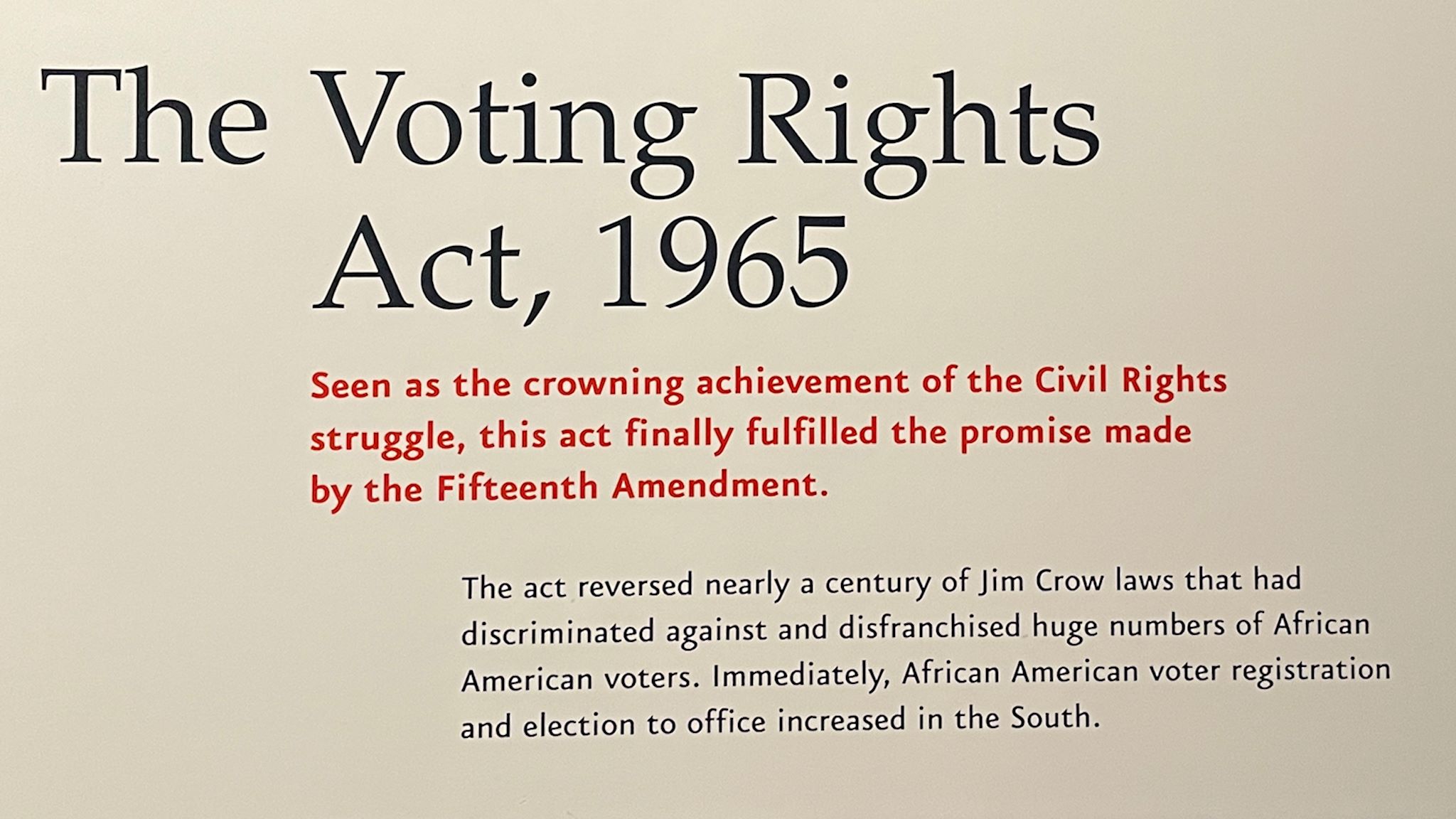
The museum also gives significant attention to what happened in the area of civil rights in the United States during the decades following the BvBoE decision, including the Civil Rights and Voting Rights Acts, to difficulties and hurdles encountered in the implementation of the decision, and to the broad impact that the BvBoE decision had on areas outside of education, as well as to progress and failures since.
Sue and I believe that this National Park is hugely important. Clear documentation and explanation of this part of our nation’s history, progress, and development is essential for understanding how We, the People, got to where we are today, as One Nation – and for keeping us on track to move forward together.
For those interested, more pix here.