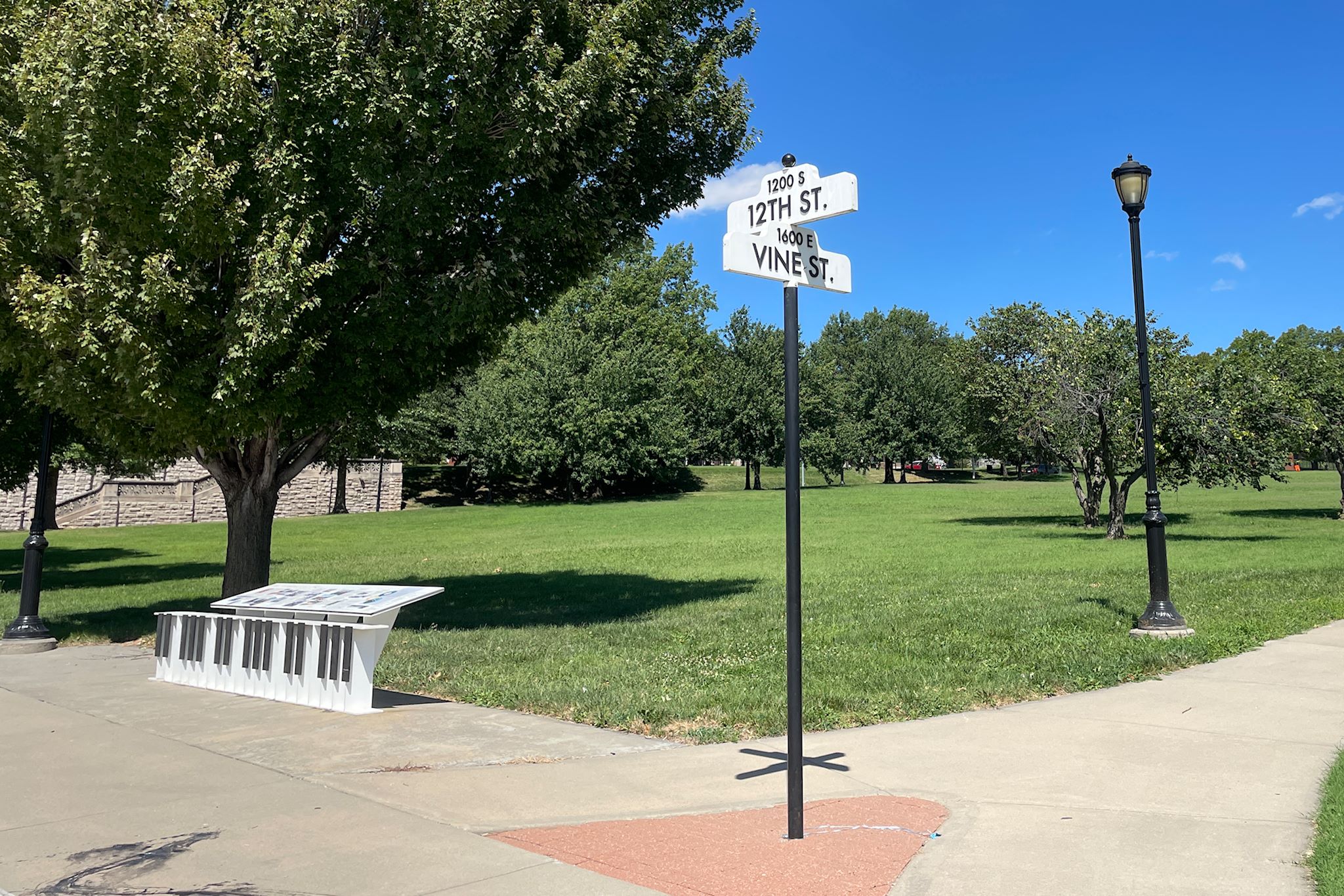
Kansas City, here I come. I’m gonna be standing on the corner – the corner of Twelfth Street and Vine…
…with my Kansas City baby, and a bottle of Kansas City wine.
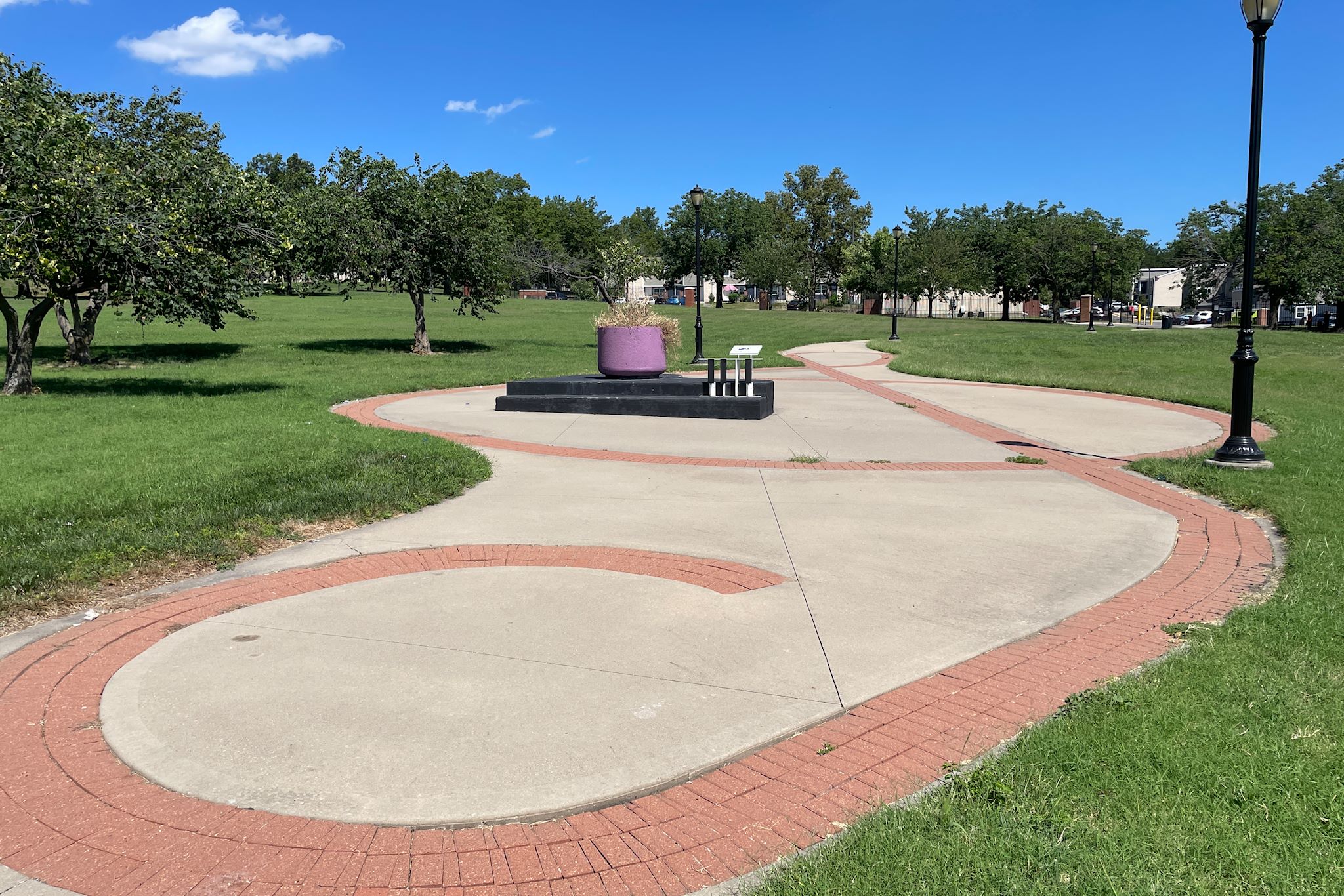
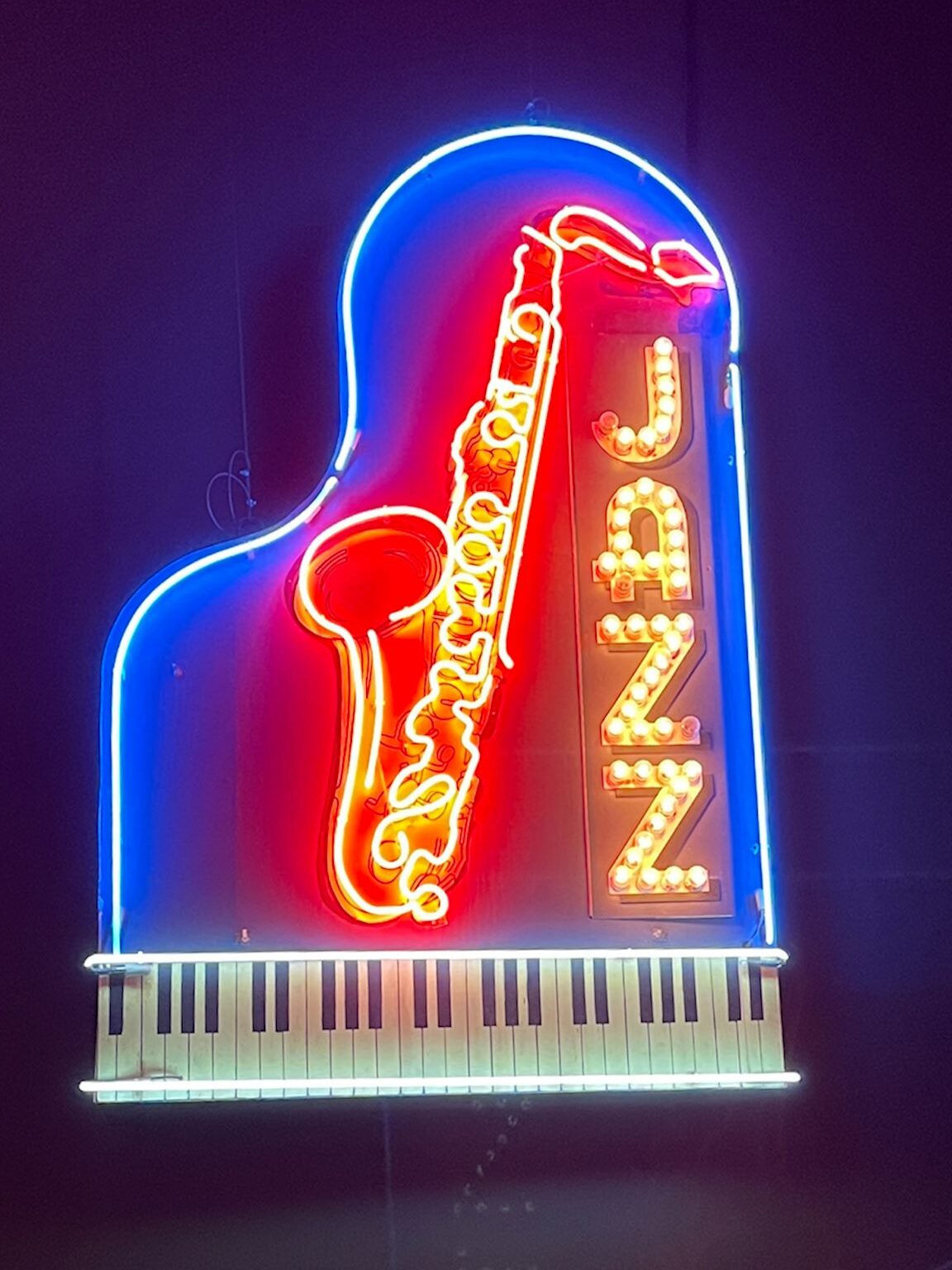
The corner of Twelfth Street and Vine in Kansas City, immortalized in the classic song, was through the first half of the 20th century a part of the bustling, Black neighborhood of Kansas City known as 18th and Vine. The area was home to thriving businesses and residences, and famously to legendary jazz clubs, dance halls, honky-tonks, restaurants, and theatres that earned its international reputation as a historic point of origin of jazz music. The 12th Street clubs inspired Euday Bowman’s 12th Street Rag in 1914 as well as the song Kansas City, written by Jerry Leiber and Mike Stoller in 1952. Urban renewal projects in the 1950’s through the 70’s replaced much of the historic neighborhood with housing and transportation projects, in the process eliminating the intersection at Twelfth and Vine along with the buildings that stood there. In their place today is an urban park (called the Goin’ To Kansas City Plaza At Twelfth Street And Vine) which commemorates this piece of music history. The park has a replica signpost, a historic marker shaped like a piano keyboard, a grand piano sculpture, and a walkway shaped like a treble clef. A sign on the piano indicated that an array of music-inspired art installations are planned to be added roughly annually over the coming years.
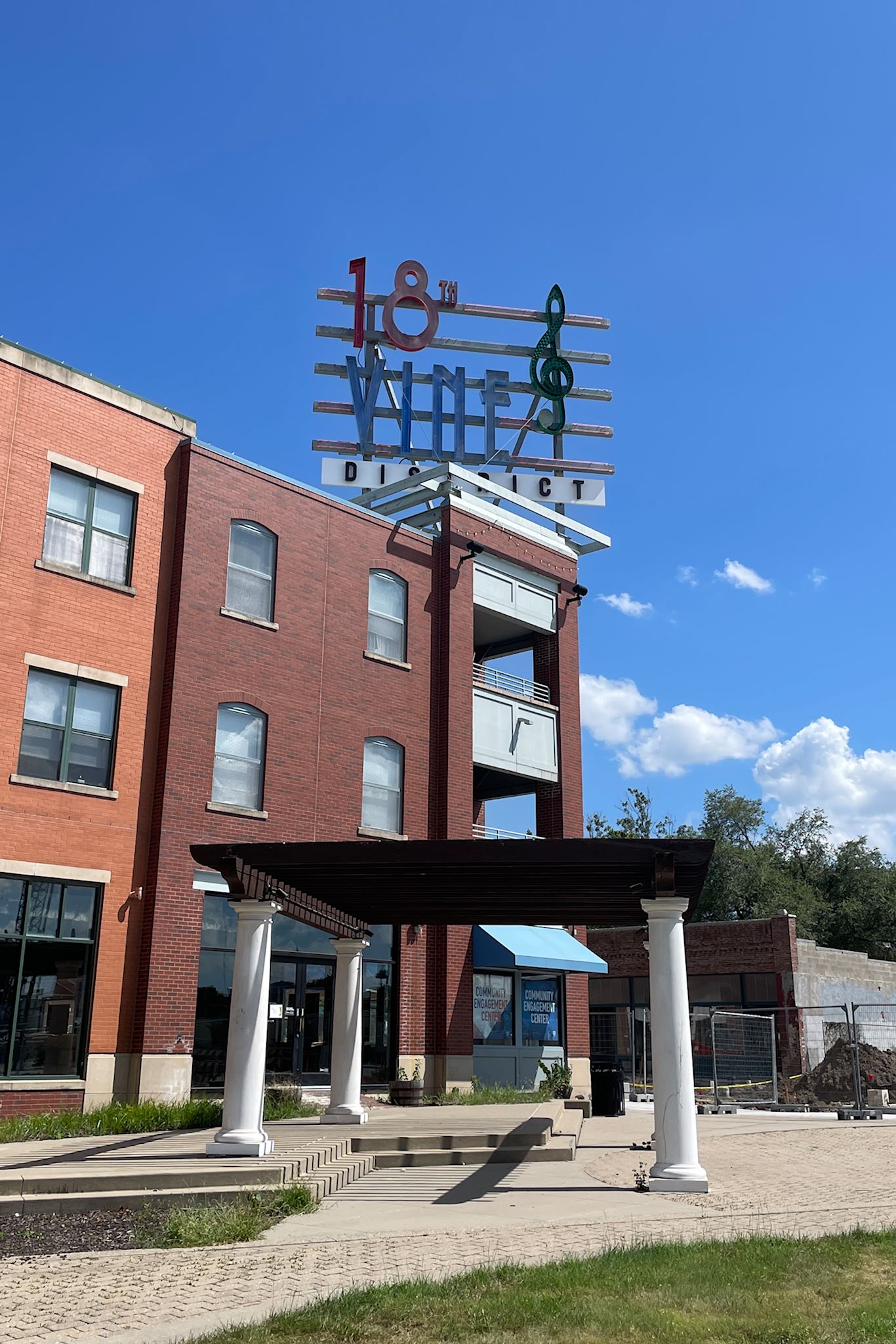
The central block of the district, 18th Street between Vine and the Paseo is the focus of redevelopment as the cultural center of the neighborhood. The Blue Room Club, the American Jazz Museum, Negro League Baseball Museum, the Gem Theater and other historic buildings and institutions are here.
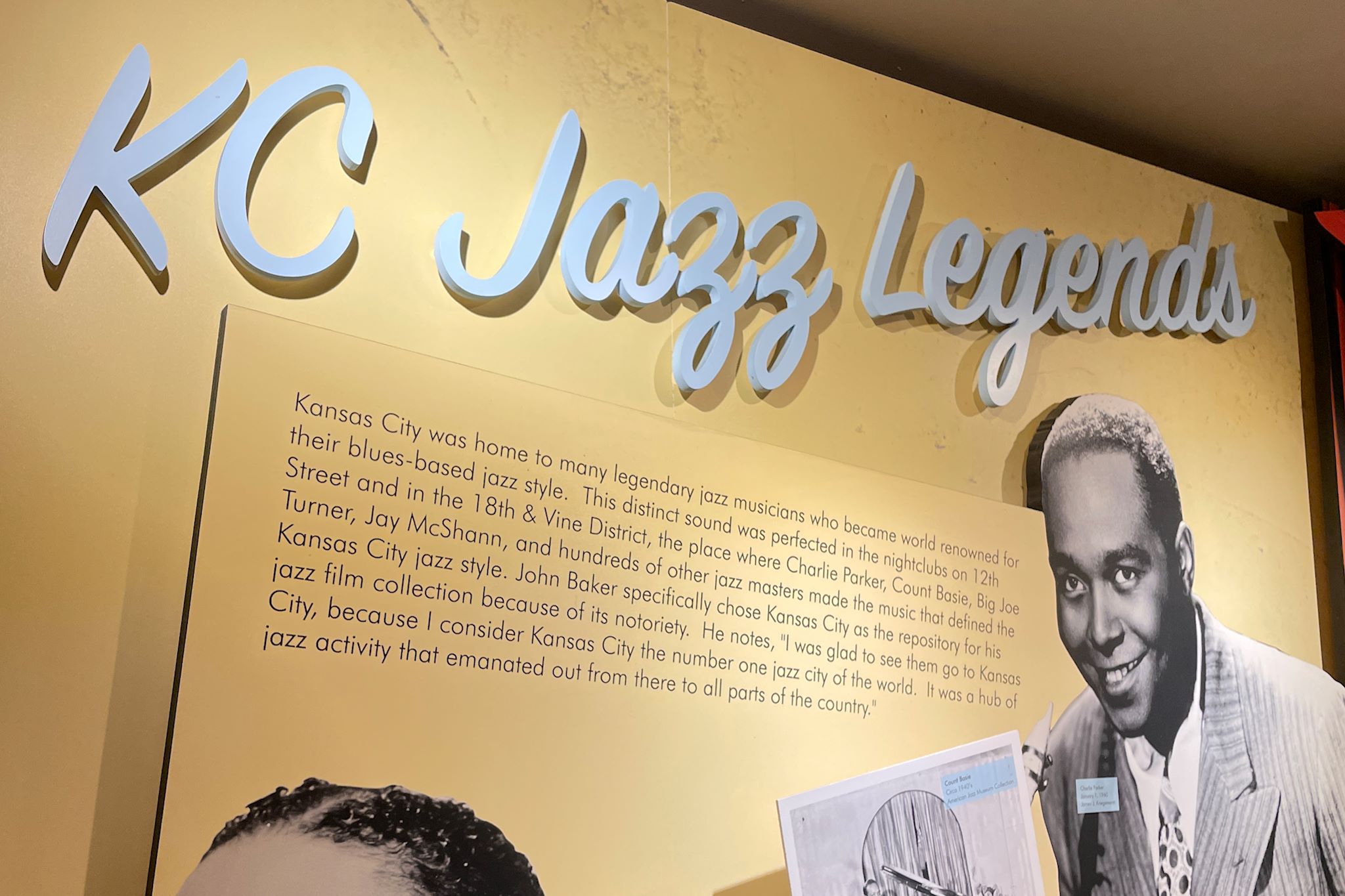
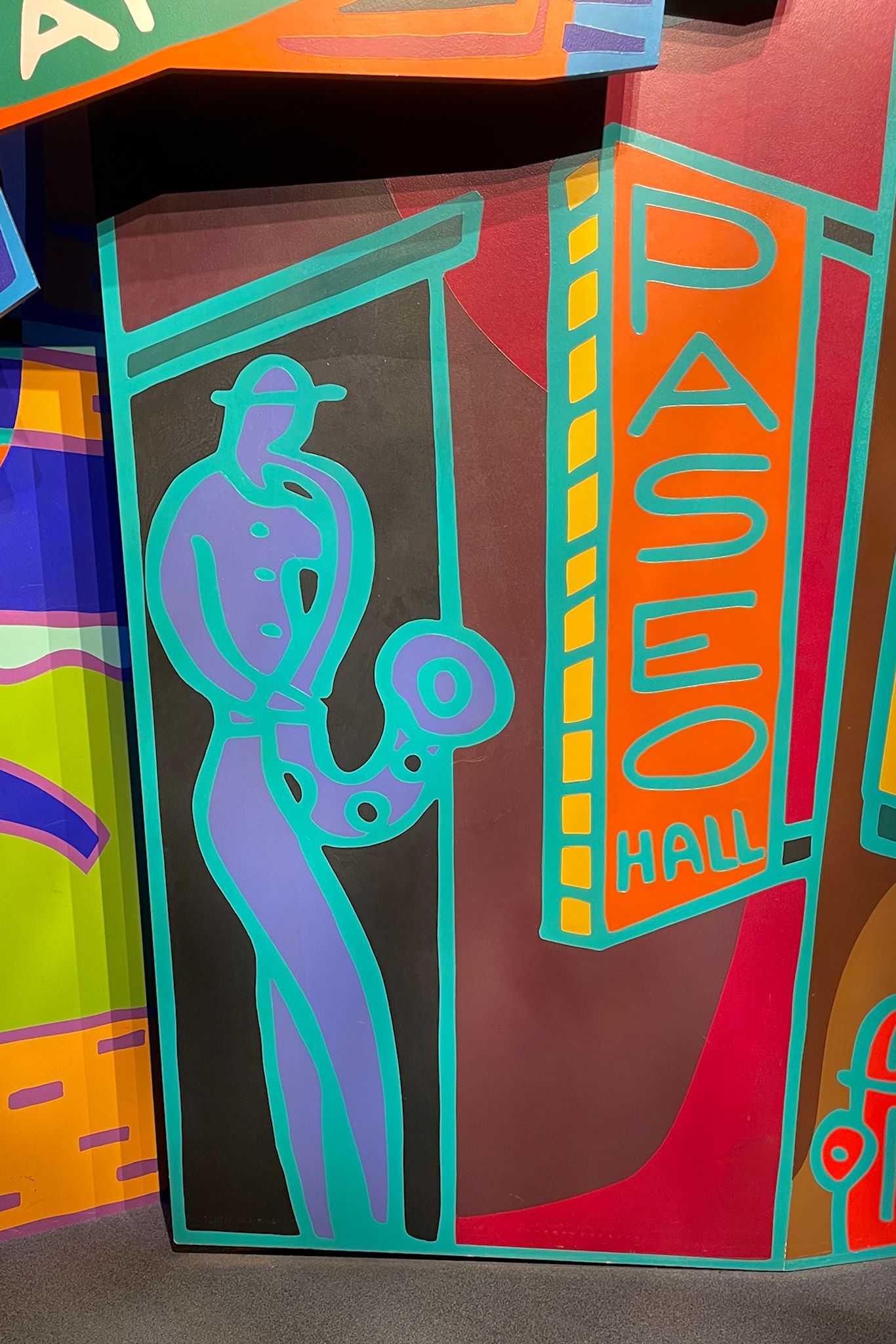
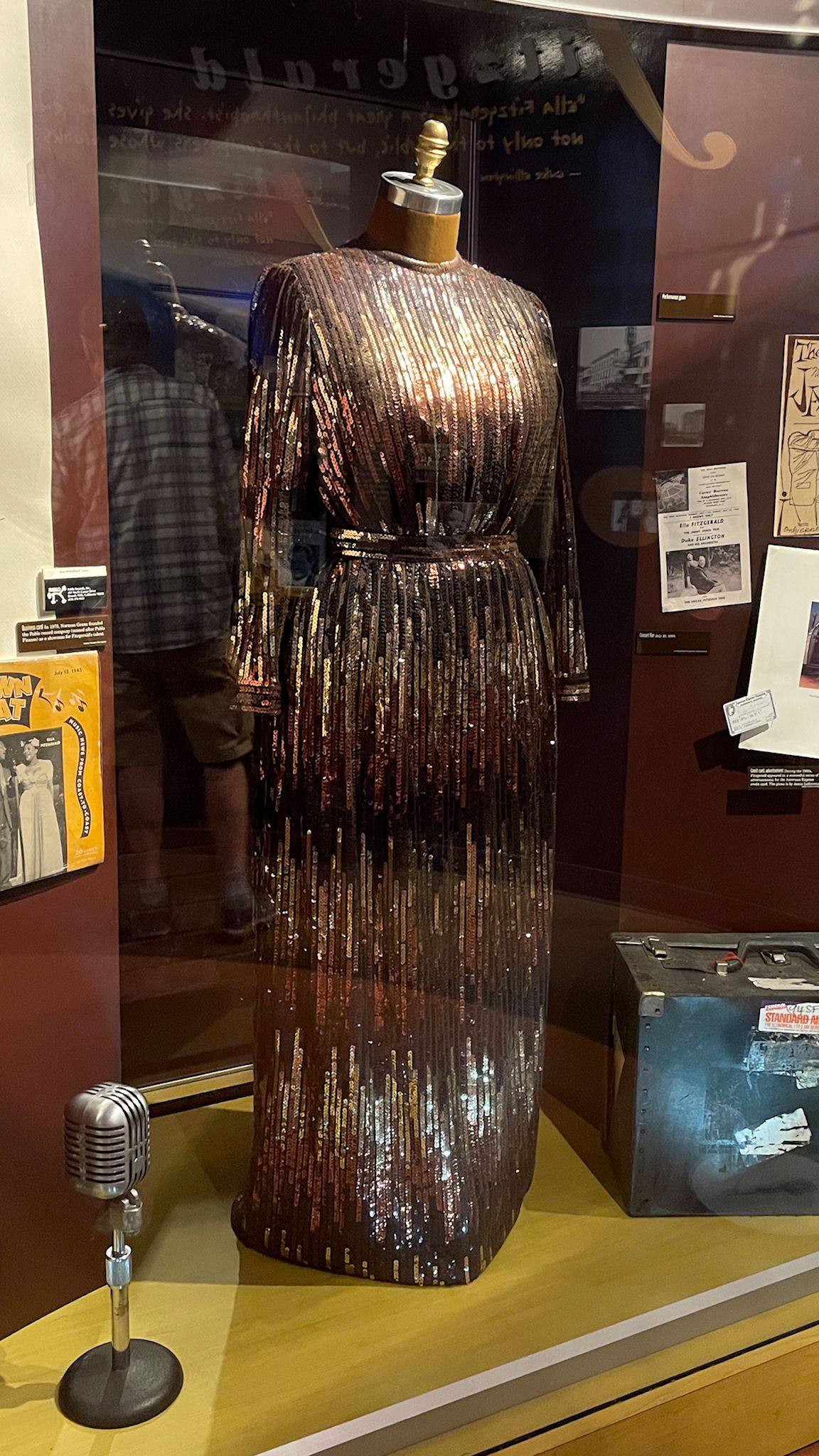
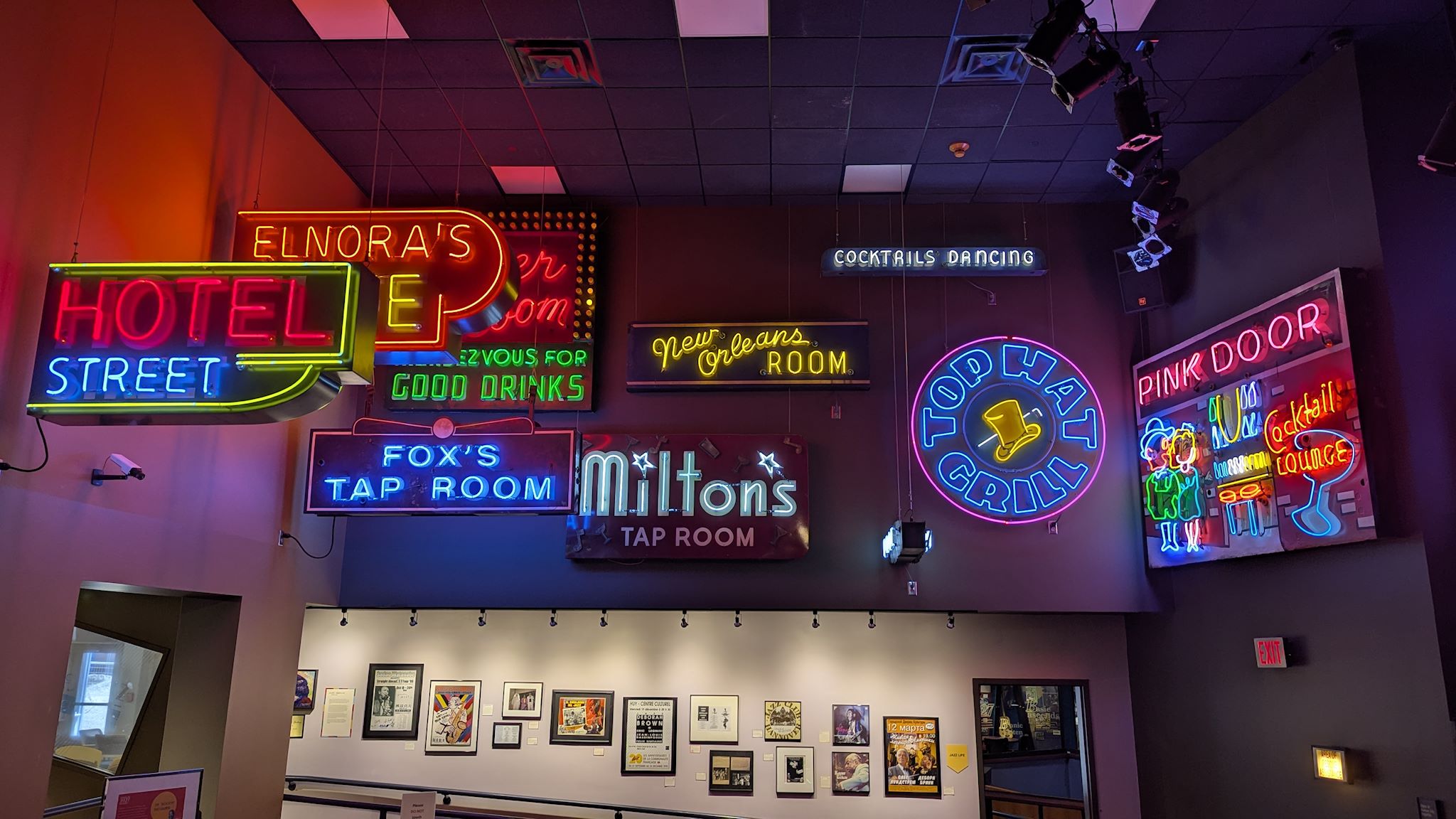
The American Jazz Museum sounded to us like a must-see. As museums go, its scope is on the narrow side. The focus is on Black musicians who were instrumental (pun intended) to the development of jazz and with a connection to the Kansas City jazz scene – Louis Armstrong, Duke Ellington, Count Basie, Charlie Parker, Ella Fitzgerald, and more – and the talents and innovations of many other musicians were also integrated throughout the exhibits. Carefully curated audio recordings at each exhibit kept us attached to headphones for most of an afternoon. Sharing those here is impractical, so hopefully you’ll enjoy a few photos…
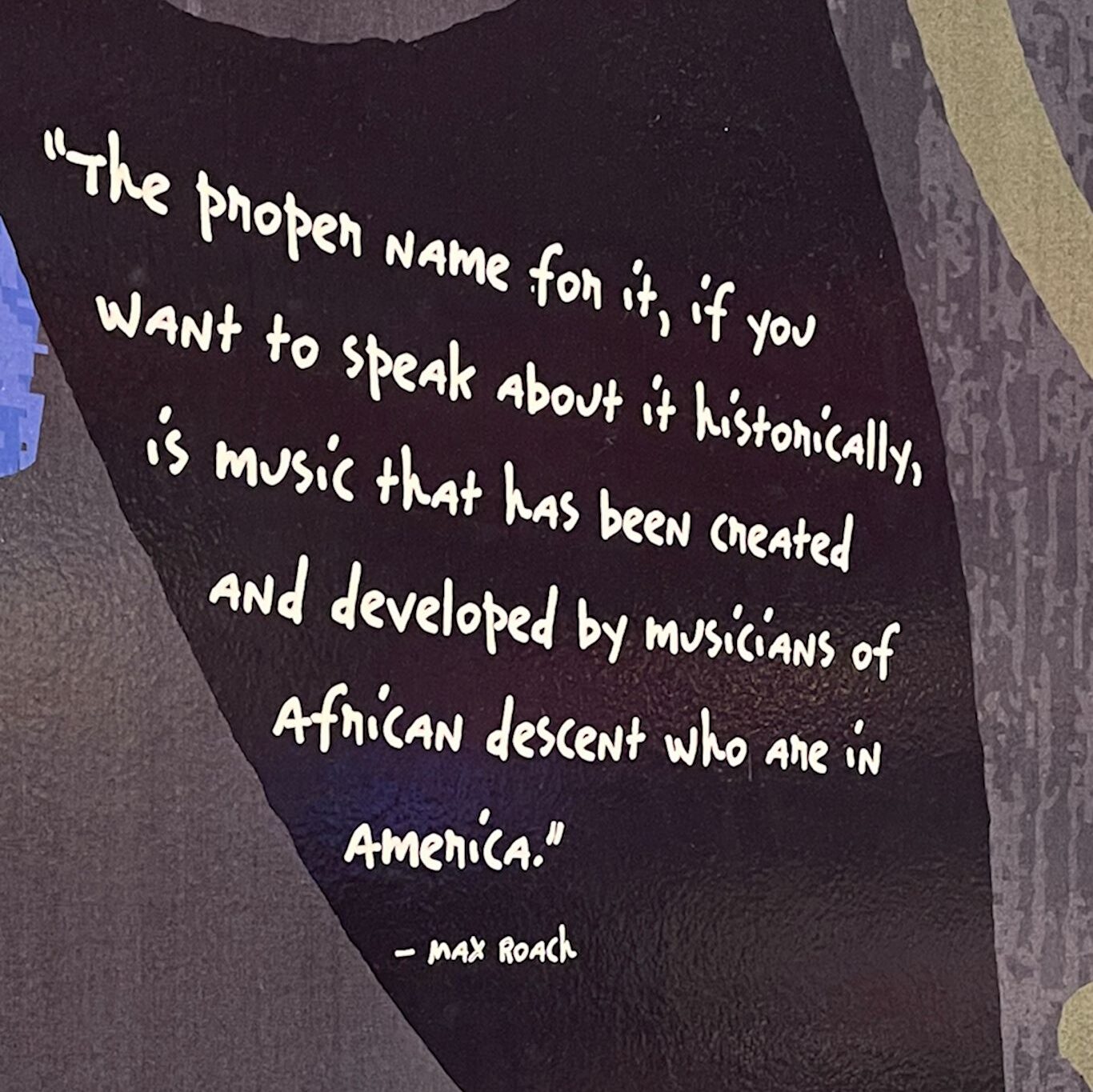
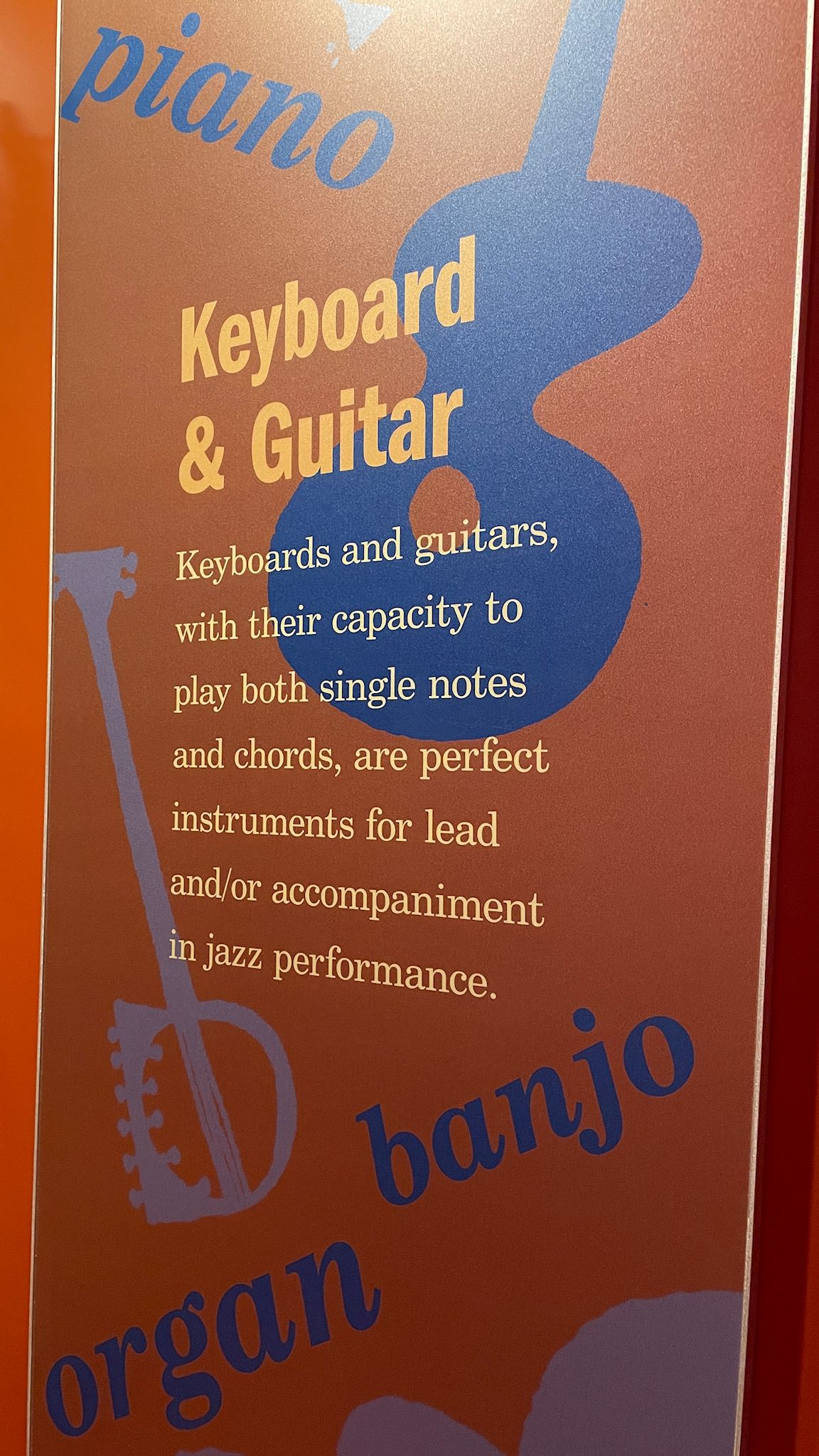
The audio exhibits aimed to demonstrate different aspects of jazz from the perspective of an instrument, music component (rhythm, melody, harmony) or jazz musicians or ensembles. Reading about a concise description of the specific concept, an audio recording was then available to hear the concept come to life.
The Piano exhibit included a detailed description of how Art Tatum regularly used riffs, arpeggios and the whole range of the keyboard and demonstrated those skills with a recording of Tea for Two. Max Roach’s (then) new innovation of keeping time with a high hat (instead of a bass drum) was showcased in a recording within the Drum and Bass exhibit. We could clearly hear the demonstration of Ella Fitzgerald’s clear, broad range and rhythmic genious in a recording of Mack the Knife. The Jazz Harmony exhibit described 5 types of jazz harmony, presenting an audio recording of each. Then a song using the 5 types of harmony was offered so we could pick them out in the tune. That we were able to pick up most of these helped us understand how we’ve grown as musicians.
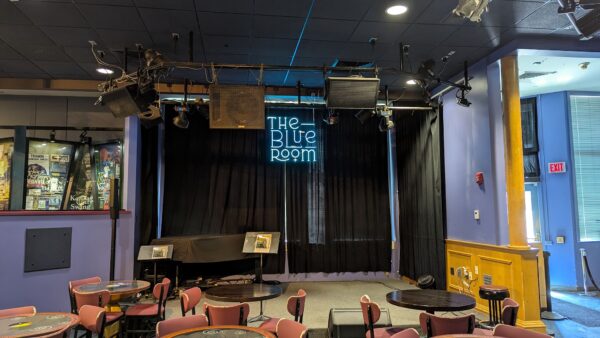
Part of the jazz museum complex, the Blue Room is essentially an exhibit of live jazz! Local, regional and national jazz talent perform in this intimate space a few times a week. Unfortunately, the next scheduled performance was 4 days away… We need to head west. With regrets, we missed taking in a show.
We loved our day’s total immersion into jazz!
For anyone who’s interested, more 18th and Vine and American Jazz Museum pix…