
This visit to Caraquet was different from our first visit in 2023. My maternal grandparents and generations of ancestors were born and lived here and I’ve heard about the town since I was a kid. In 2023, we aimed to check out the town. The town is in a pretty location on the Baie des Chaleurs (Bay of Warmth), on a peninsula in northern New Brunswick. We loved it! The arts community, the funky restaurants, the murals, the beaches, the marinas, the bay, the outdoor gathering spots all caught our attention. We (literally) sought out signs of my ancestors and found street signs with the Morais family name.
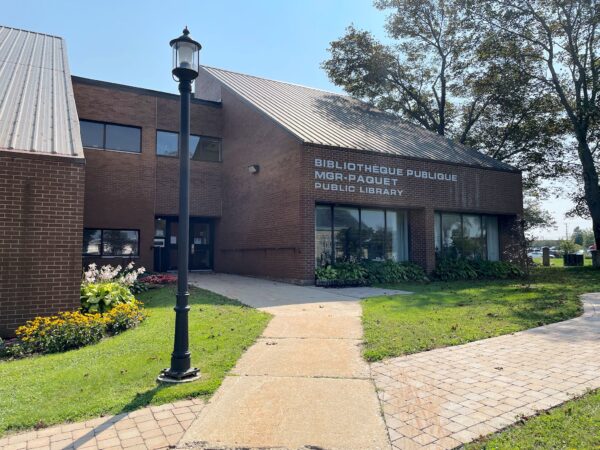
One of the larger nearby attractions was the Historic Acadian Village just outside of town. That’s where I learned that my family was Acadian (who knew!?!) and that Acadians were deported in Le Grand Dérangement in 1755, with some returning in the 1760’s. I now had a million questions about my family history. I stopped by the Bibliothèque Publique Caraquet (Public Library) and did some research. I was able to confirm that the genealogy information I had on my family was accurate and learned that at least 3 ancestors received land grants. I couldn’t find any information on why, though. And there was no information on who, if any, of my ancestors were involved in this deportation. More questions than answers… I planned to do more research over the winter.
I read several books and was shocked by the devastation and cruelty of Le Grand Dérangement. I won’t get into any more detail here in this post. I’ve highlighted some of these atrocities in several blog posts this summer as we’ve visited historical sites related to Le Grand Dérangement. If you want more info, key ‘Derangement’ into the search bar and you’ll find those posts.
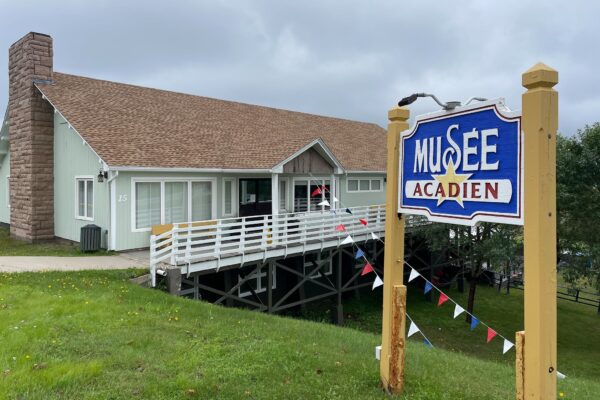
The more we learned about Le Grand Dérangement over the summer, the more I suspected my ancestors were not directly impacted. It wasn’t until we stumbled upon the tiny little Musée Acandien (Acadian Museum), inadvertently overlooked on our first visit to Caraquet, that we found answers. Acadians in Nova Scotia and southern New Brunswick who chose to flee and hide from the British rather than be deported made their way to northern New Brunswick or Quebec. Some Acadians had also settled in Quebec, including some of my ancestors who later moved to Caraquet which was a growing Acadian community.
Despite escaping Le Grand Dérangement, my ancestors were not immune to the British exploits. In 1758, the last year of the deportations, the British (who continued to rule Nova Scotia), passed a law that Catholics could not legally own land, knowing that Acadians were all Catholics. This all changed in 1783 when the law was repealed, followed by the separation of New Brunswick from Nova Scotia in 1784 (although both continued under British rule). With La Grande Grant (Great Grant), the 34 Acadians families living in Caraquet were given a land grant allowing them to legally own the land they’d been living on and cultivating for 20-30 years. Thus, my direct ancestor, Jacques Morais received his land grant. There were also grants to the Godin and Cormier families, although I found no specific names that matched my known ancestors. And all 3 families are considered ‘founders’ of Caraquet.
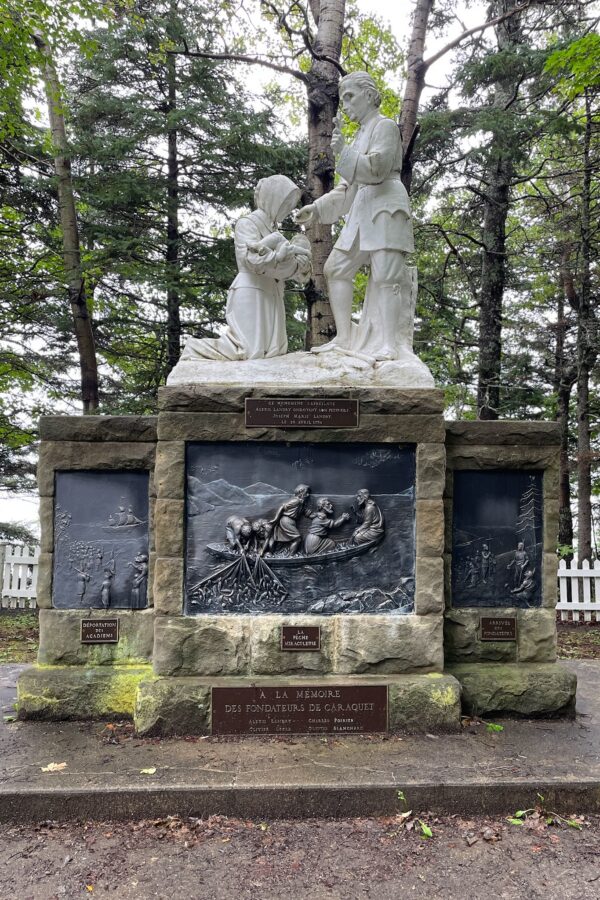
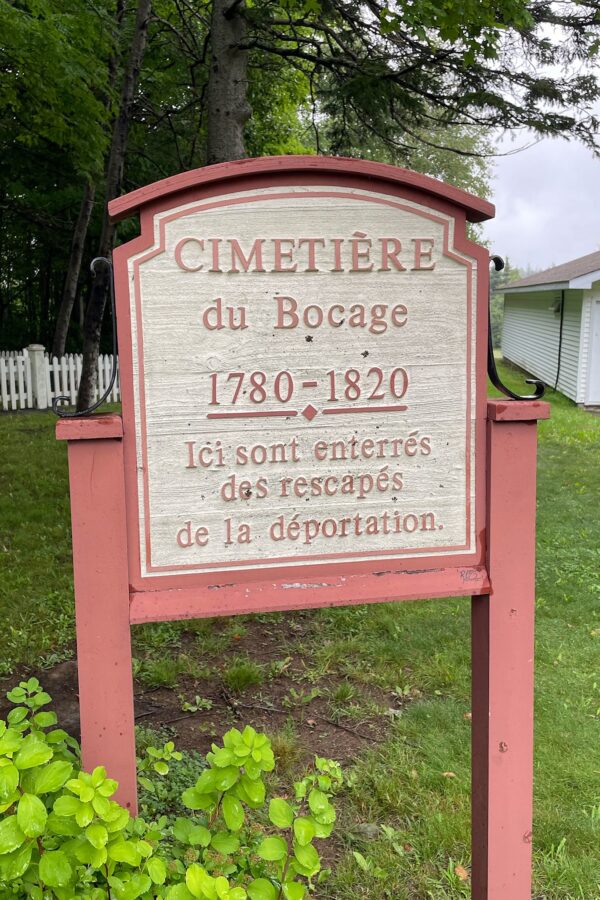
Here lie the survivors of the deportation
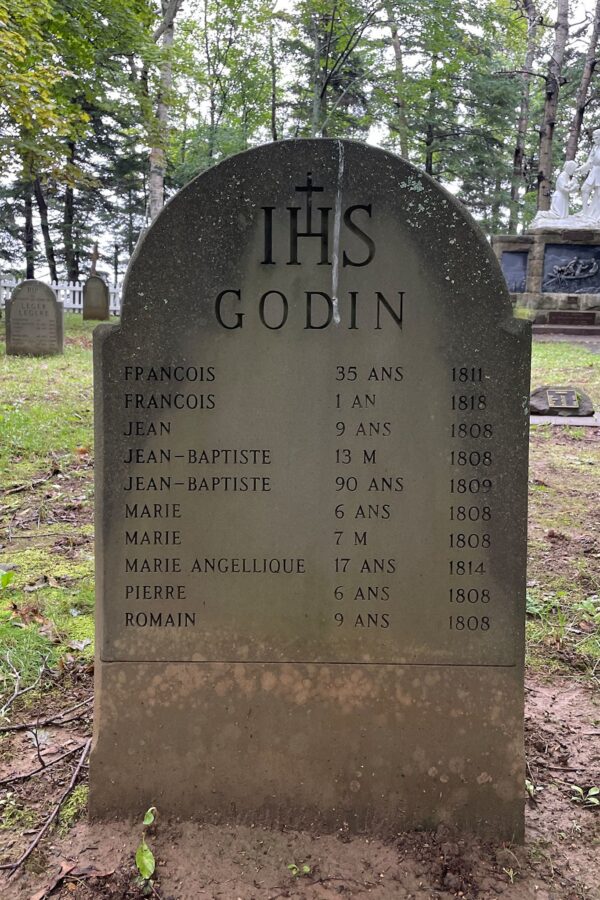
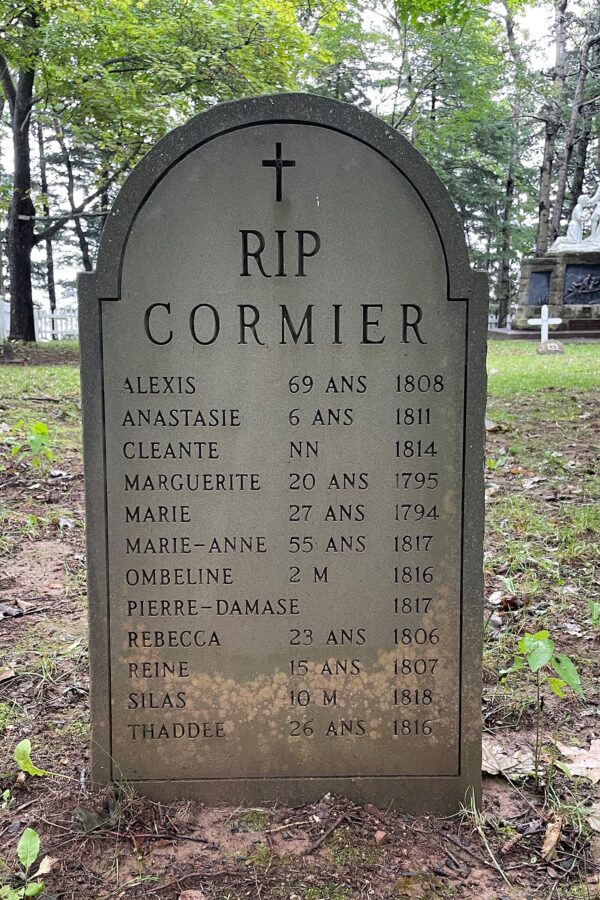
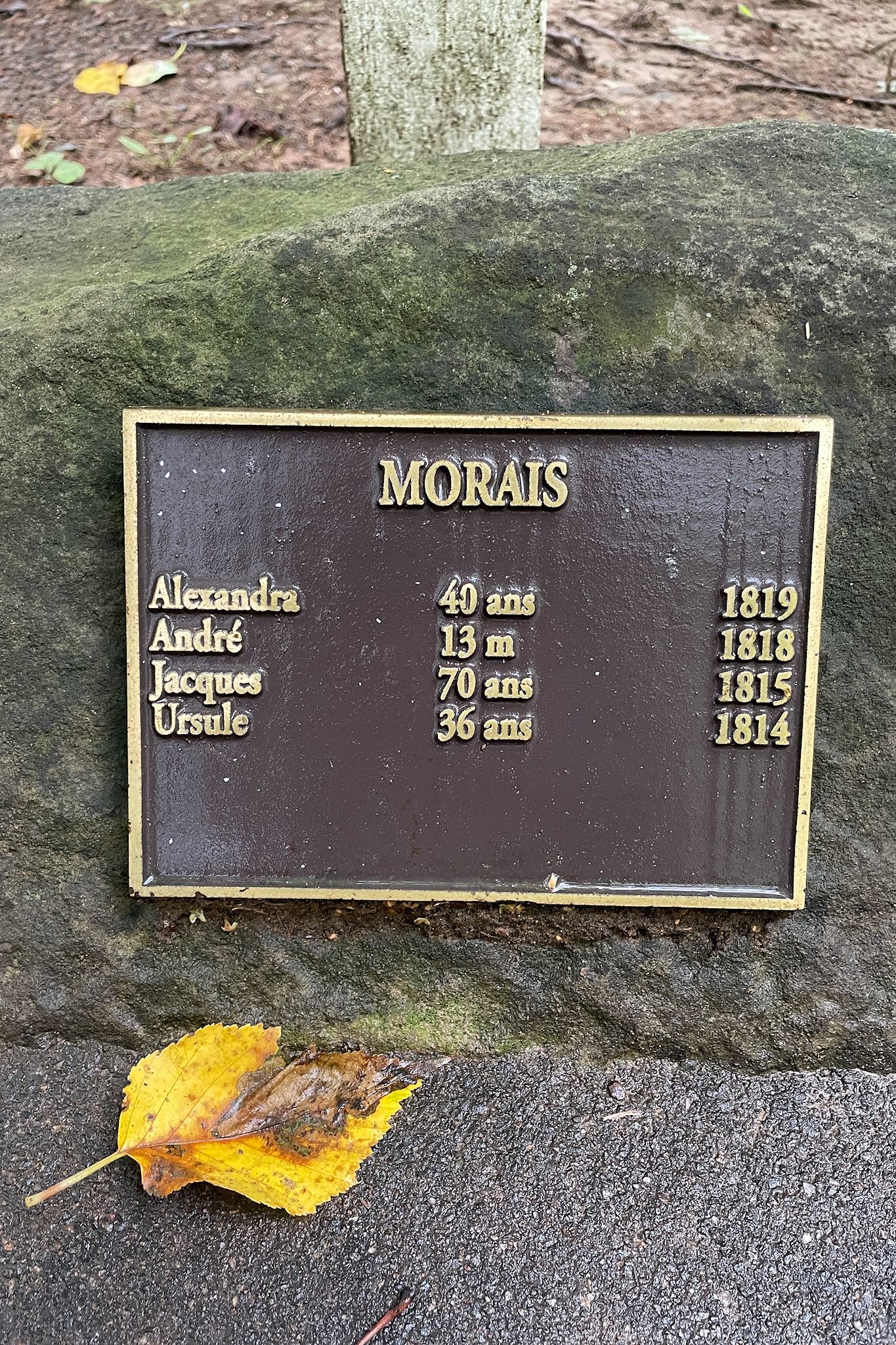
The host at the Musée Acadien encouraged us to visit Sainte Anne du Bocage chapel and the cemetery there to possibly find gravestones for my ancestors. It was a fascinating walk through history. We’re glad we did!
Not all of our time in Caraquet was focused on ancestral history. We did take strolls along the wonderful walking paths, admiring the well developed and maintained waterfront part of town. We did find our favorite restaurant from last time – Restaurant du Quai – and ordered the totally decadent and absolutely not traditional seafood poutine.
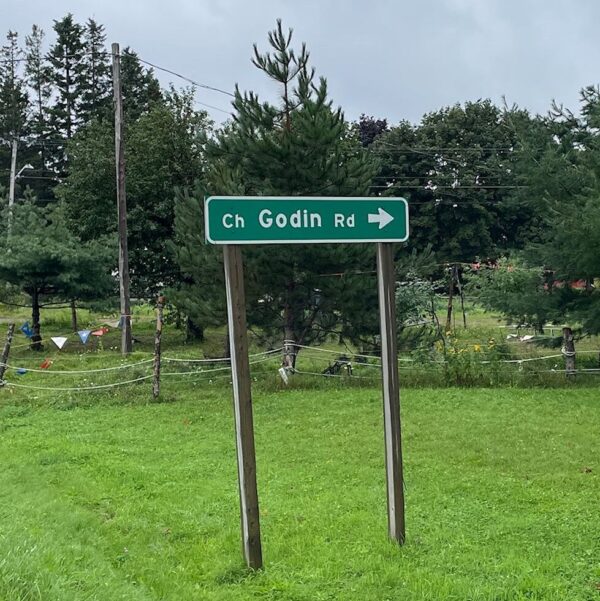
Oh, and this time we found the wayward Godin family street sign…
For anyone interested, more Caraquet 2026 and Caraquet 2023 pix…