
In 1923, the Carey Salt Company in Hutchinson, KS dropped a mine shaft 650 feet below the earth’s surface to tap into a large salt deposit. This salt deposit, formed 275 million years ago, is one of the world’s largest and spans much of Kansas, Oklahoma and Texas. The mine has been in continuous operation since it opened, changing ownership a few times. The mine is now owned by the Hutchinson Salt Company and it yields about 5,000 tons of salt every day, most of it used for ice-melting applications and various other industrial and agricultural purposes. Table salt, also produced in this region though not at this mine, is extracted in a very different process that involves pumping fluids down to the salt layer to dissolve salts and pumping the solution back to the surface for refining.
There are 14 other salt mines in the US. The only mine that offers underground tours is this one in Hutchinson – the Kansas Underground Salt Museum – which is now run by a non-profit educational foundation called Strataca.
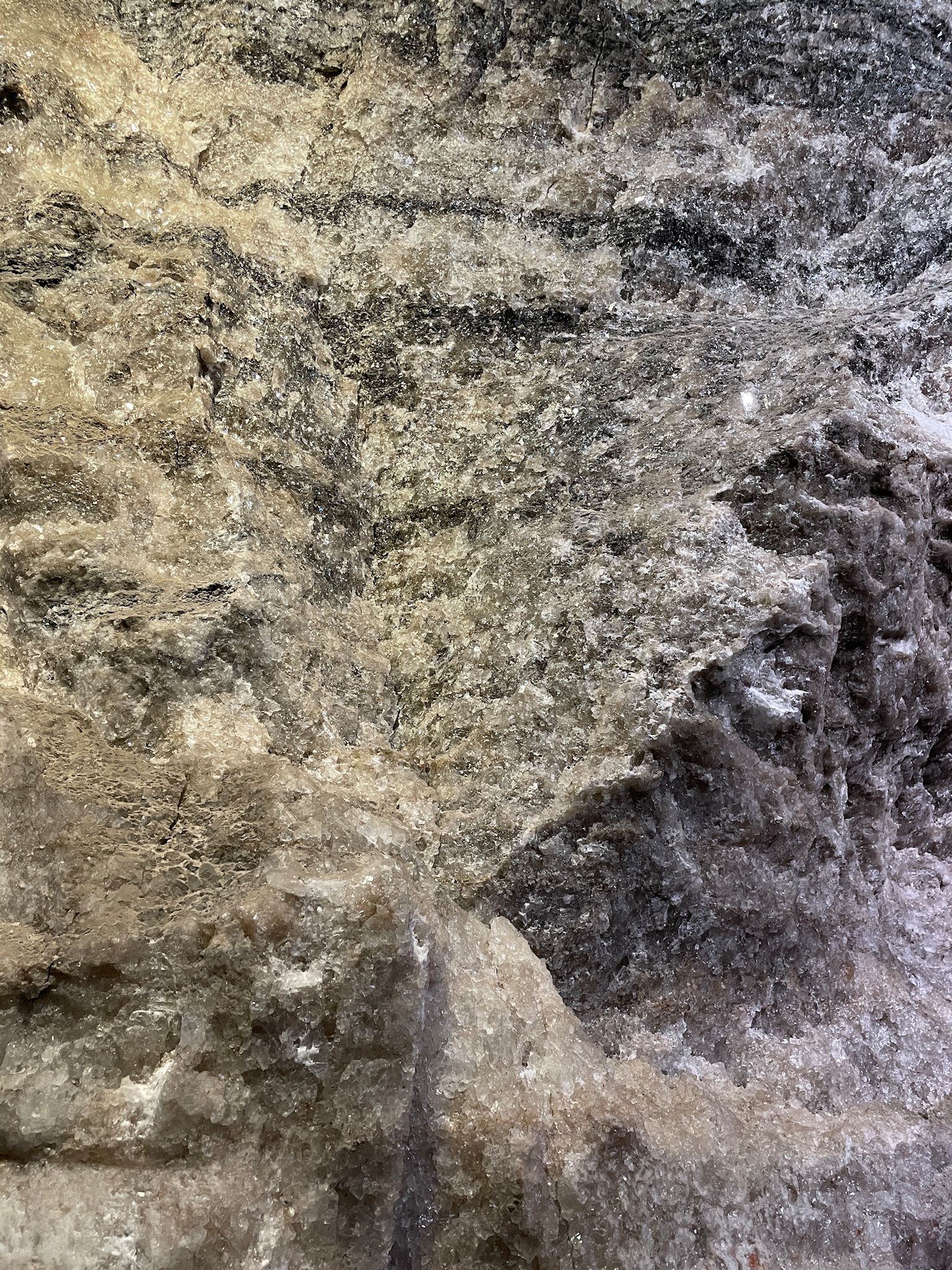
I’ll admit to being mildly claustrophobic, and several thoughts crossed my mind as 10 or a dozen of us in a small elevator dropped 650 feet, in complete darkness, in 90 seconds, underneath the surface of the earth. Once out of the elevator, it was like being in one of those subway shopping malls, only sparkly. Yup, raw salt has a sparkle to it.
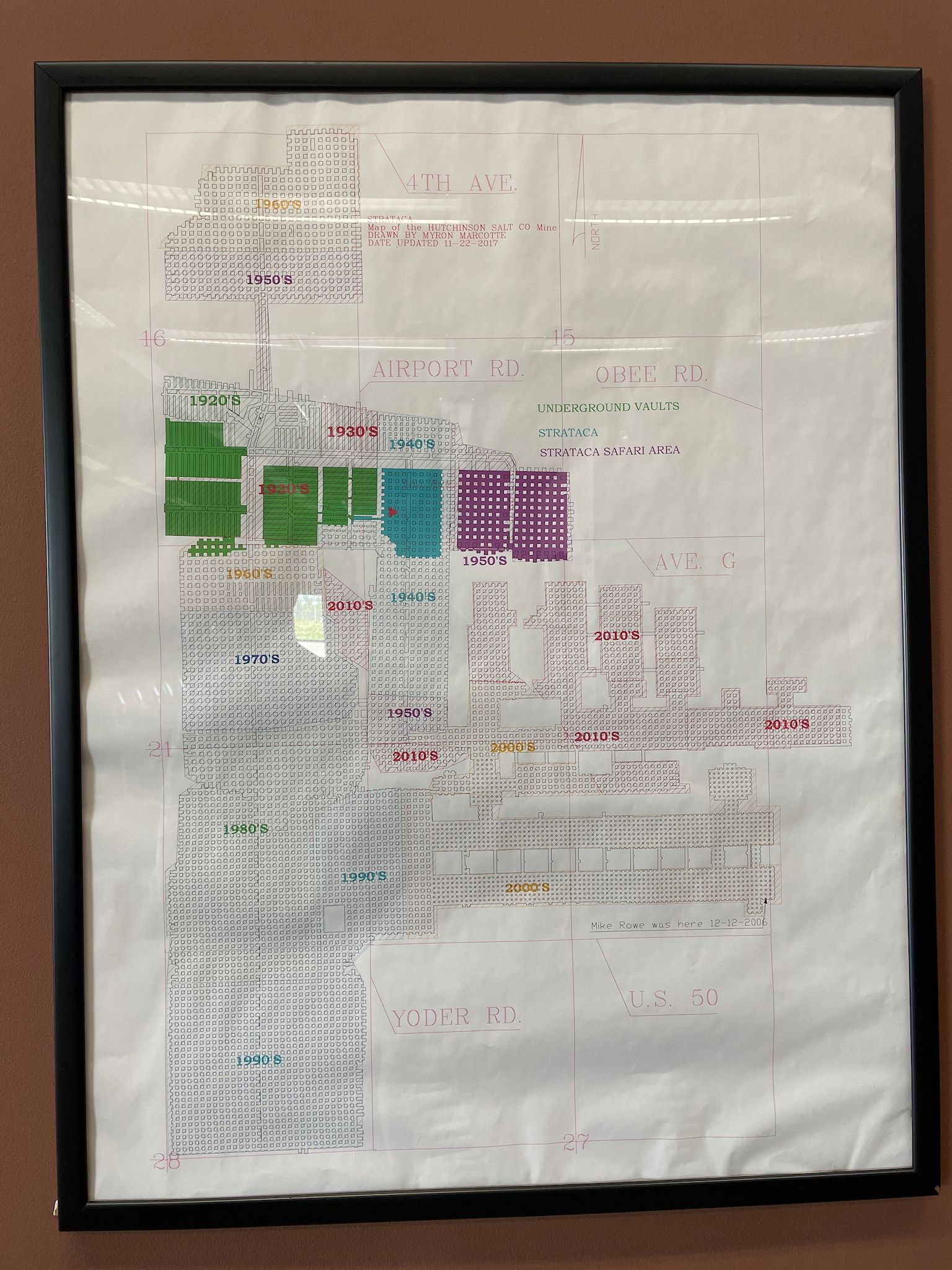
The Strataca museum is located in a chamber that was mined in the 1940’s and includes a self-guided tour through 3 galleries, plus 2 0r 3 optional, separate guided excursions through the areas of the mine beyond the museum.
The Mining Gallery, demonstrates the process of salt mining through photos and videos and displays of representative machinery and artifacts from different eras of the mine.
The type of mining done here is called room and pillar. The salt is mined in chunks called rooms. Between the rooms are 40 foot square pillars, unmined sections left to hold up the ‘roof’ of the mine. A bird’s eye view (if a bird could see through 650 feet of rock) shows a checkerboard pattern. If all all of the mined corridors were connected end to end, they would be about 150 miles long.
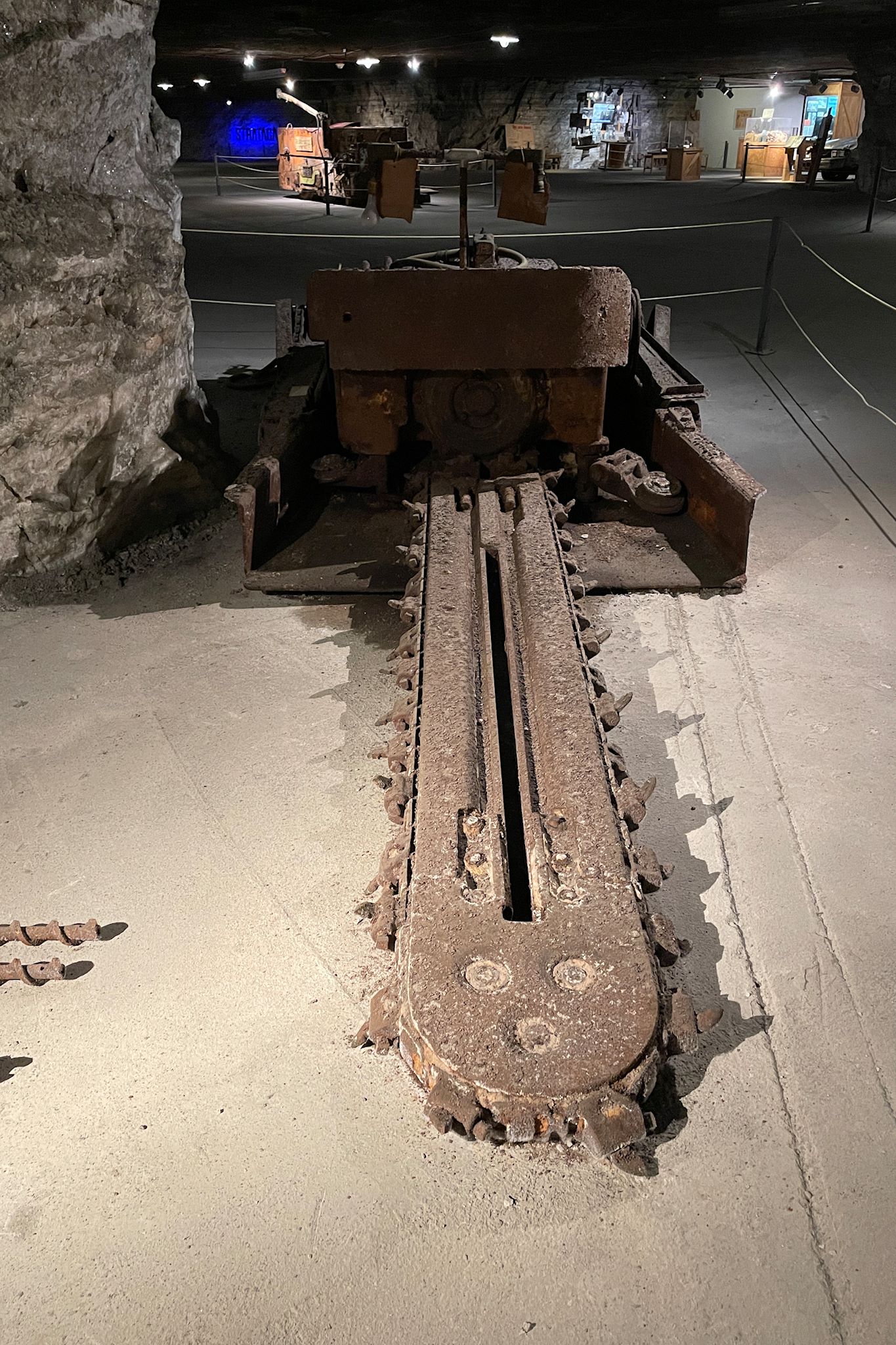
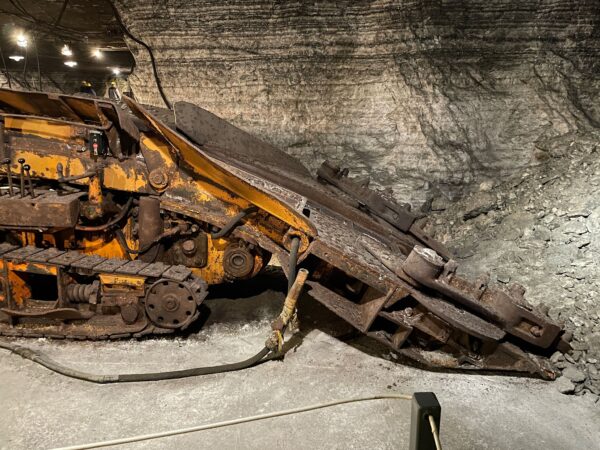
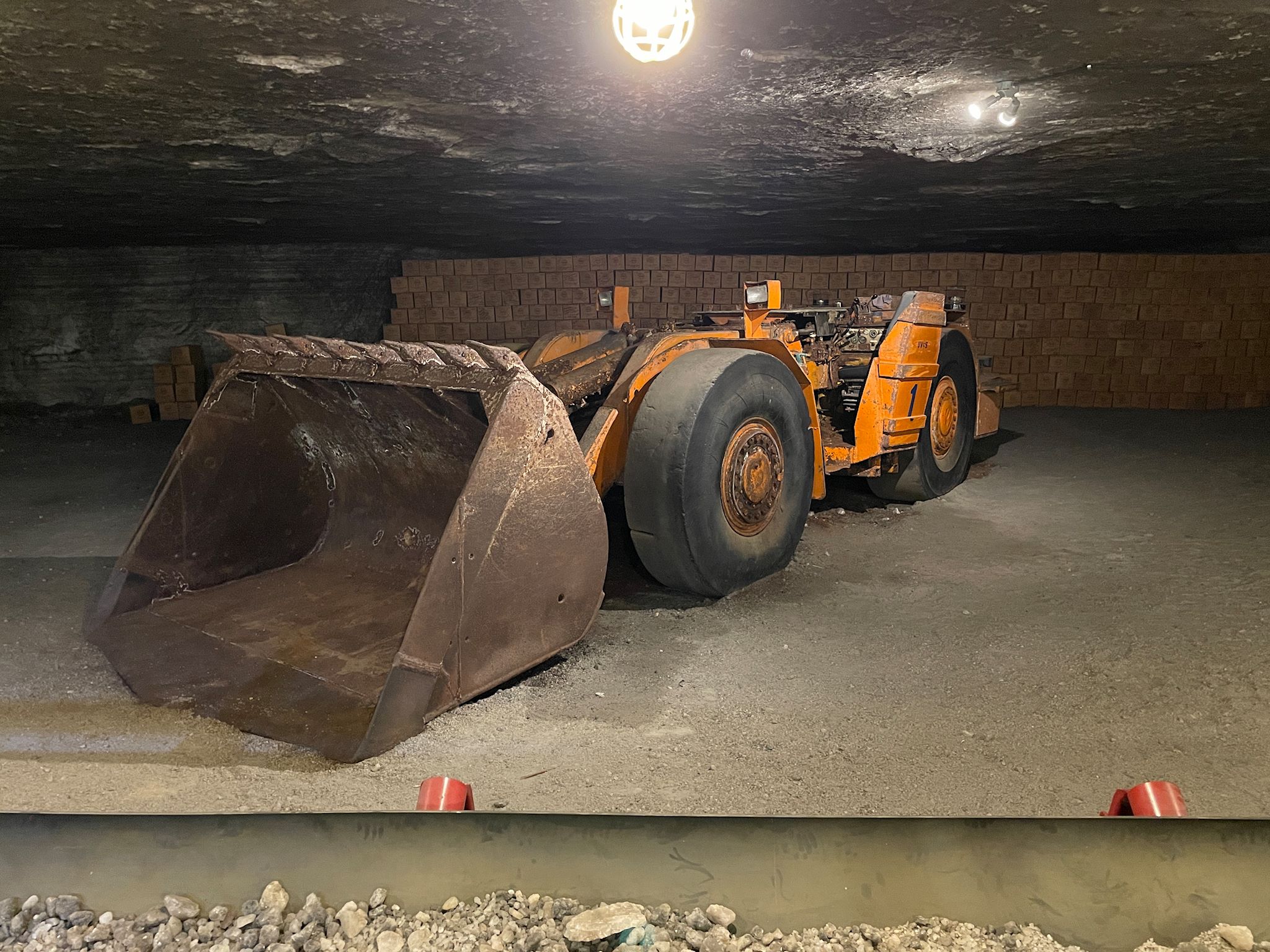
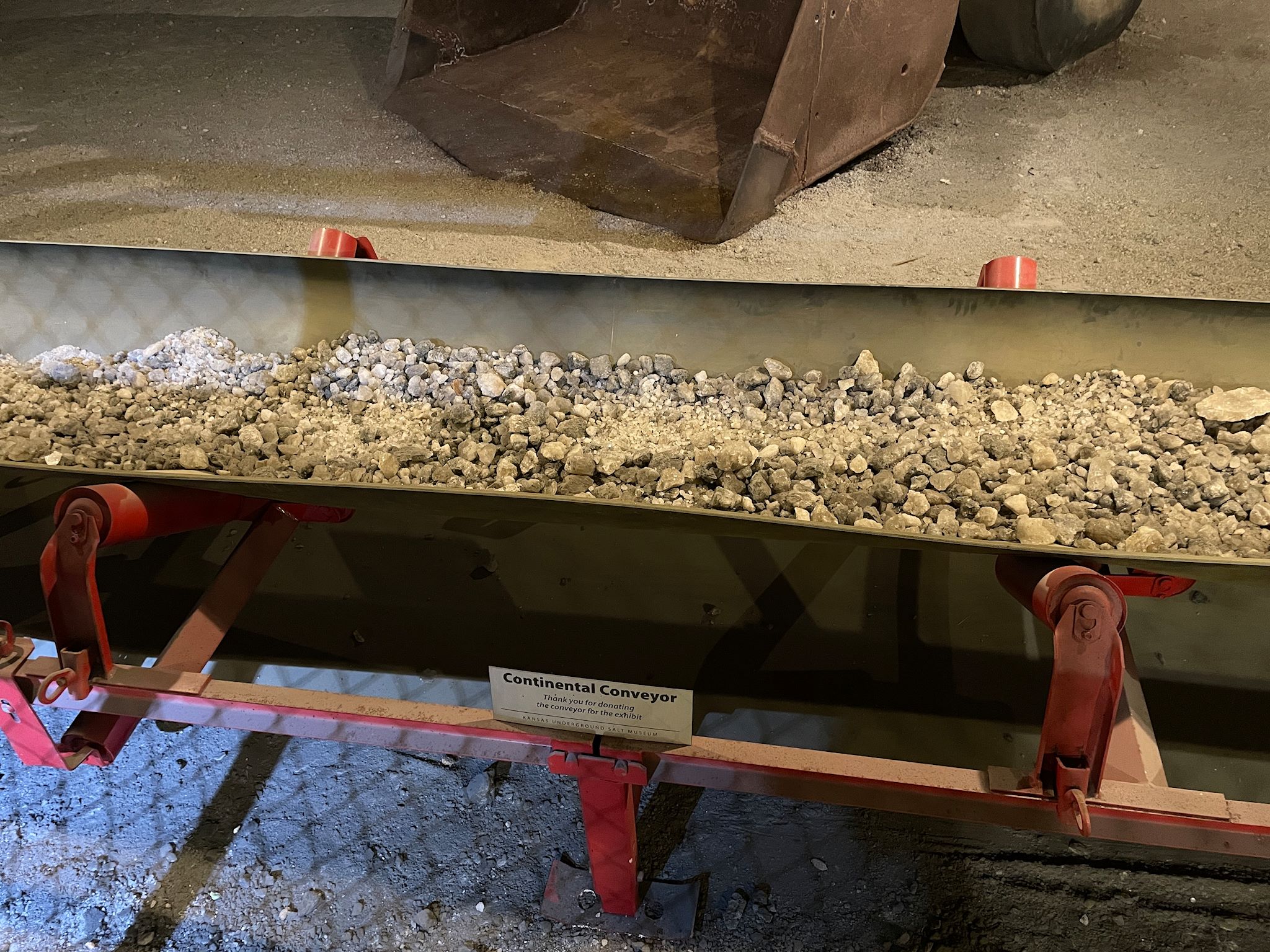
With today’s modern mining technology and tools, the Hutchinson Salt Company has 12-15 miners working at any one time. To create a room, an undercut is made into the face of the salt wall with a tool that looks like a 1-tined forklift where the single tine is an oversized chainsaw. Next, a machine that looks like a bug with multiple eyes on stalks drills holes in the salt wall in a specific pattern. An explosives expert then comes by to load the holes with explosives. When these are detonated, a space approximately 20 feet wide, 10 feet deep and 10 feet tall turns into salt rubble in less than 5 seconds. Using heavy machinery, the miners then scoop up the rubble and dump it into a conveyor that carries the rubble towards the mine shaft, which is currently 2 miles away from the mining activity. En route, the rubble goes through 2 crushers, each time making the pieces smaller. These pieces are hoisted topside with large buckets up through a shaft. The team of miners can create 5 rooms per day.
The most critical job in the mine is maintaining the conveyor. When the conveyor stops, nothing else can move either, and all mining stops…
Geological history and phyical properties of salt were presented in the Geology Gallery, including many scientific experiments that have been and continue to be done in this and other salt mines.
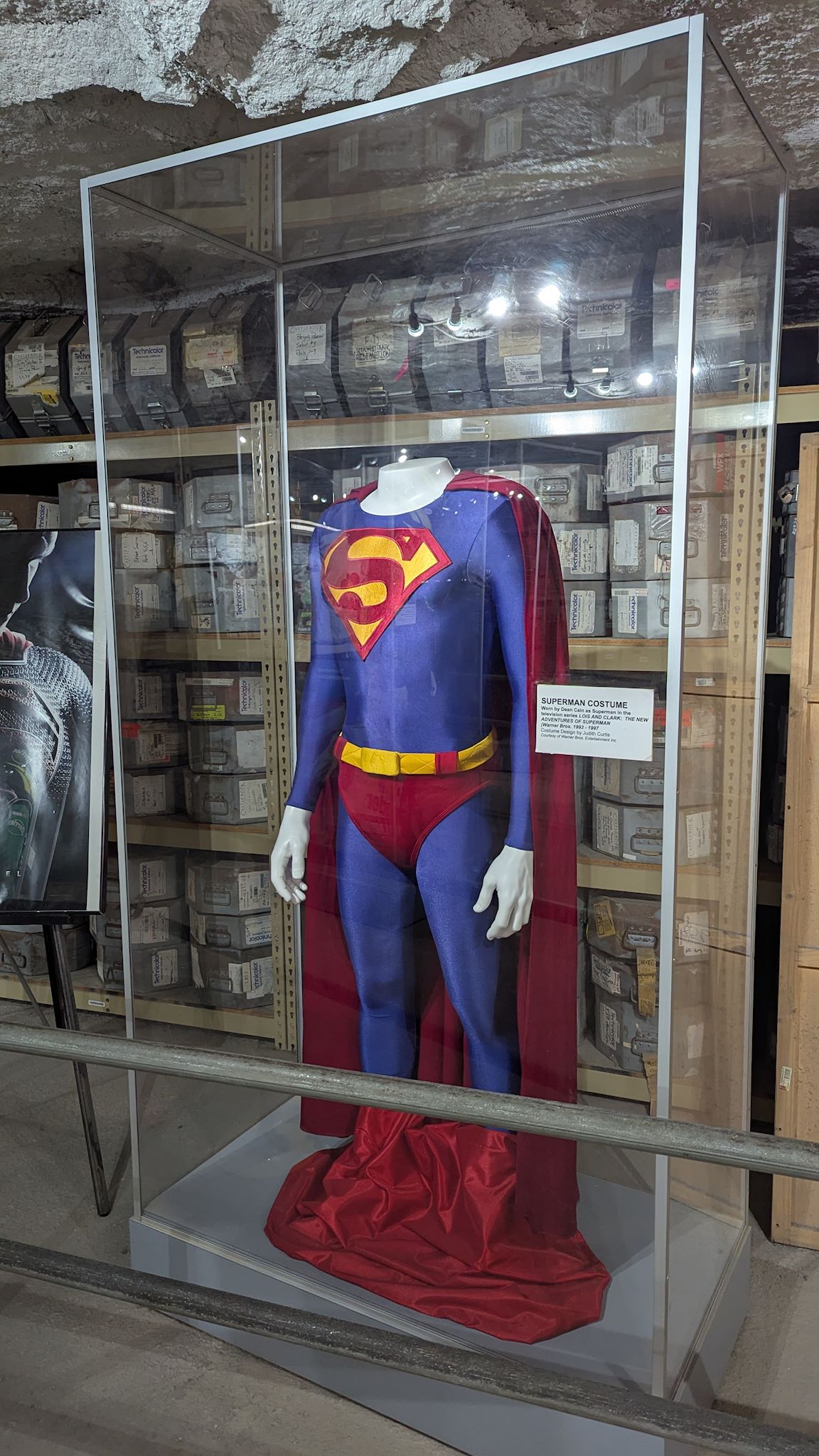
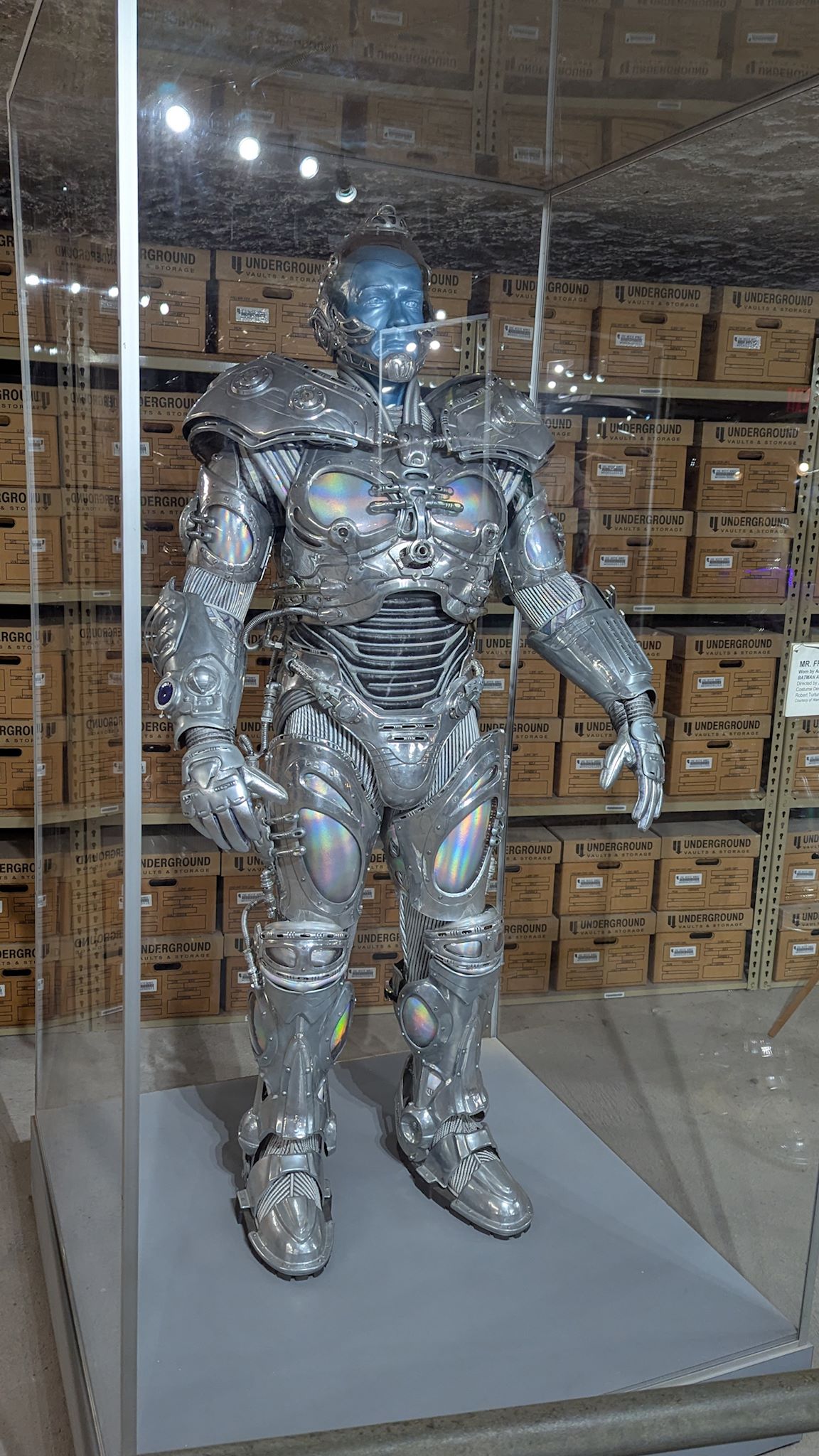
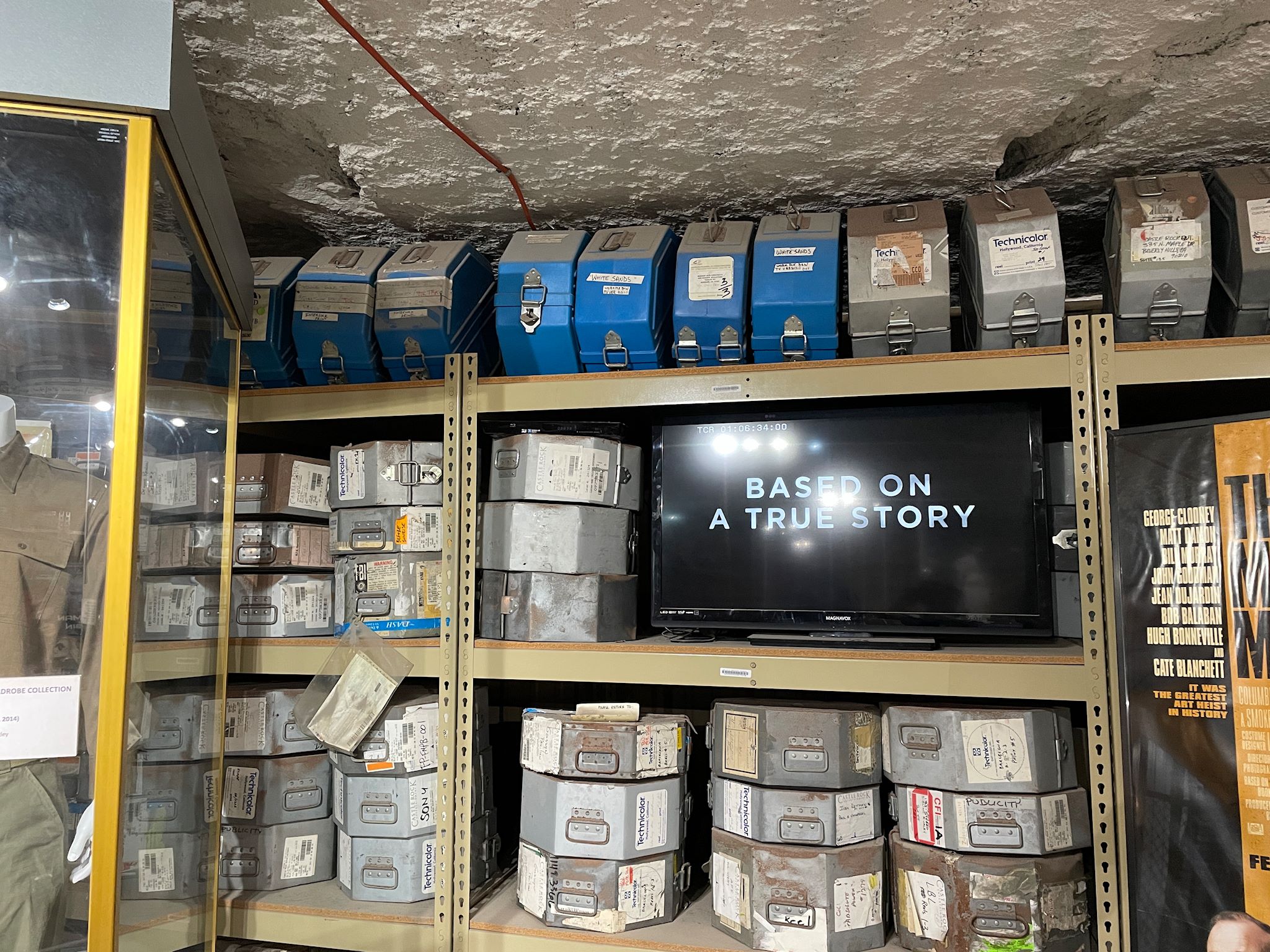
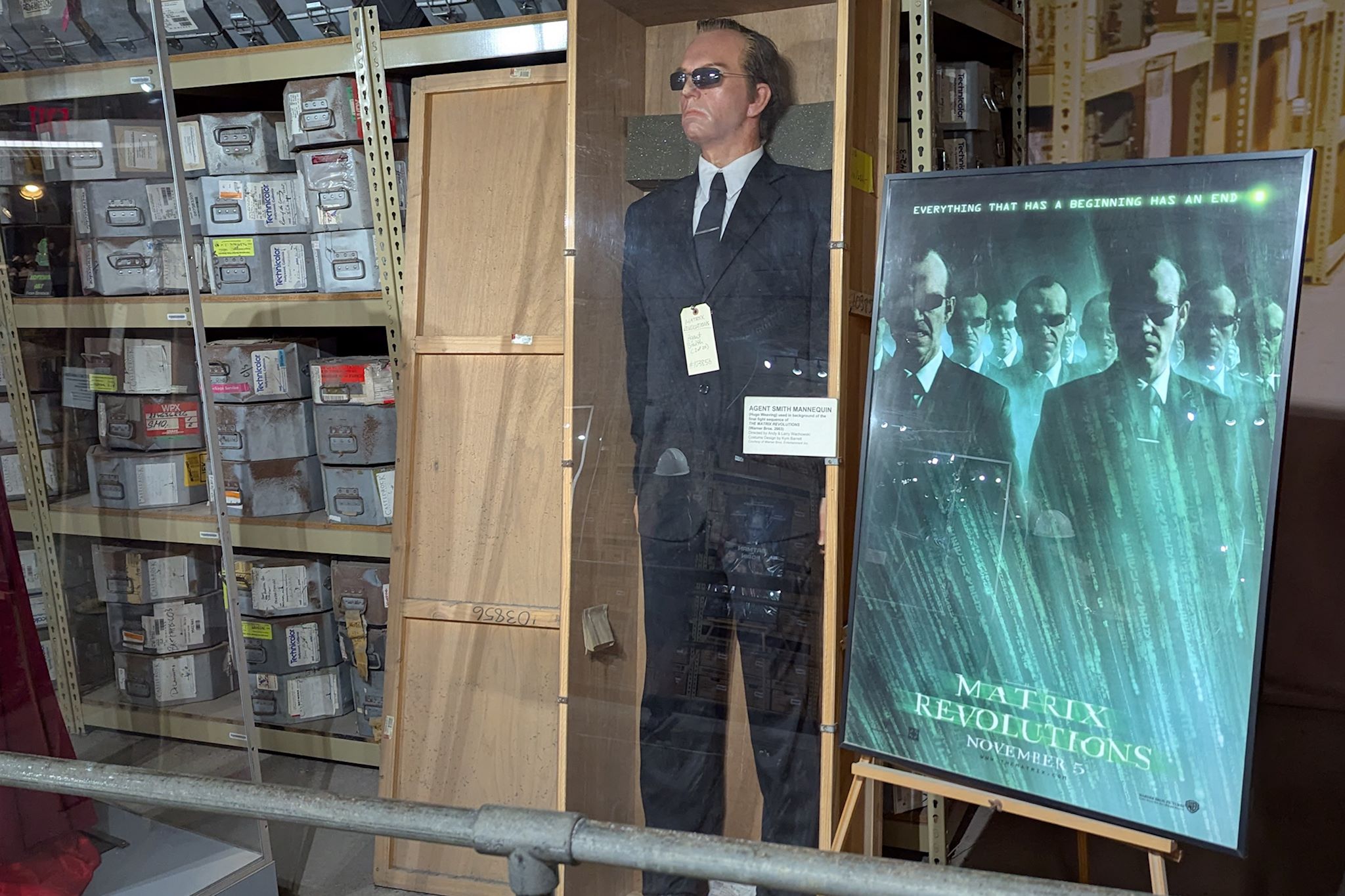
The Storage Gallery was interesting. The mine environment is quite stable and consistent – 68 degrees and 45% humidity, 24/7/365 – and it single entrance down the 650-foot shaft is easy to control and secure. For this reason, the mine leases some of its previously mined space to a company called Underground Vaults & Storage, which provides a safe and secure underground storage service for sensitive, delicate, valuable and/or important items. Medical records, police records, original Hollywood movie reels, original costumes used in movies, and many other valuable documents from customers all over the world are stored here.
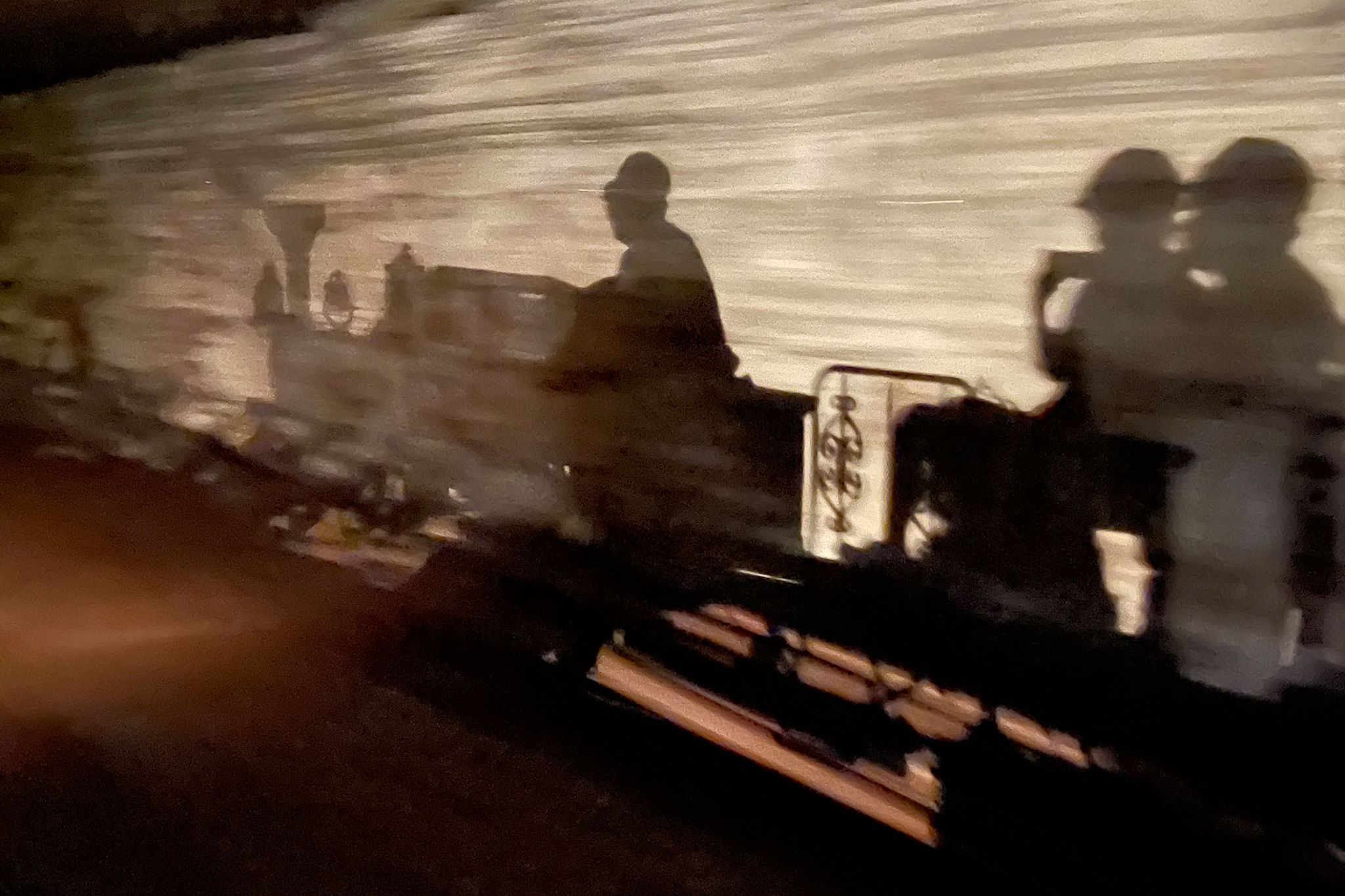
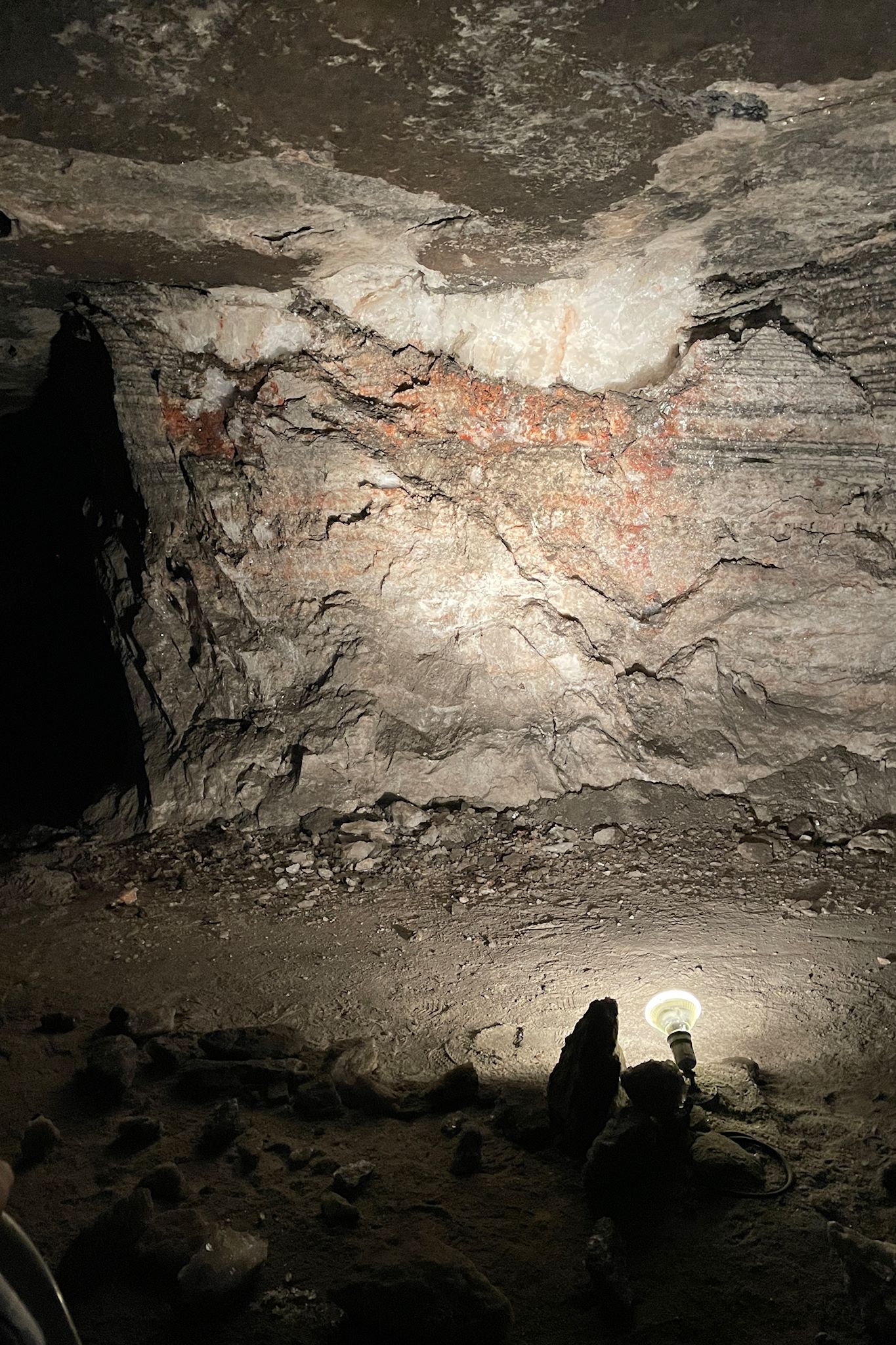
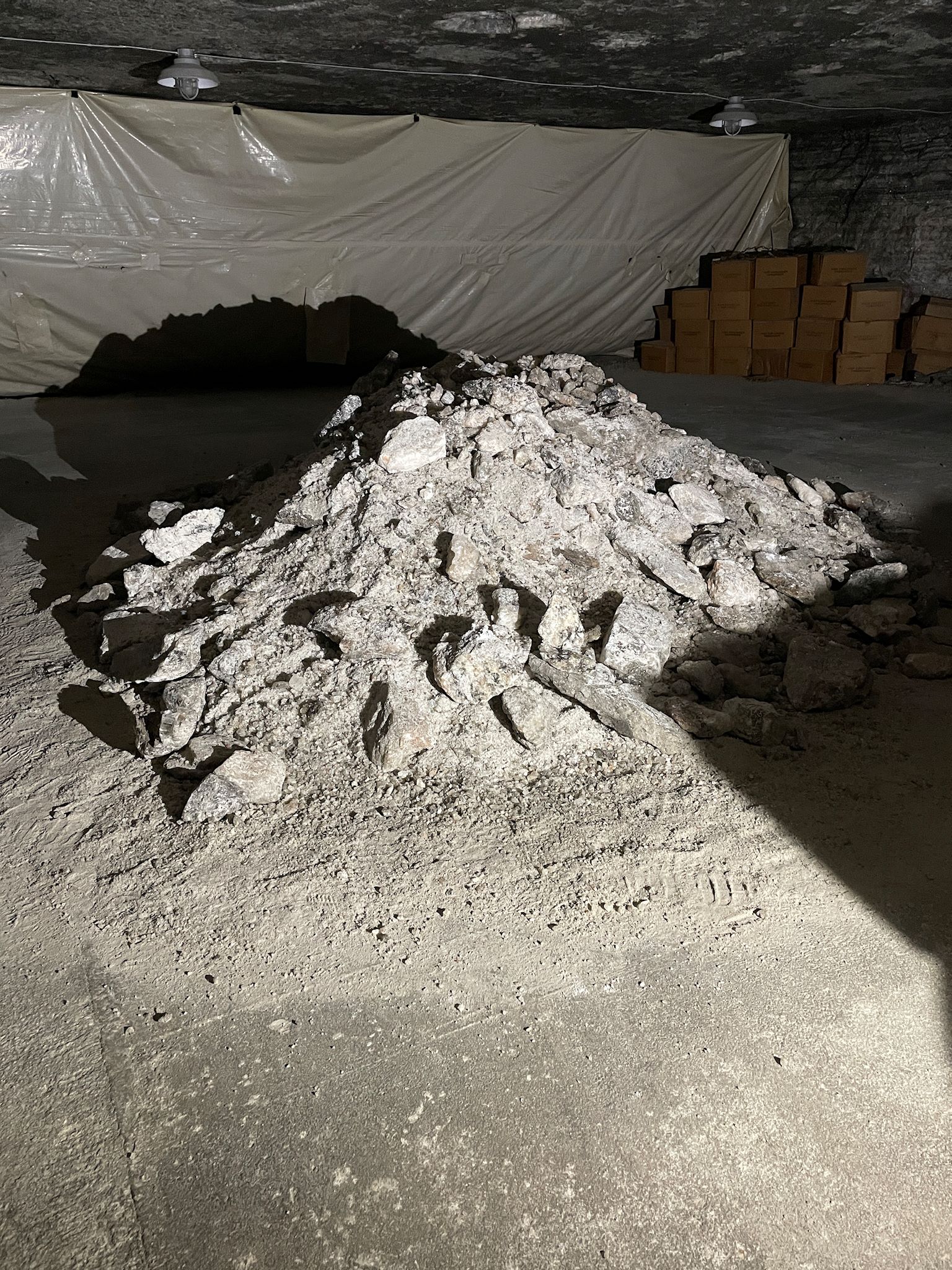
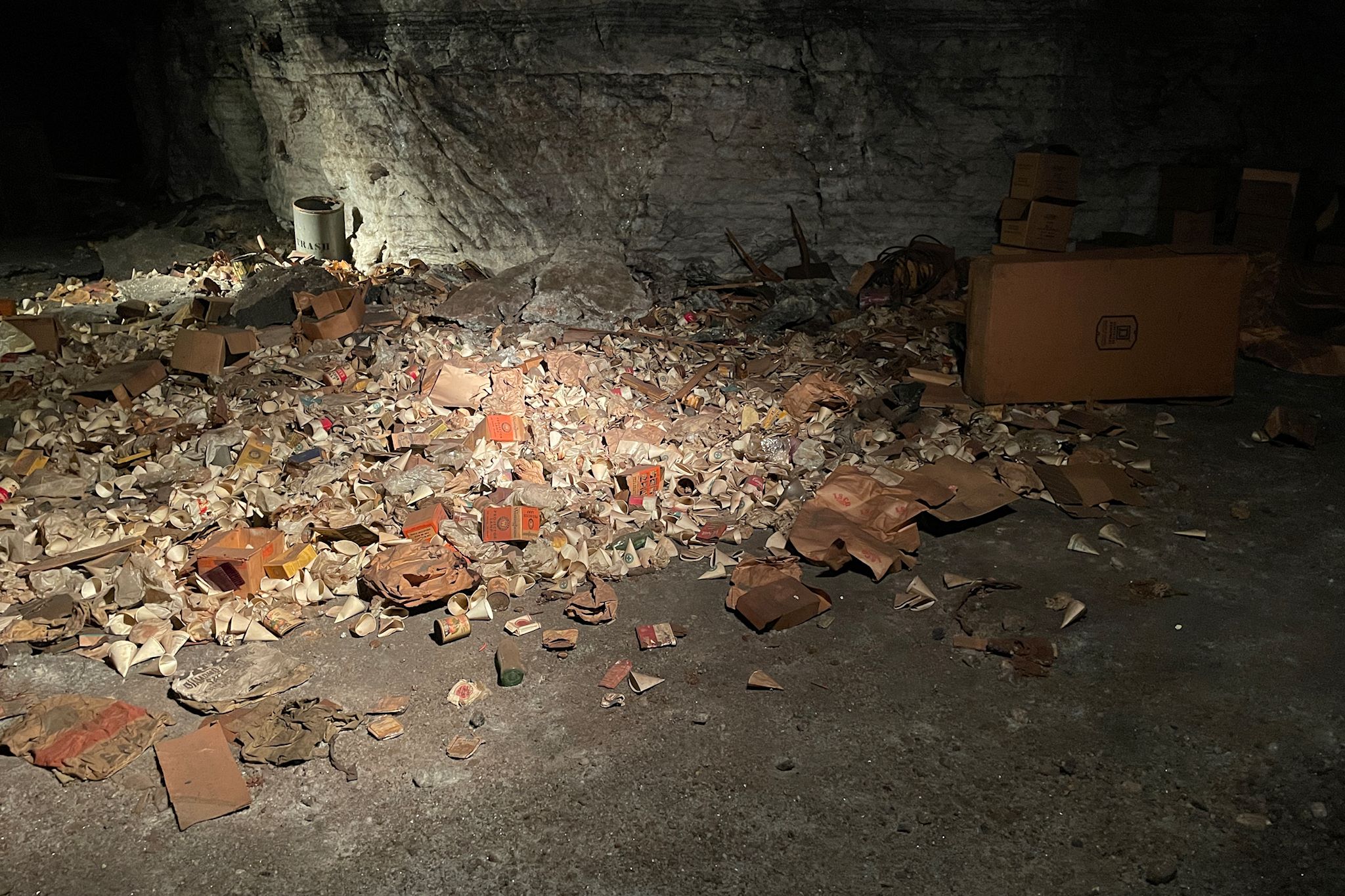
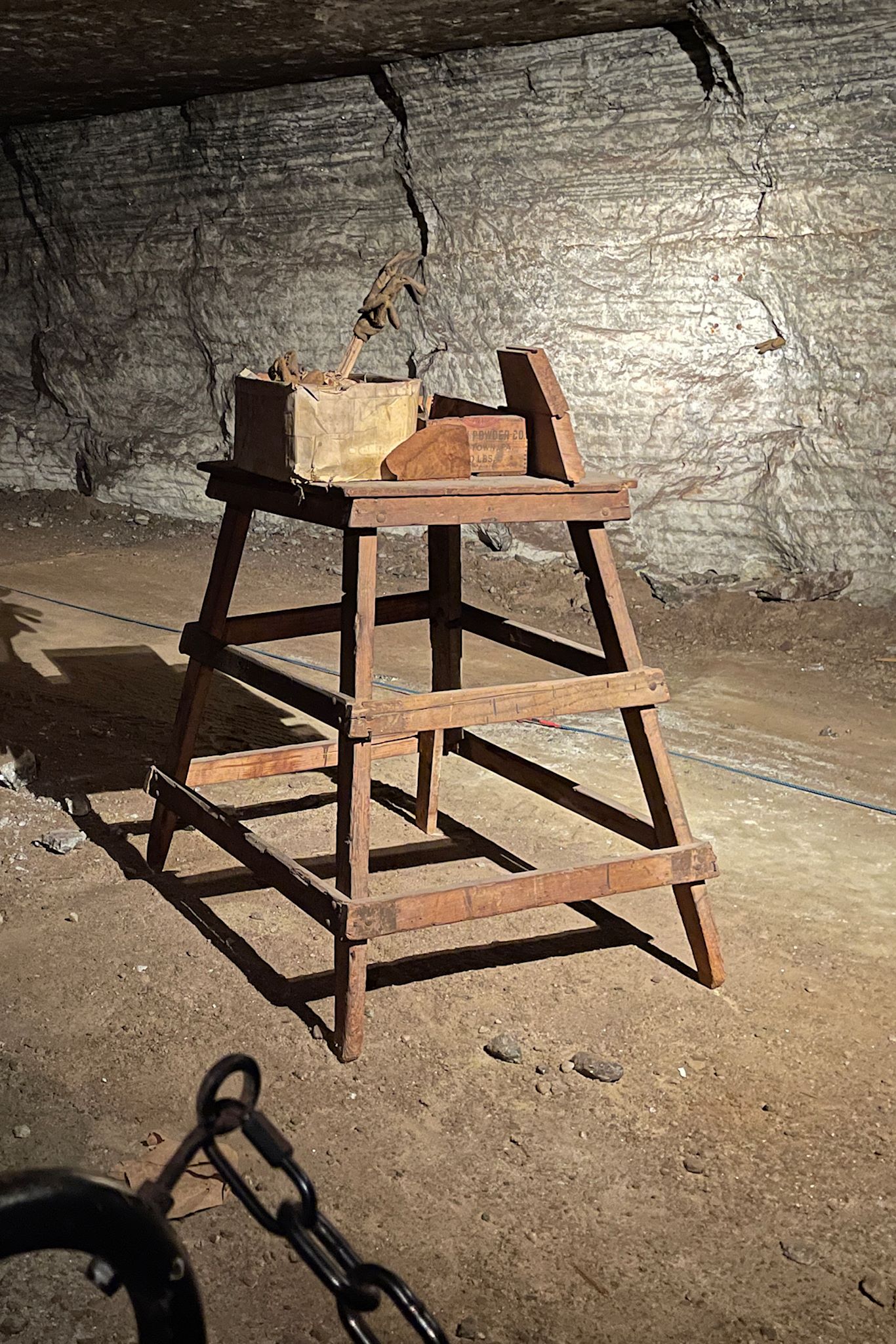
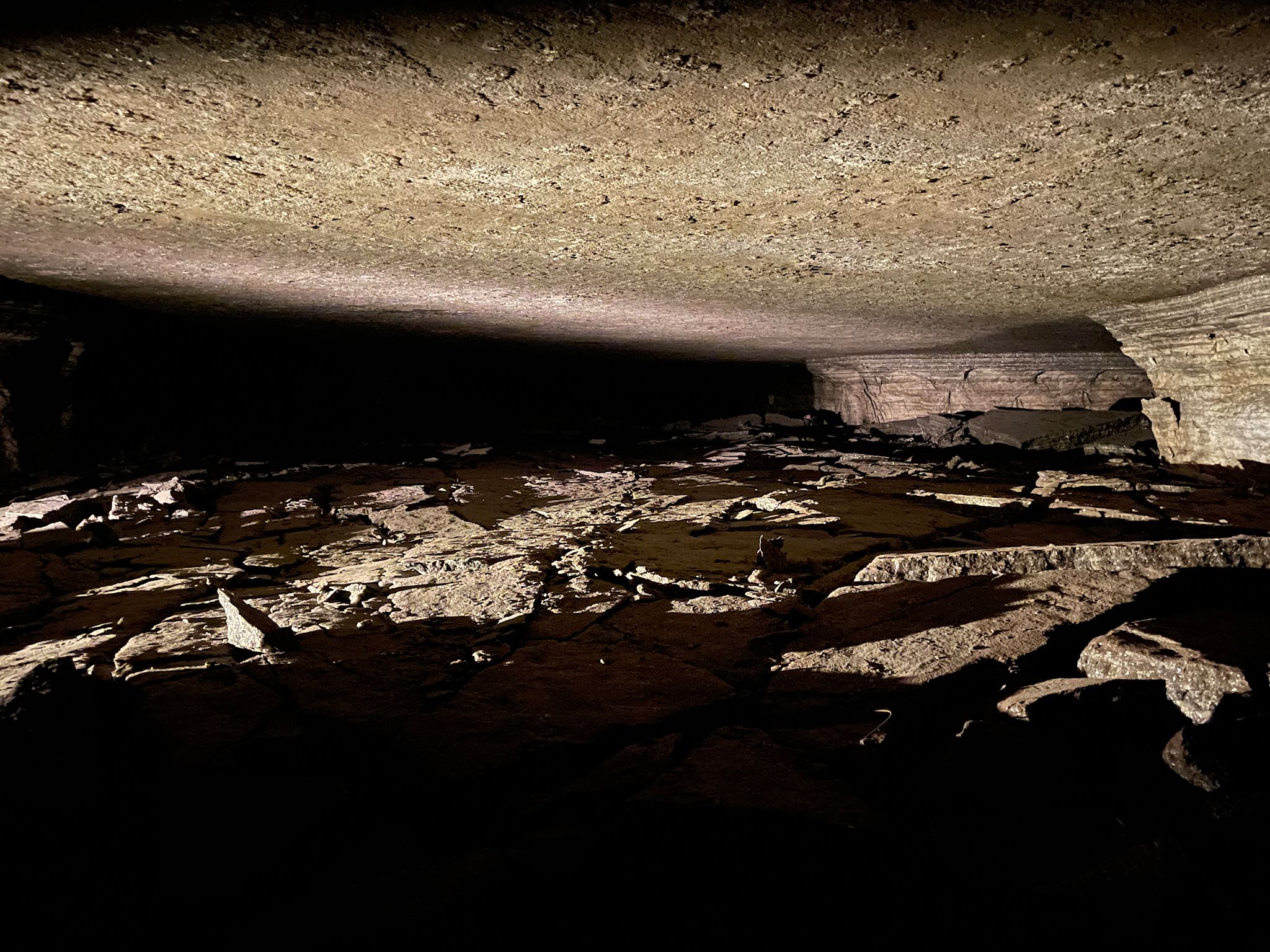
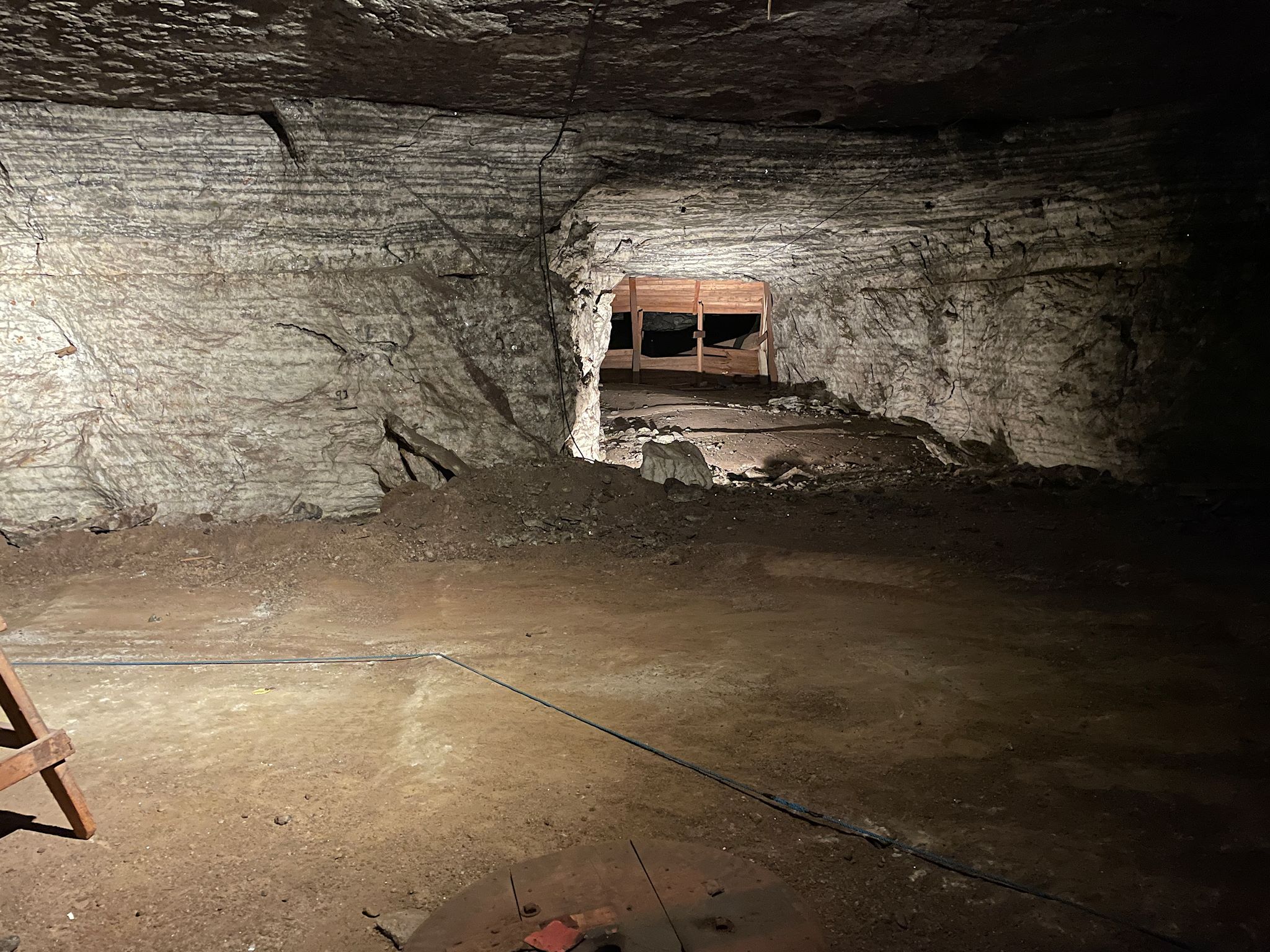
We went on 2 of the exploratory excursions, both of them with Larry as our tour guide. On these rides, we got to see sights far deeper into the mine than the museum. To control air circulation through the tunnels, some halls need to be opened, while others need to be closed off. We saw the heavy curtains used to direct air to appropriate sections of the mine. Everything going into and out of the mine has to travel through the elevator shaft, and removing trash was not high priority since there was so much storage space in the miles and miles of mine chambers. Remnants of ‘break rooms’ are located throughout the mine, and we saw a couple of these. Quite fascinating were the discarded 2-thumbed gloves. Supplies of many materials, including leather, were at a premium during WWII, so work gloves for the mine were made with 2 thumbs so the gloves could be used until the ‘palms’ on both sides of the gloves wore through.
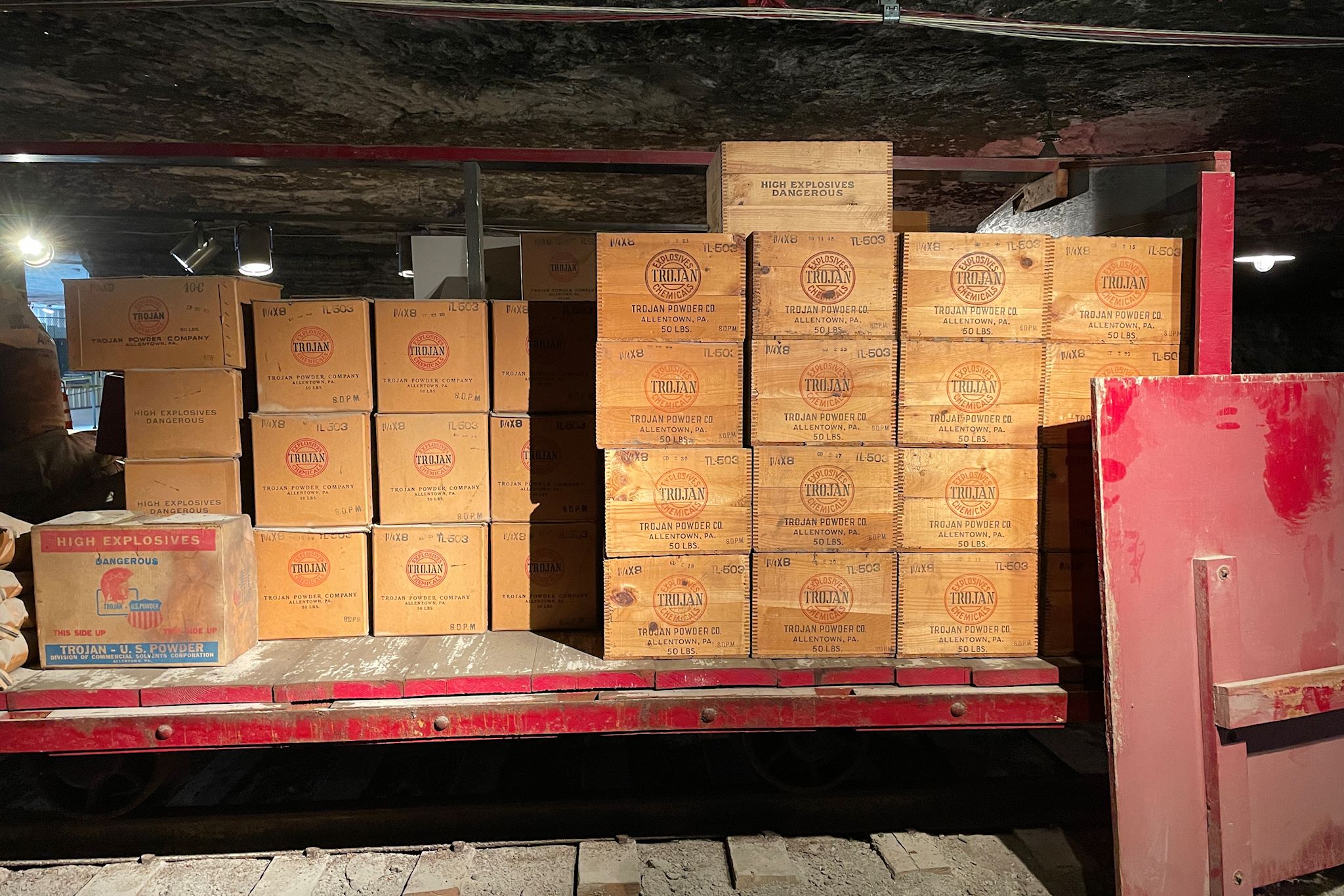
Other notable sights in the tunnels included one room where the ceiling had fallen (a bit of a claustrophobia trigger, although they monitor this carefully – the fall was anticipated well in advance and precautions were taken); pretty variations in the salt walls where water or other liquids had seeped through crevices millions of years ago, dissolving and re-crystallizing the salt; and explosive storage areas where everything was packed in (non-conductive) wood or cardboard boxes and moved on wooden cars to minimize the risk of sparks from metal-to-metal contact.
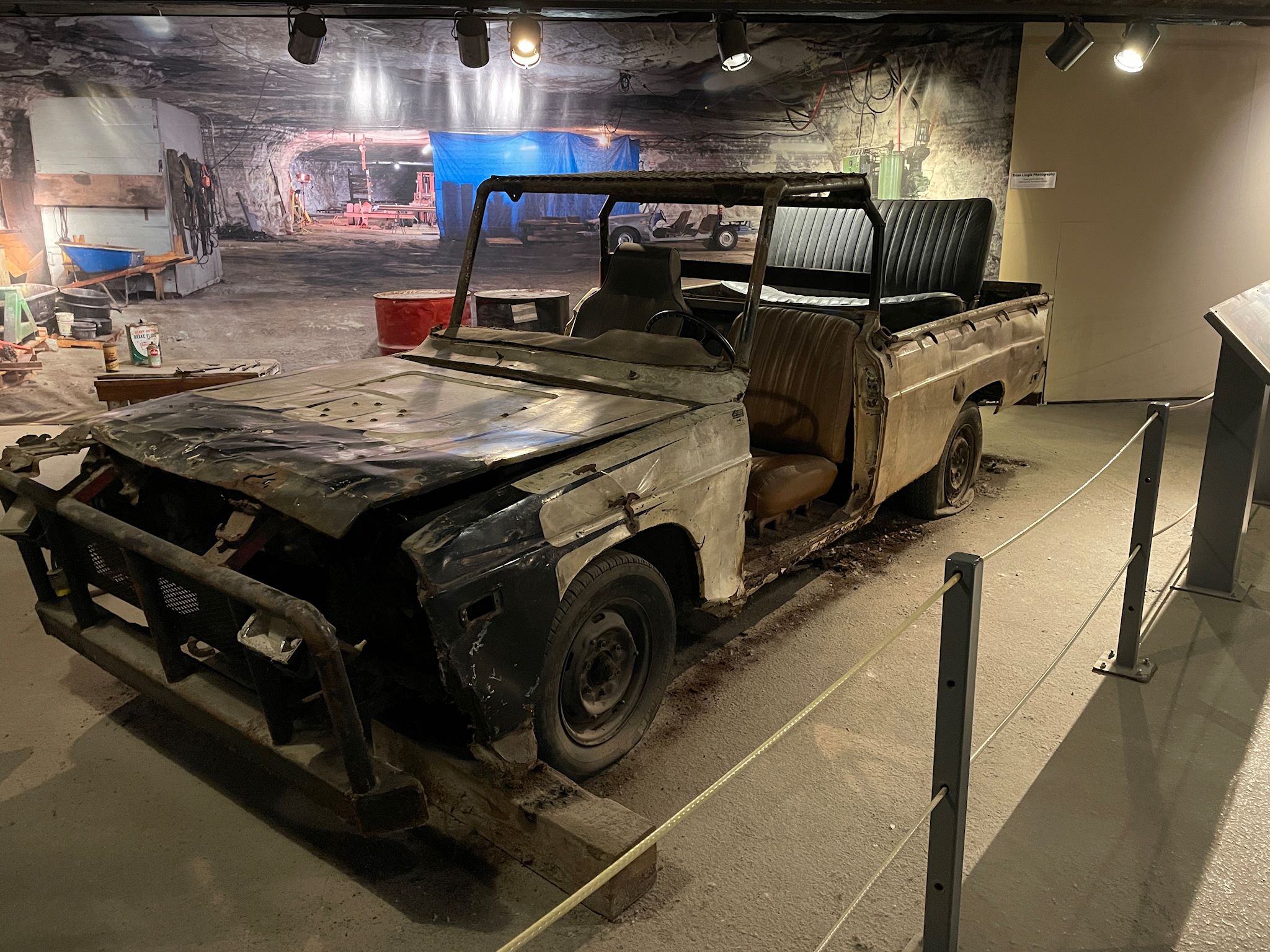
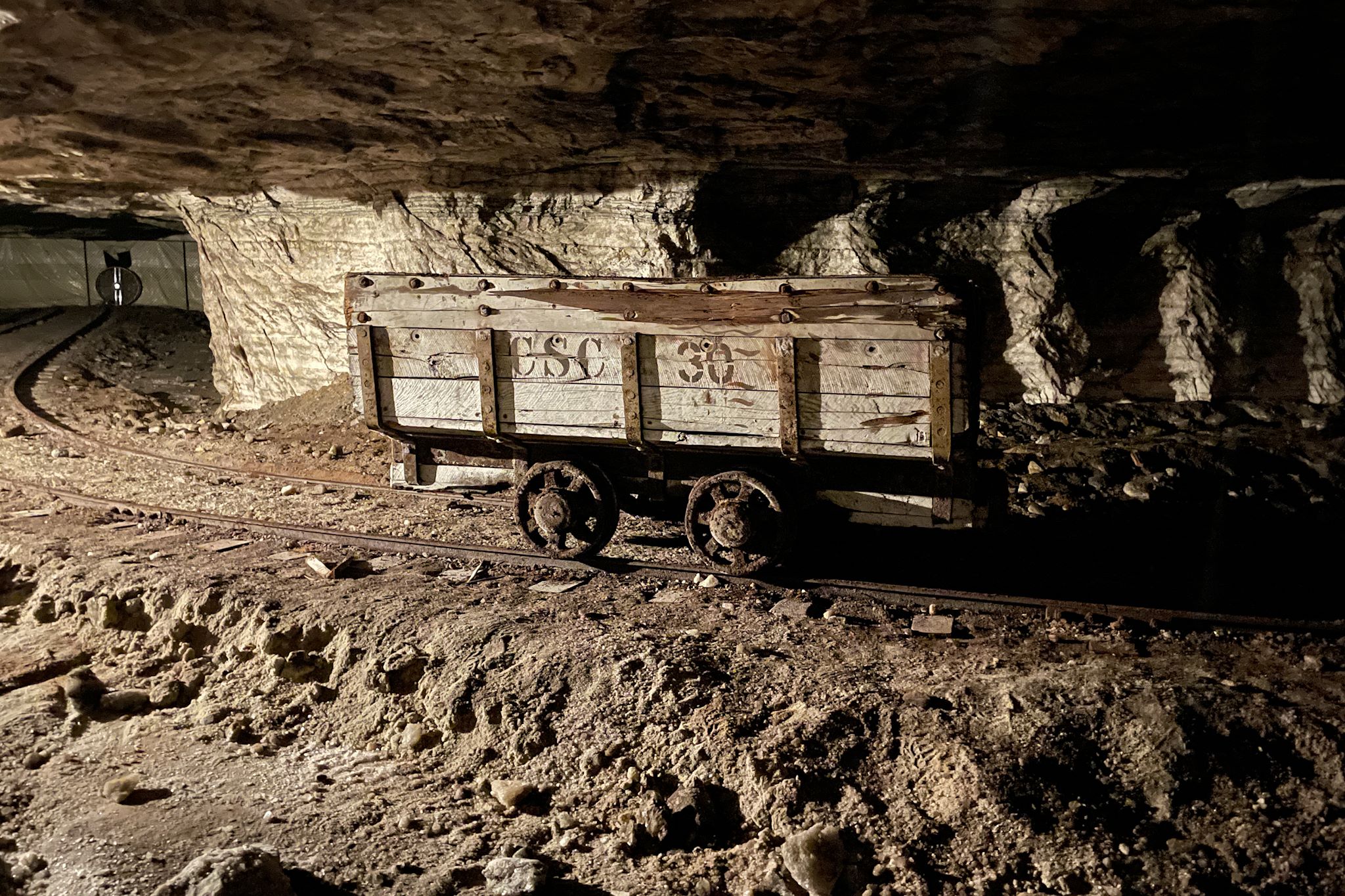
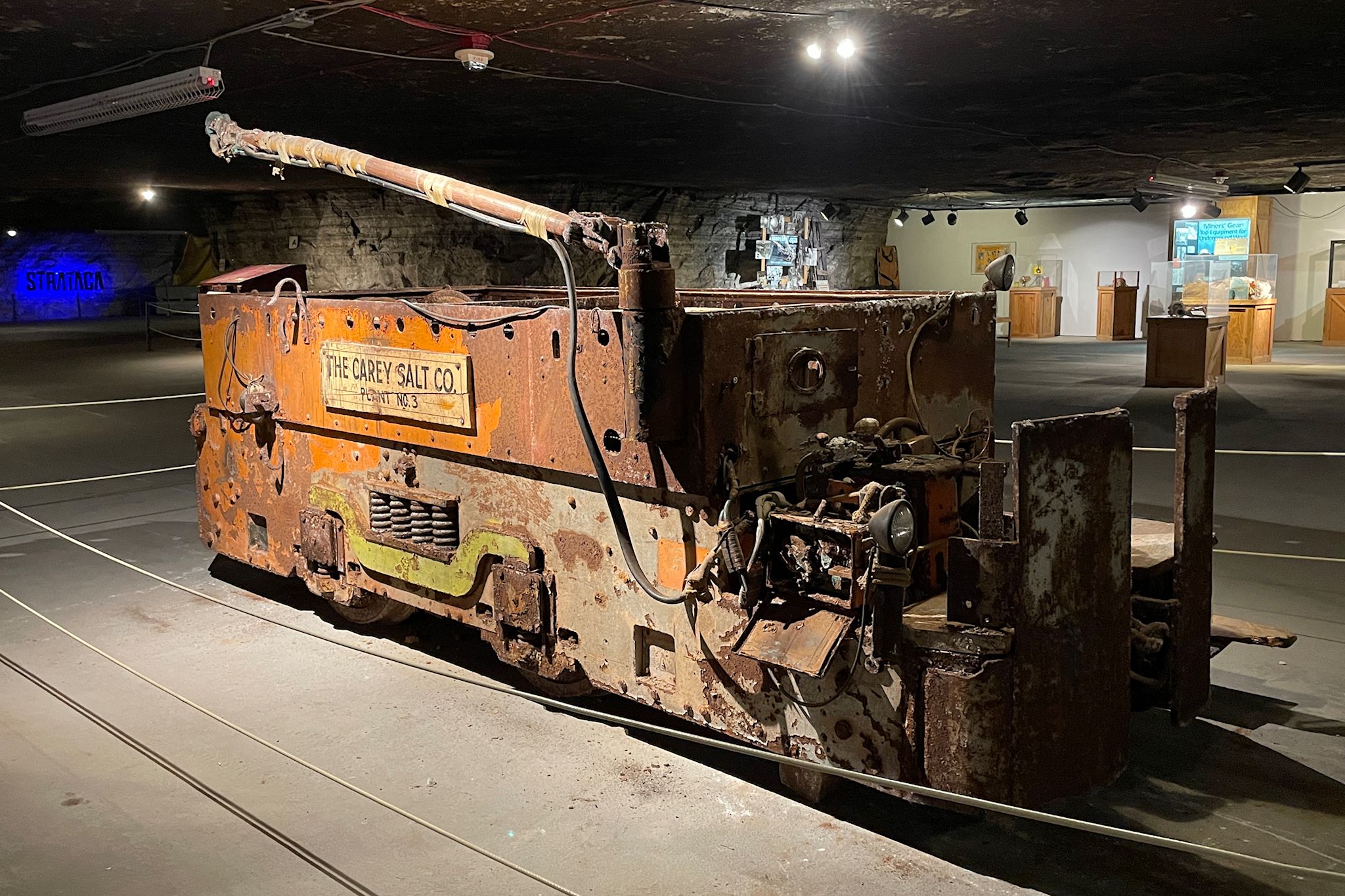
Also old cars and tractors… How’d they get into the mine? (And why?) They were disassembled topside into sections that would fit into the lift, and only essential parts were brought down the small elevator and reassembled underground. These vehicles were used to shuttle miners to the face (the current working surface) of the mine – it’s now 2 miles from the shaft – and for the maintenance people to get around and keep the mine operational. At the end of their useable life, they, too, are abandoned in the mine with its excess of empty space. And some become museum exhibits.
We’d never thought about salt mines before, so it was a fun adventure and a great opportunity to learn.
For anyone who’s interested, more Strataca pix…
You guys are very brave to go down there. I’m a bit claustrophobic as well, and would pass for such a challenge. Just knowing that there’s only one entrance/exit, and no back-up would drive me crazy. Glad to hear that you enjoyed it.
Hi Bram! Thanks for stopping by. Ya, I had to force myself to not think about it. If something blocked the one entrance/exit, at least there were drinks for sale in the underground gift shop….