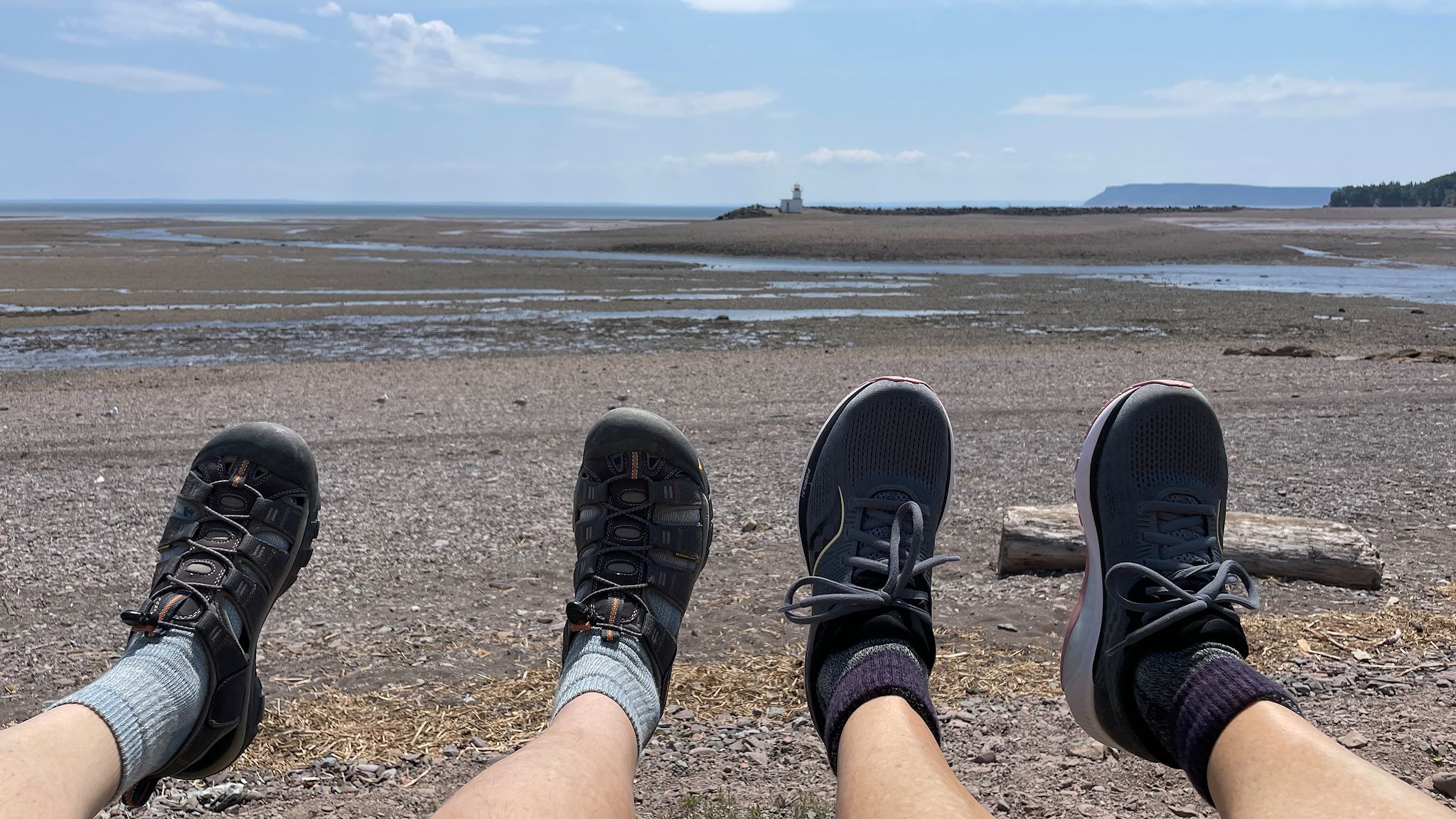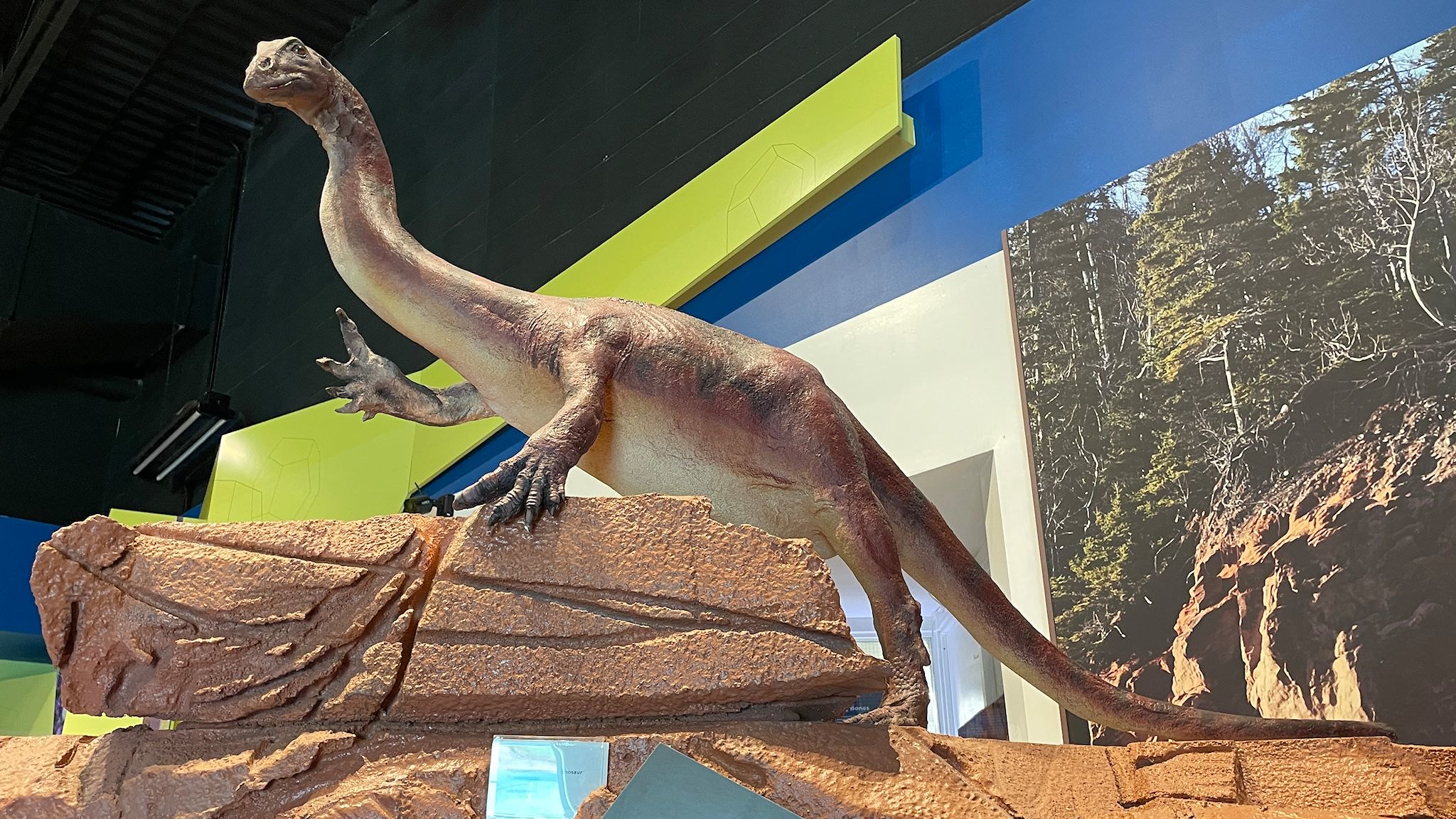
Although we were still on the shore of the Minas Basin, our first interpretive centre/museum stop heading north was all about… dinosaurs? Ok, yes – and the tides that help to uncover their fossils. The Fundy Geological Museum in Parrsboro has close ties to the Joggins Fossil Cliffs of Chinecto Bay (both are UNESCO World Heritage Centres), so let’s just start there.
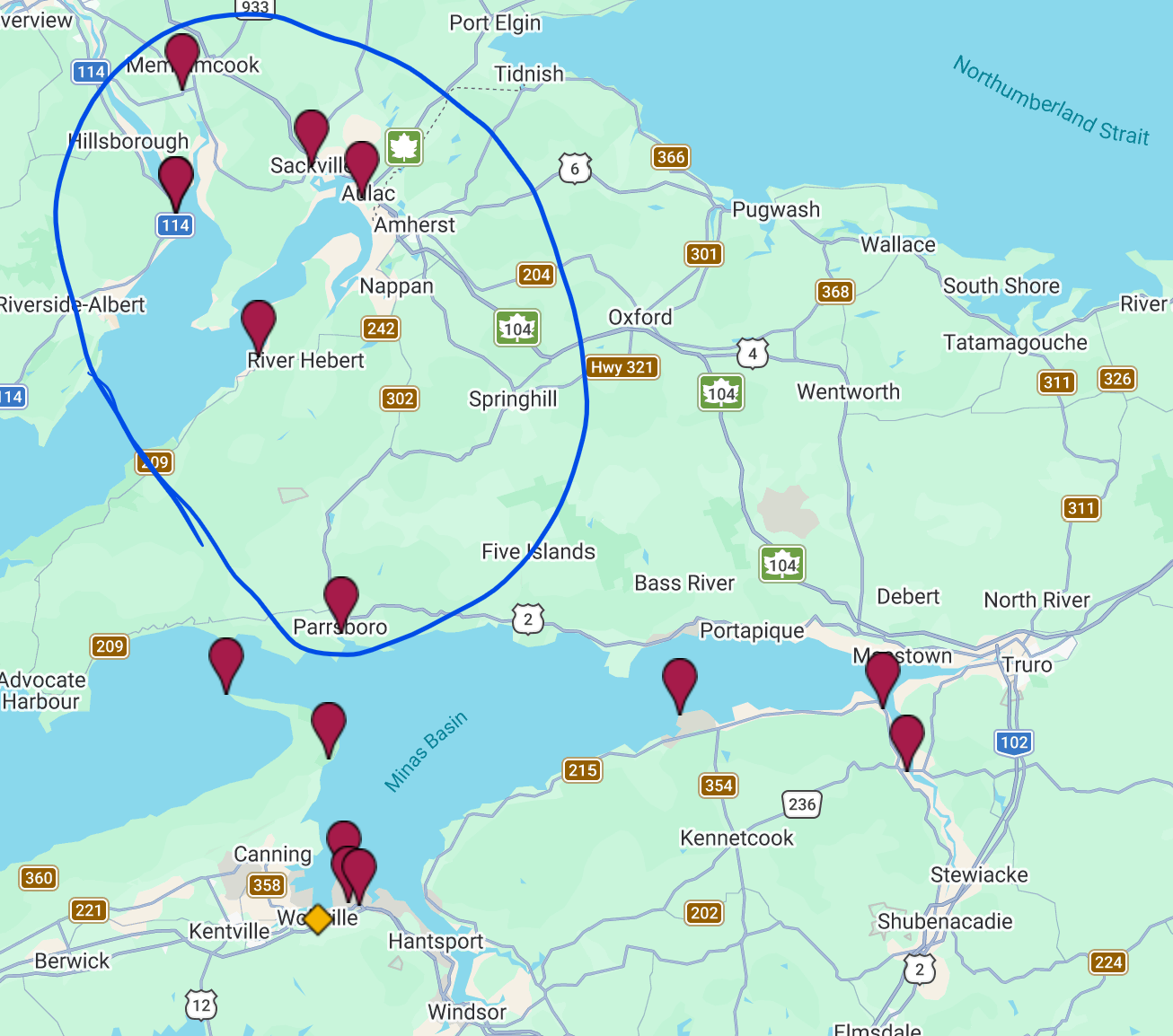
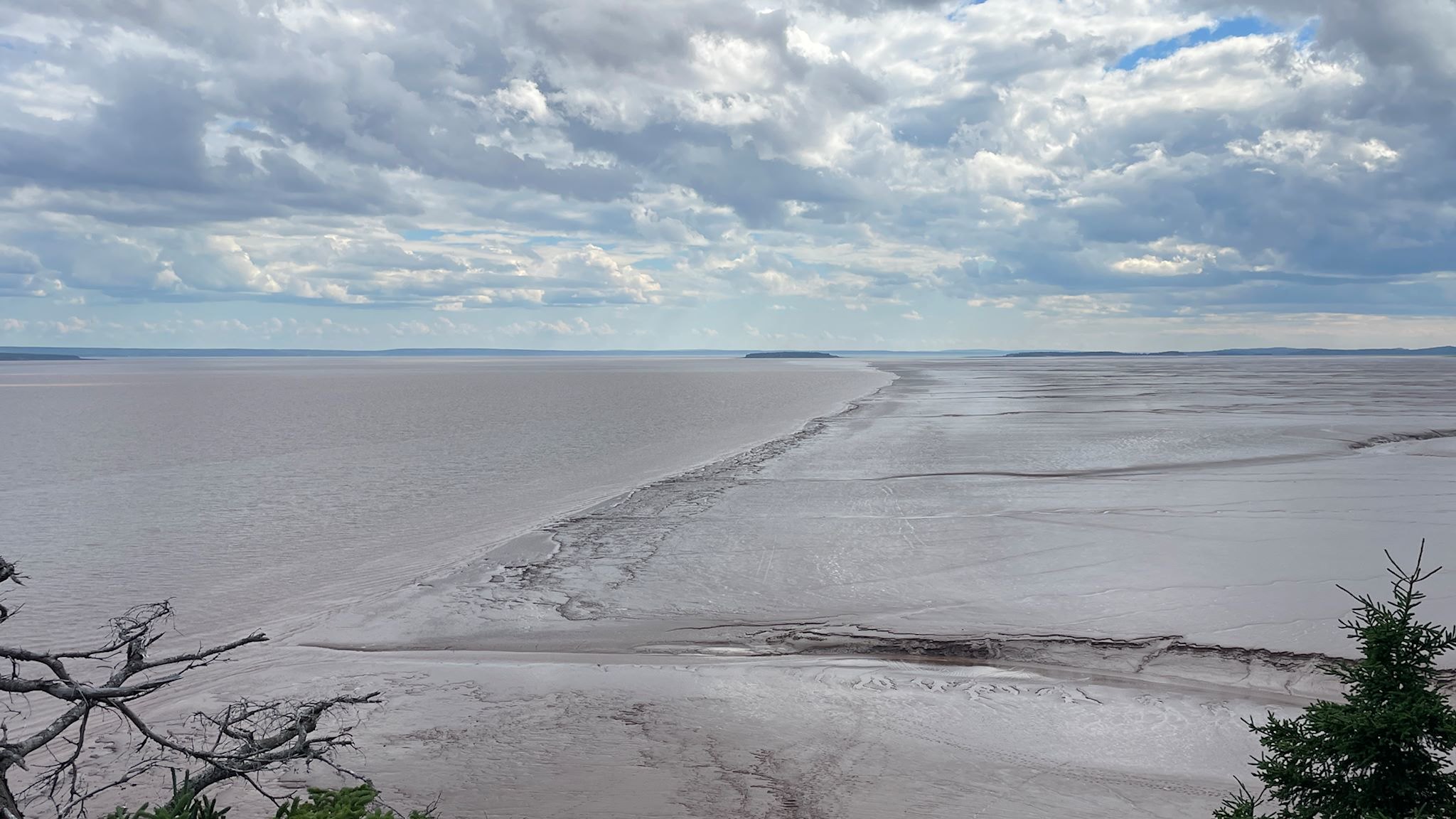
When we got to Chignecto Bay and first saw the exposed ocean floor at low tide, we immediately noticed some significant differences in comparison to relatively sturdy red sand under the sandstone cliffs we’d seen in the Minas Basin. The color of the cliffs, mud flats and sea water was muted, grey to chocolate brown, which we learned was related to a relatively high silt content from the shale and siltstone composition of the cliffs. The fine-grained silt also creates deep, soft mud that in many areas can turn walks at low tide into boot-sucking (mis)adventures. However, the eroding cliffs in both areas result in unique conditions for exposing fossils.
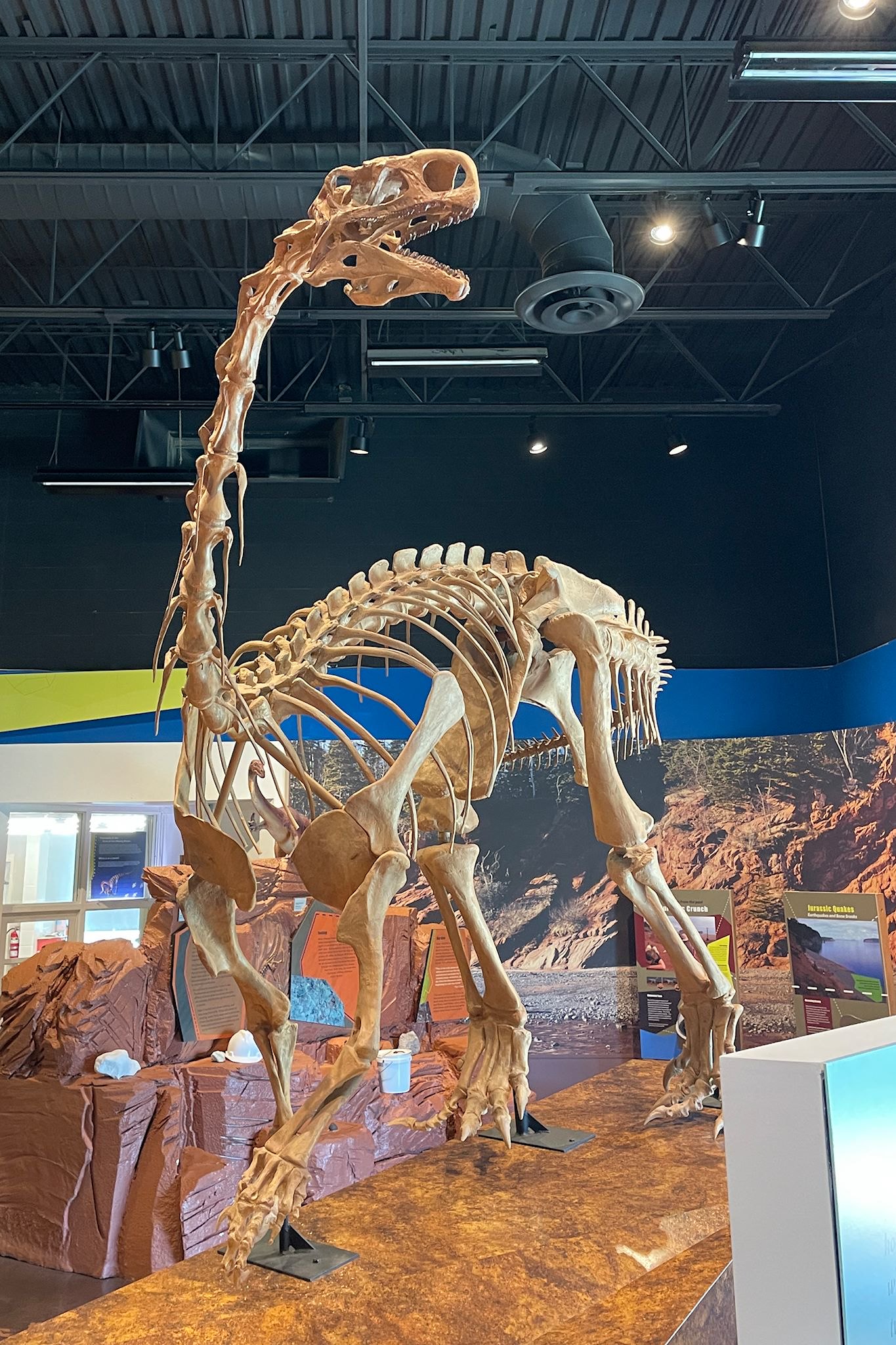
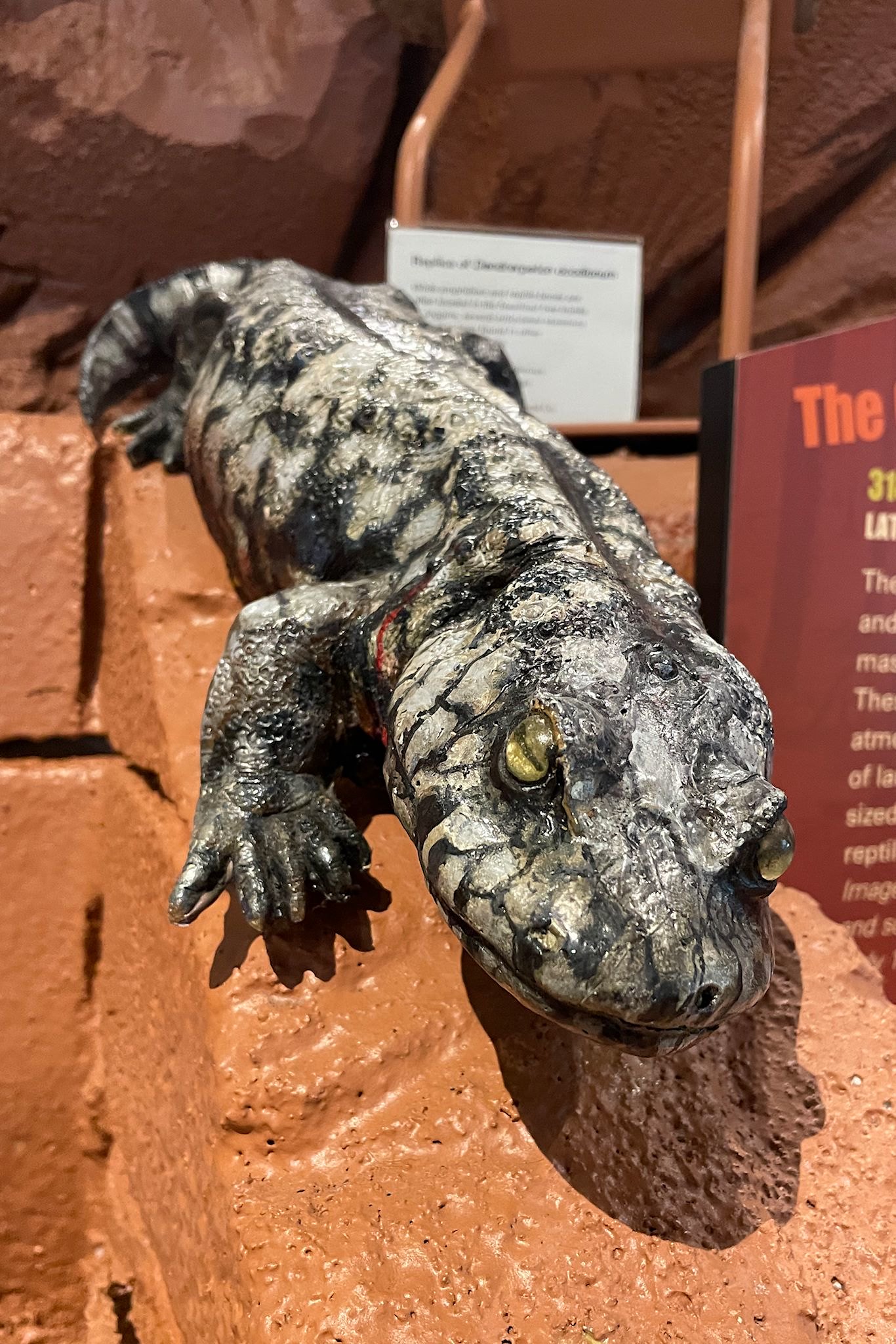
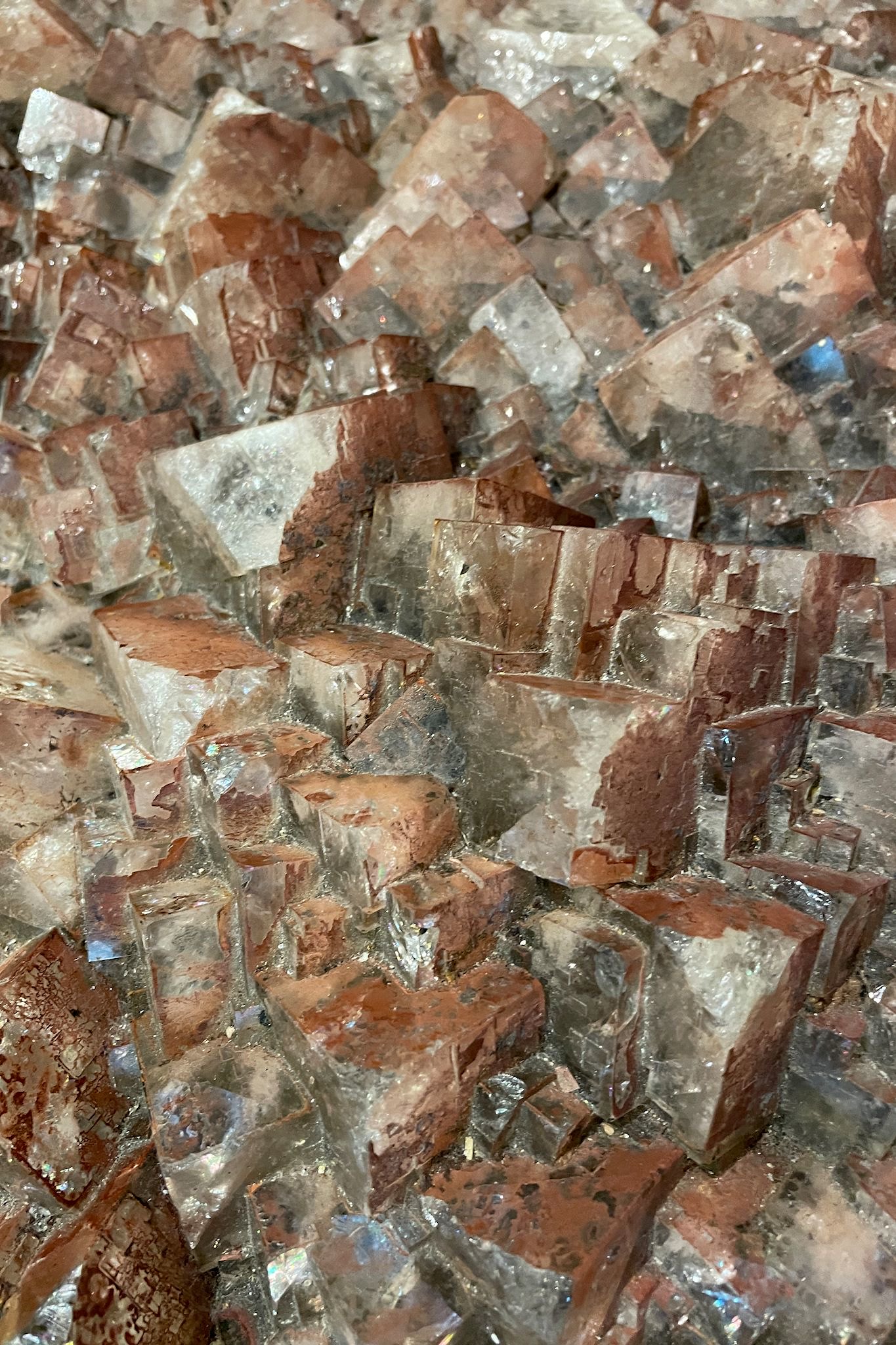
Back to the dinosaurs… Our first stop was the Fundy Geological Museum, aka the Parrsboro Dinosaur Museum. As we described in scary detail in our Gros Morne post, 300-200 million years ago, the supercontinent called Pangea began to separate. At that time, Parrsboro was connected to Morocco in Africa. The separation caused the area around Parrsboro to sink and be covered by sediment, eventually filling with deep mud perfect for preserving animal tracks, dinosaur bones and footprints, trees, insects, and other fossils. The powerful tides in this area today mean that the relatively soft cliffs, pushed up once again to the surface, are eroded a bit with each cycle, constantly exposing new fossils to be found.
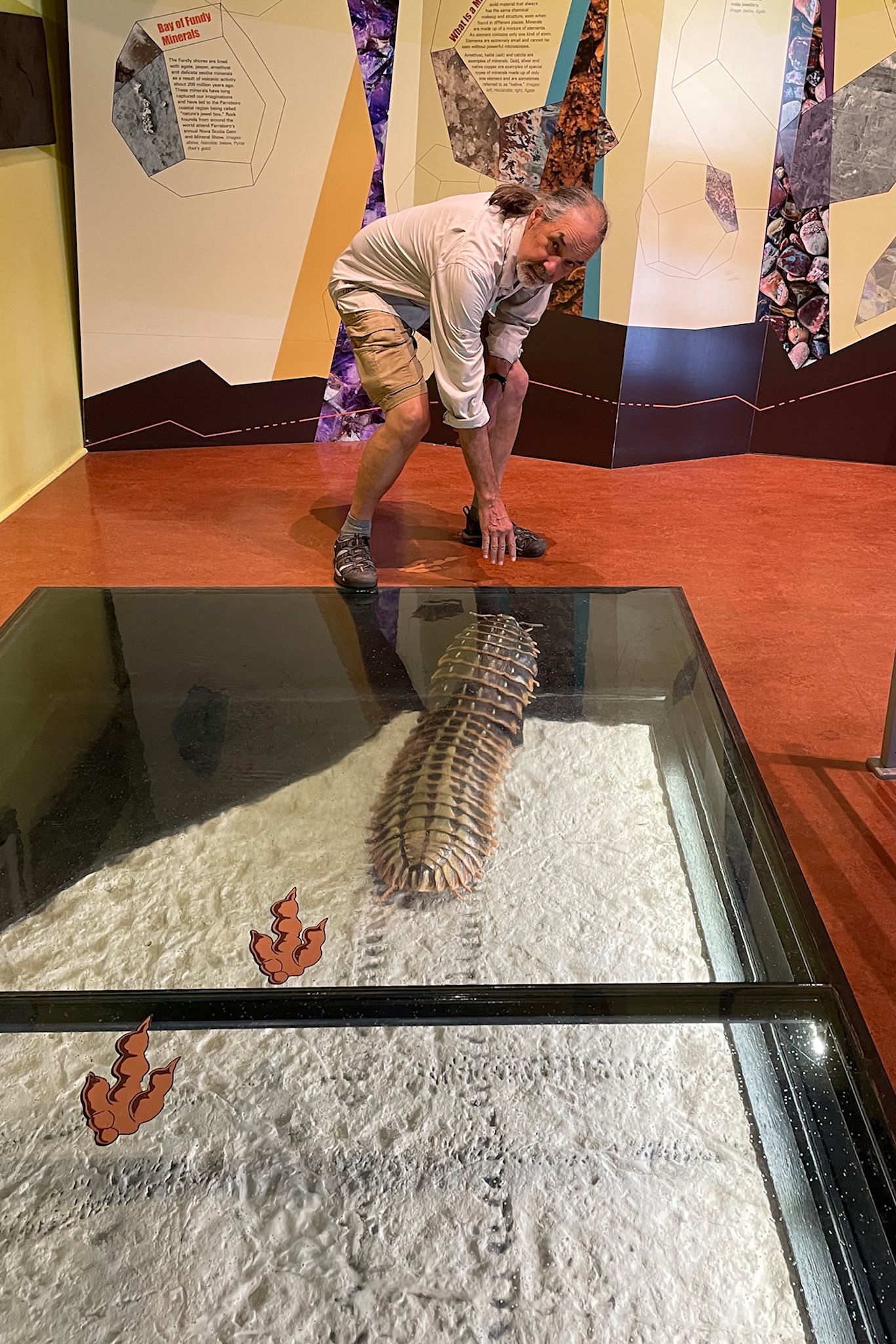
In addition to 200-million-year-old fossils, minerals and replica dinosaurs, the Fundy Geological Museum features the Fossil Research Laboratory which is staffed by paleontologists actively studying the fossils. One of the more attention-grabbing exhibits was the reproduction of the giant centipede. Fossils of tracks that look like they could have been made by an ATV turn out to have been left by a centipede-like nightmare beast the size of a large dog!
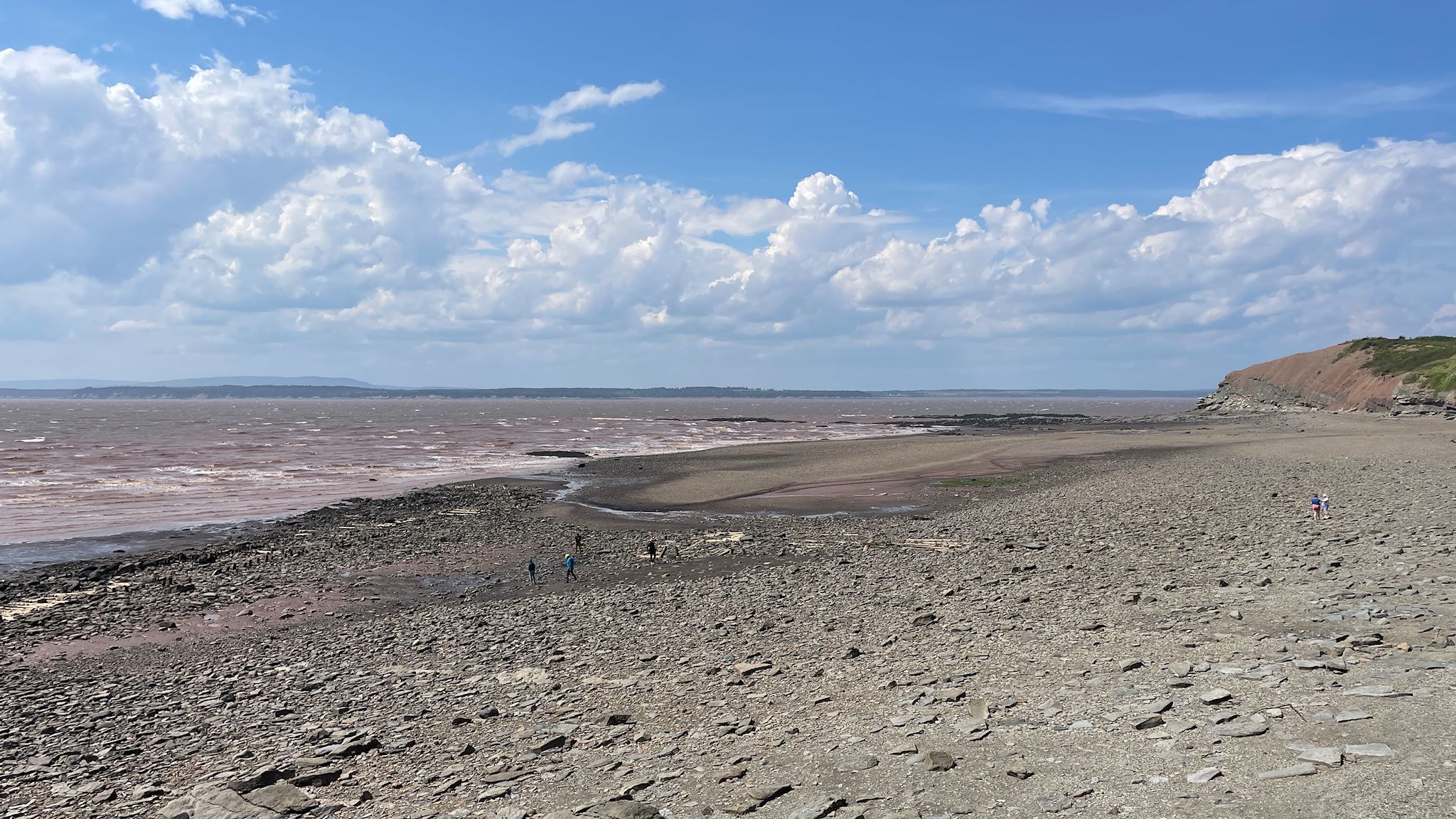
When our friend Liz heard our travel plans, she told me that one of her favorite places in Nova Scotia was the Joggins Fossil Cliffs. E-pushpin! While the Fundy Geological Museum provided the inside view, the Joggins Centre laid additional groundwork then provided the outside view. Thank you Liz! Awesome place!
Inside, Joggins explained how fossils were exceptionally well preserved by the deep mud in the area 200 million years ago. And a groundbreaking finding was discovered here – reptiles. This is the earliest proof of an evolutionary milestone where animals adapted to live and reproduce exclusively on dry land.
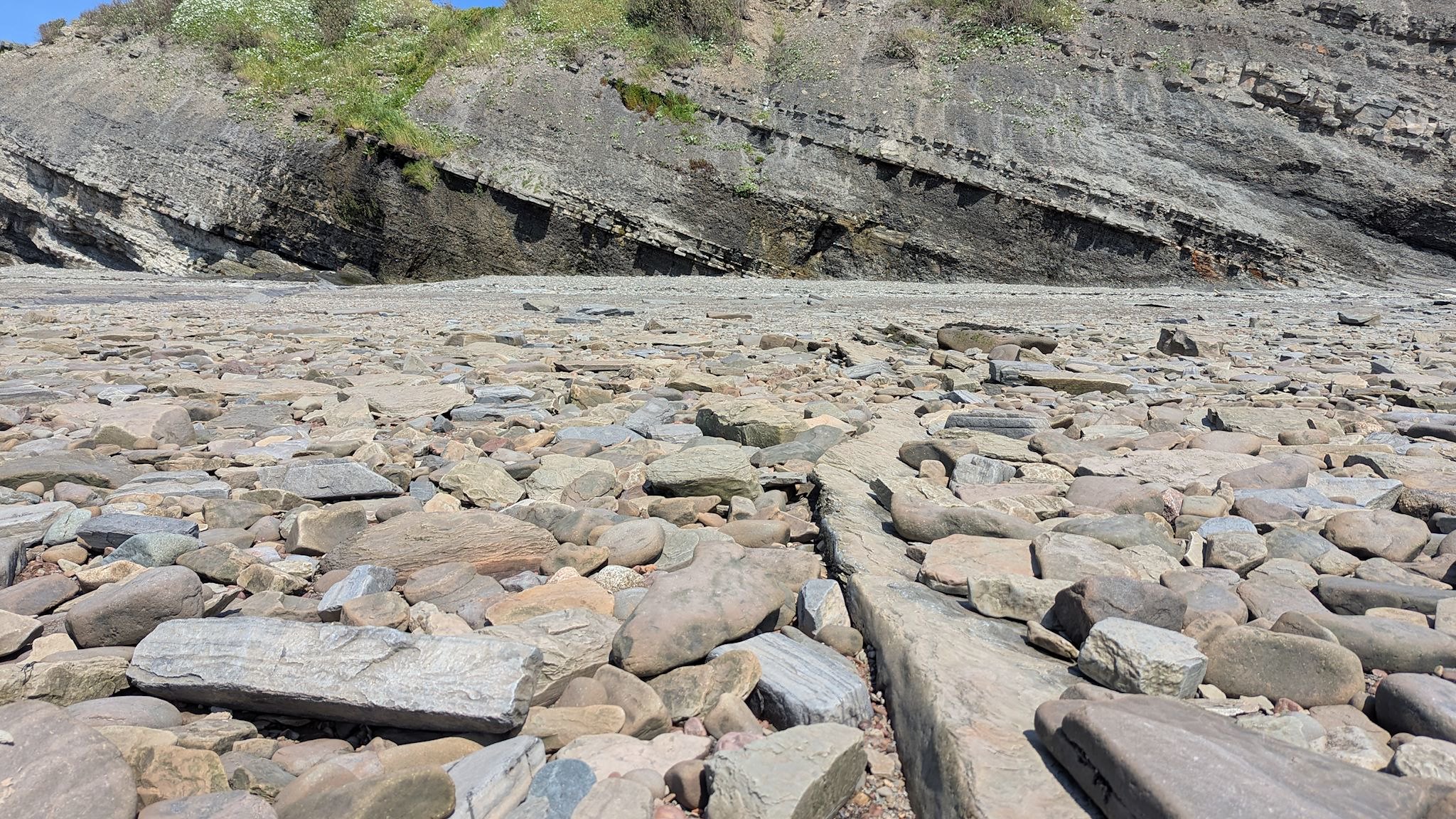
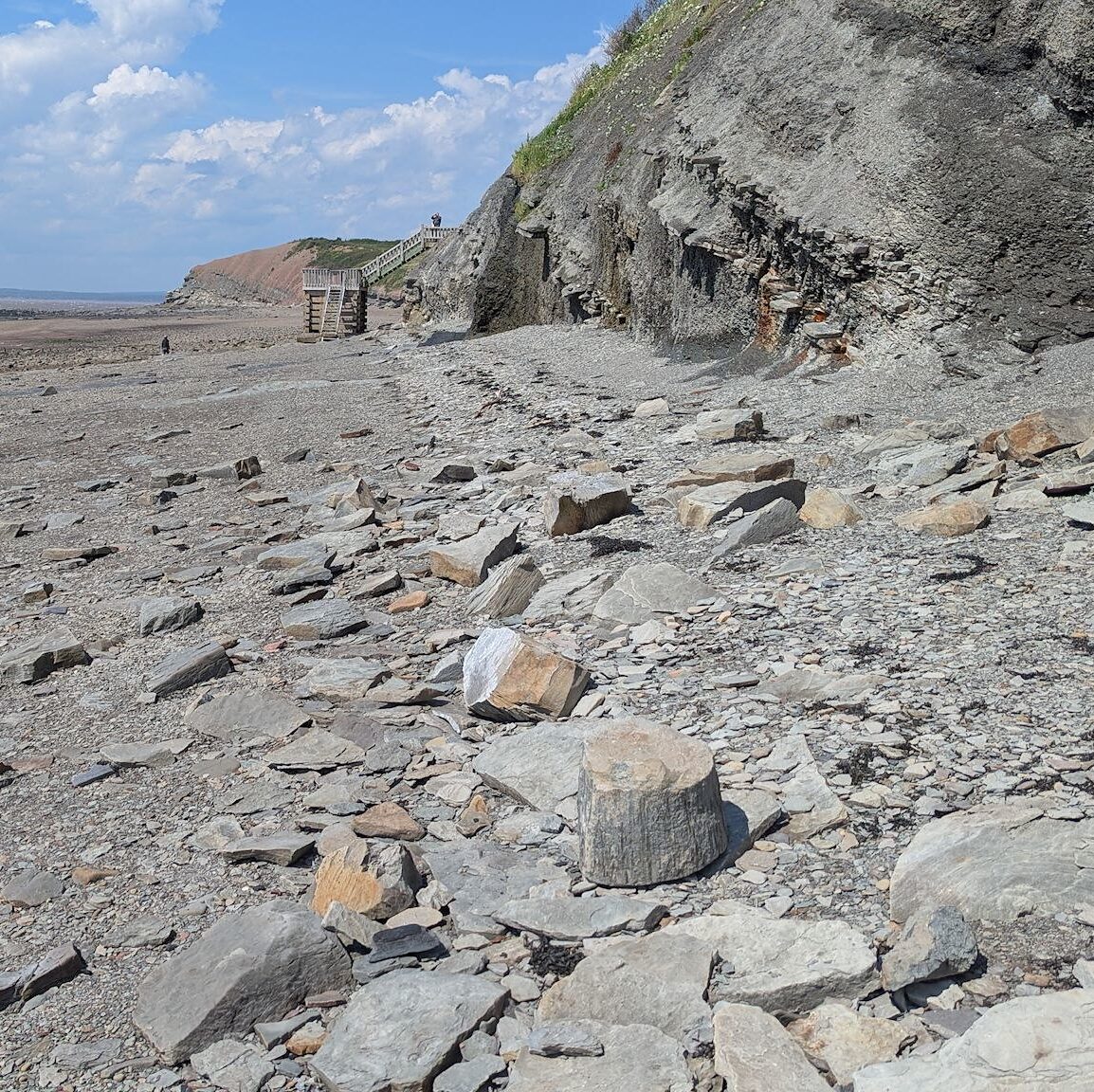
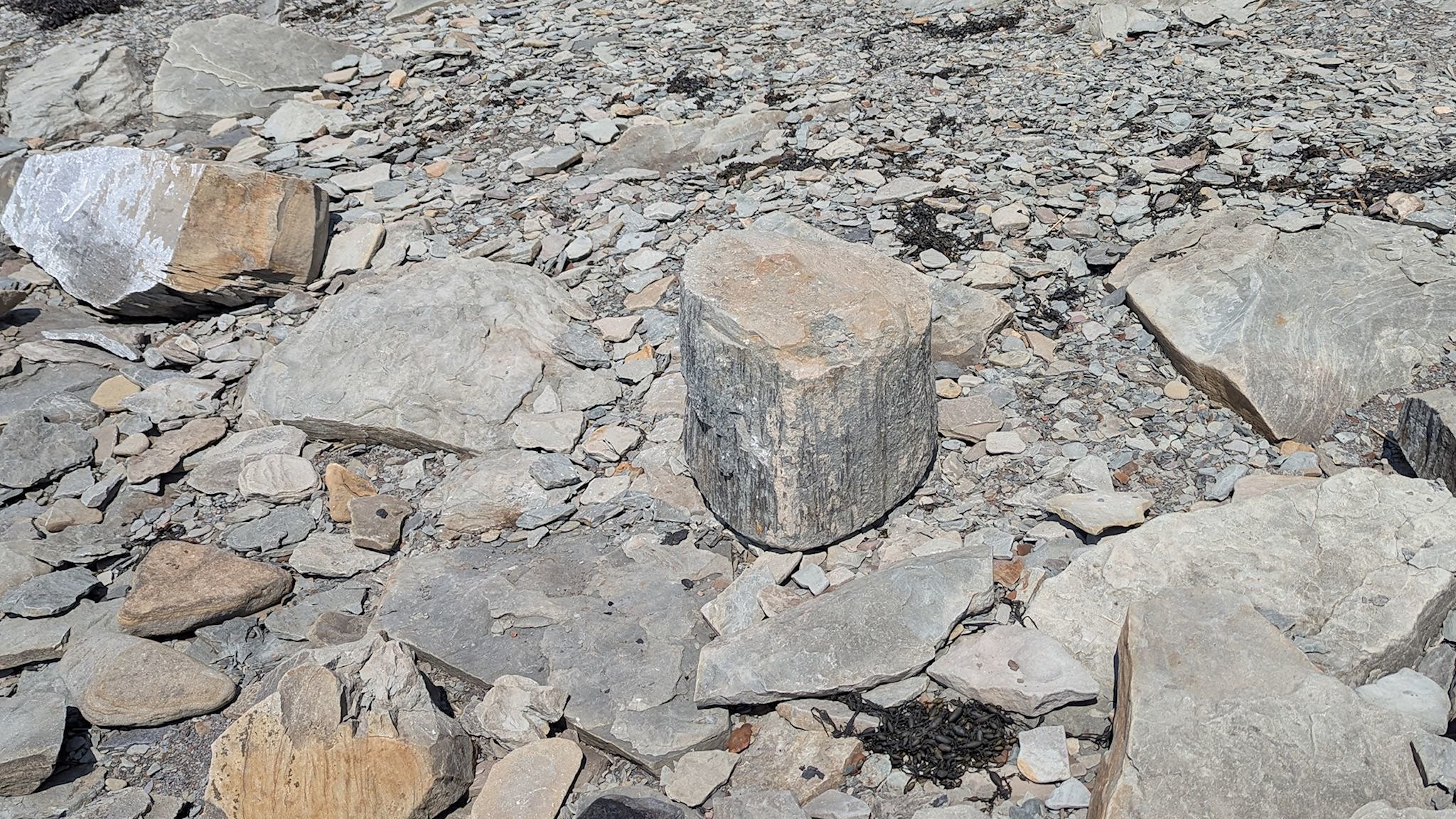
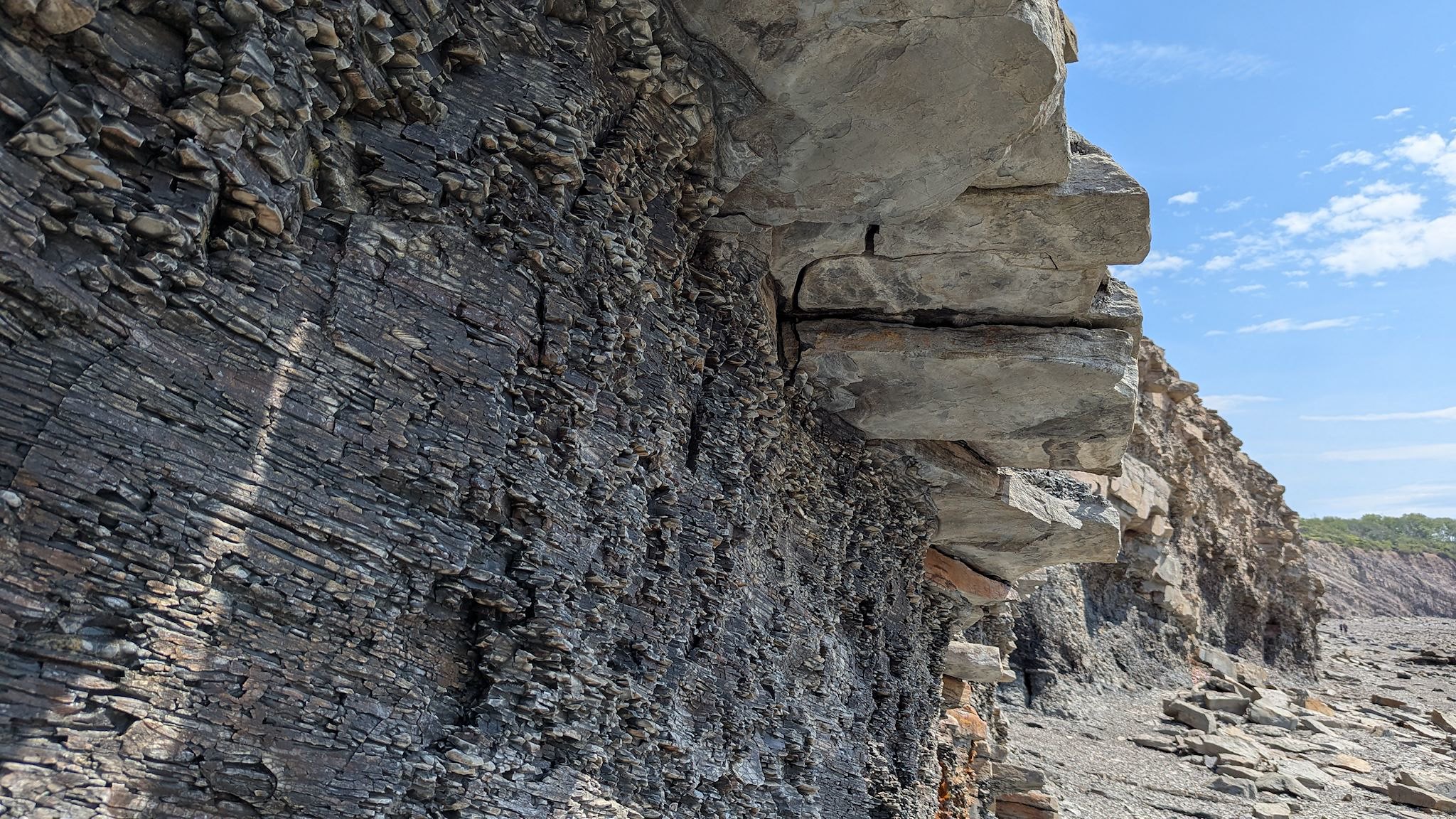
Walking along the ocean floor at low tide provided the opportunity to see the cliffs up close and personal and visualize how each tidal cycle would uncover more fossils. The tilt of the cliffs and the ocean floor directly reflect the shift of tectonic plates. Doug’s fave find was what appeared to be a cylindrical rock. It was actually a chunk of a fossilized tree trunk, freed by the tides, sitting on the ocean floor among the ‘real’ rocks.
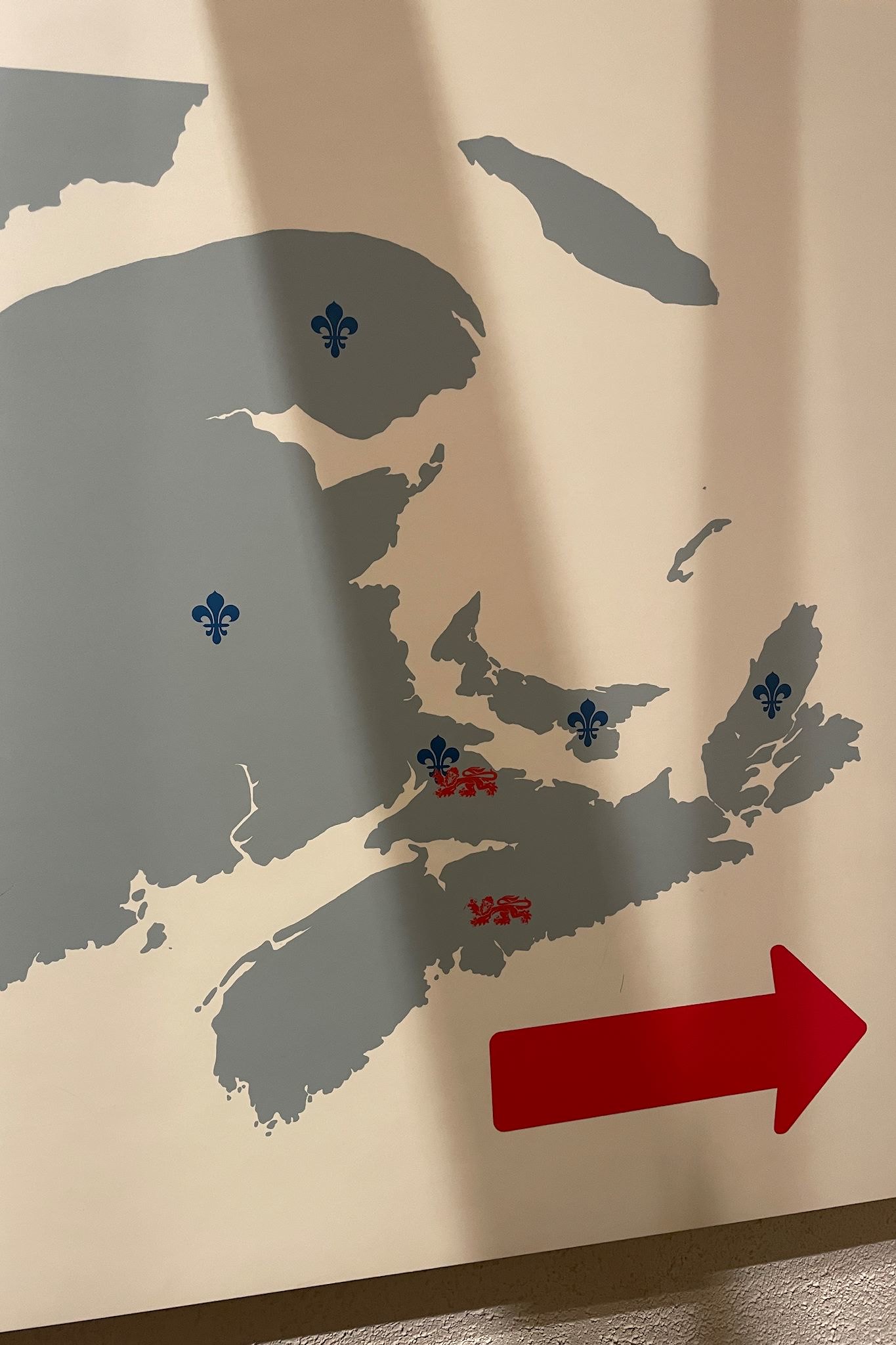
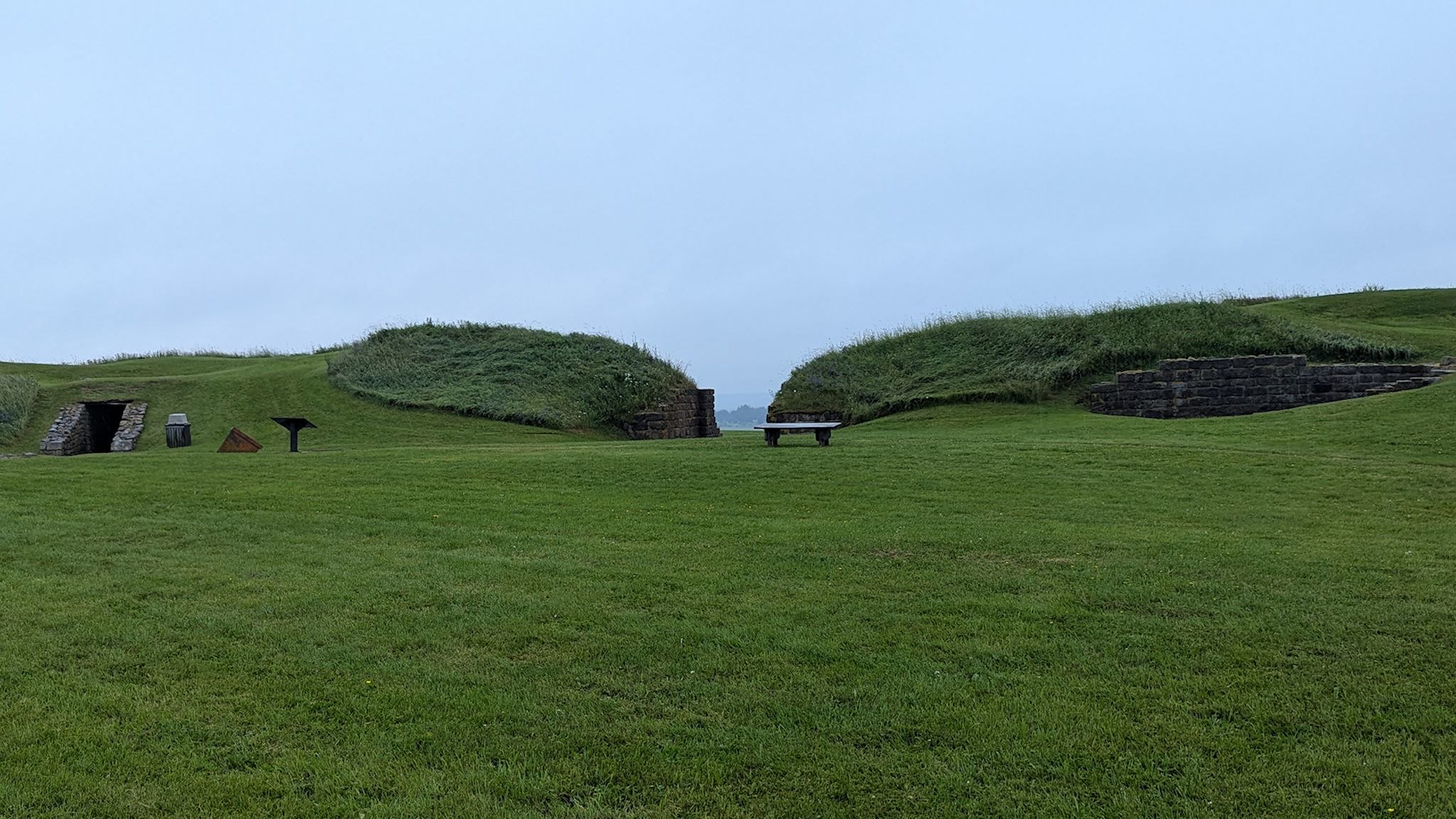
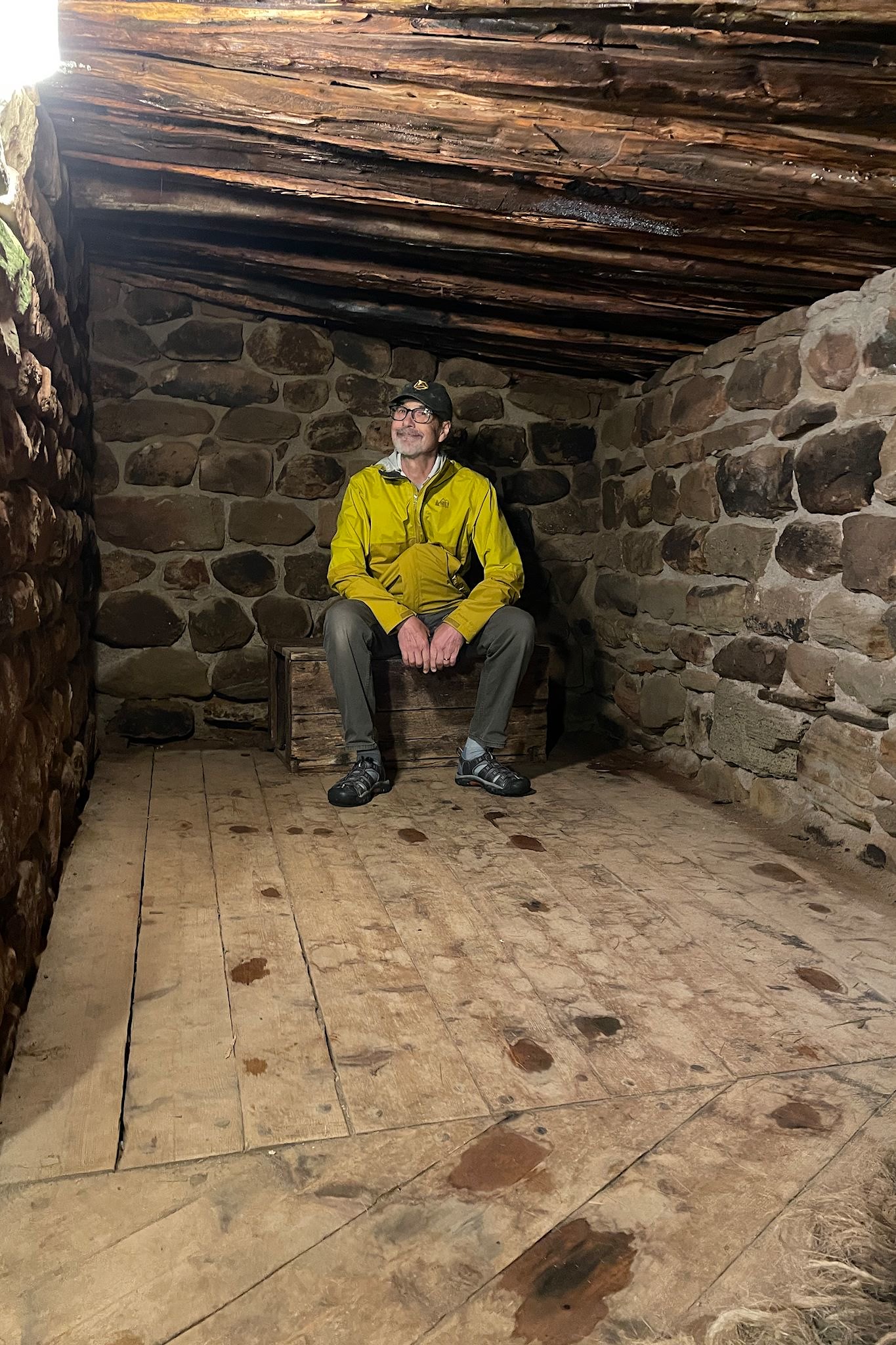
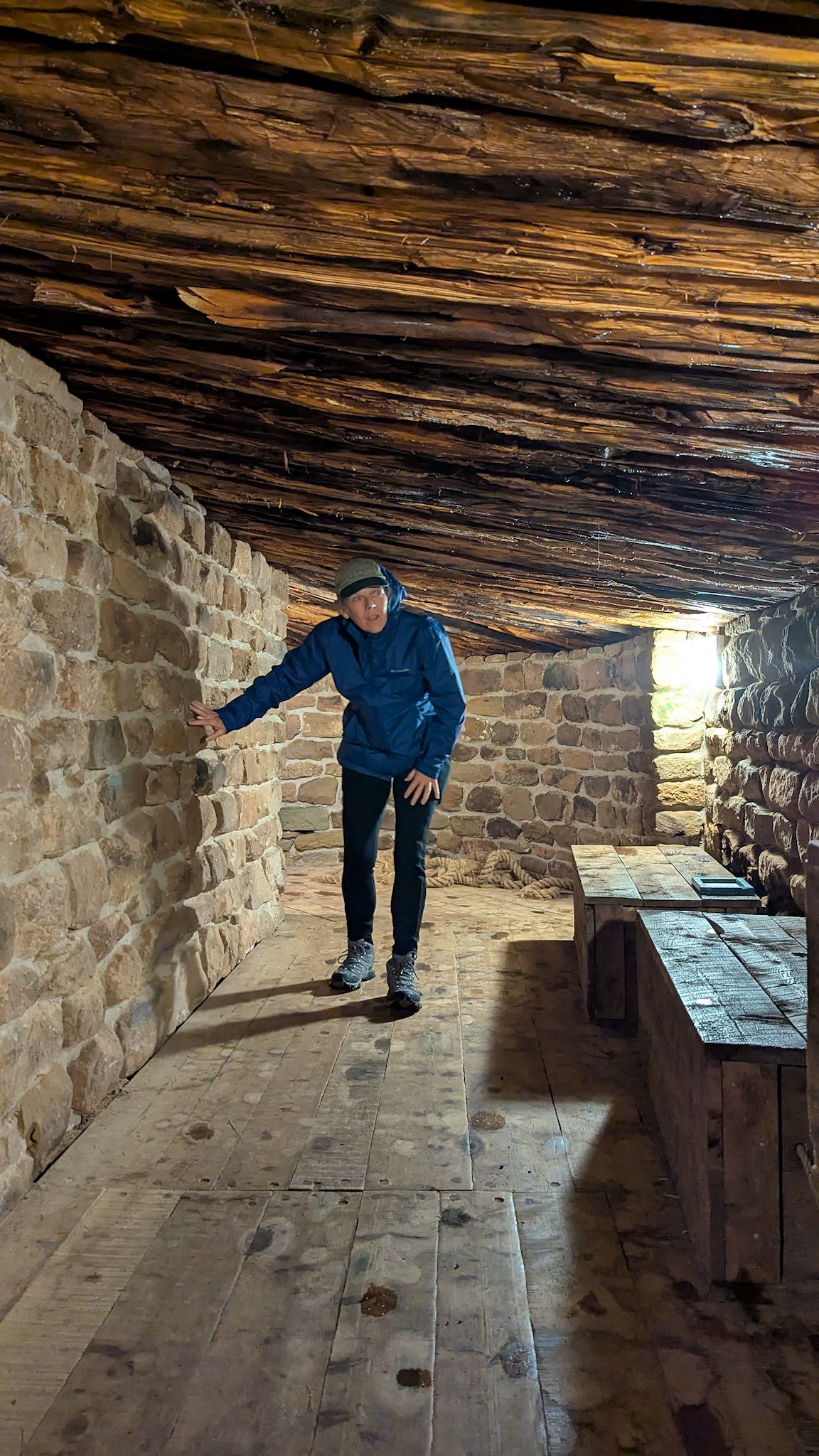
We thought our visit to Fort Beauséjour – Fort Cumberland would be short – the remnants of a fort and a small museum, on a dreary morning in the pouring rain. Ha! The first exhibit said it all… the French had claimed what is now New Brunswick and the British had claimed what is now Nova Scotia. There was an overlap near the Missaguash River. Although settled in the area for a century, the Acadians were pushed north of the river by the British. Working with the French, Acadians helped build Fort Beauséjour to protect the French interests. When the British attacked the fort in 1755, about 200 Acadians worked with the French to defend the fort which ultimately fell to the British. Although Acadians had professed neutrality, this battle convinced the British that the Acadians could not be trusted and had to be deported. The British changed the name to Fort Cumberland and used it as a prison for Acadians awaiting deportation.
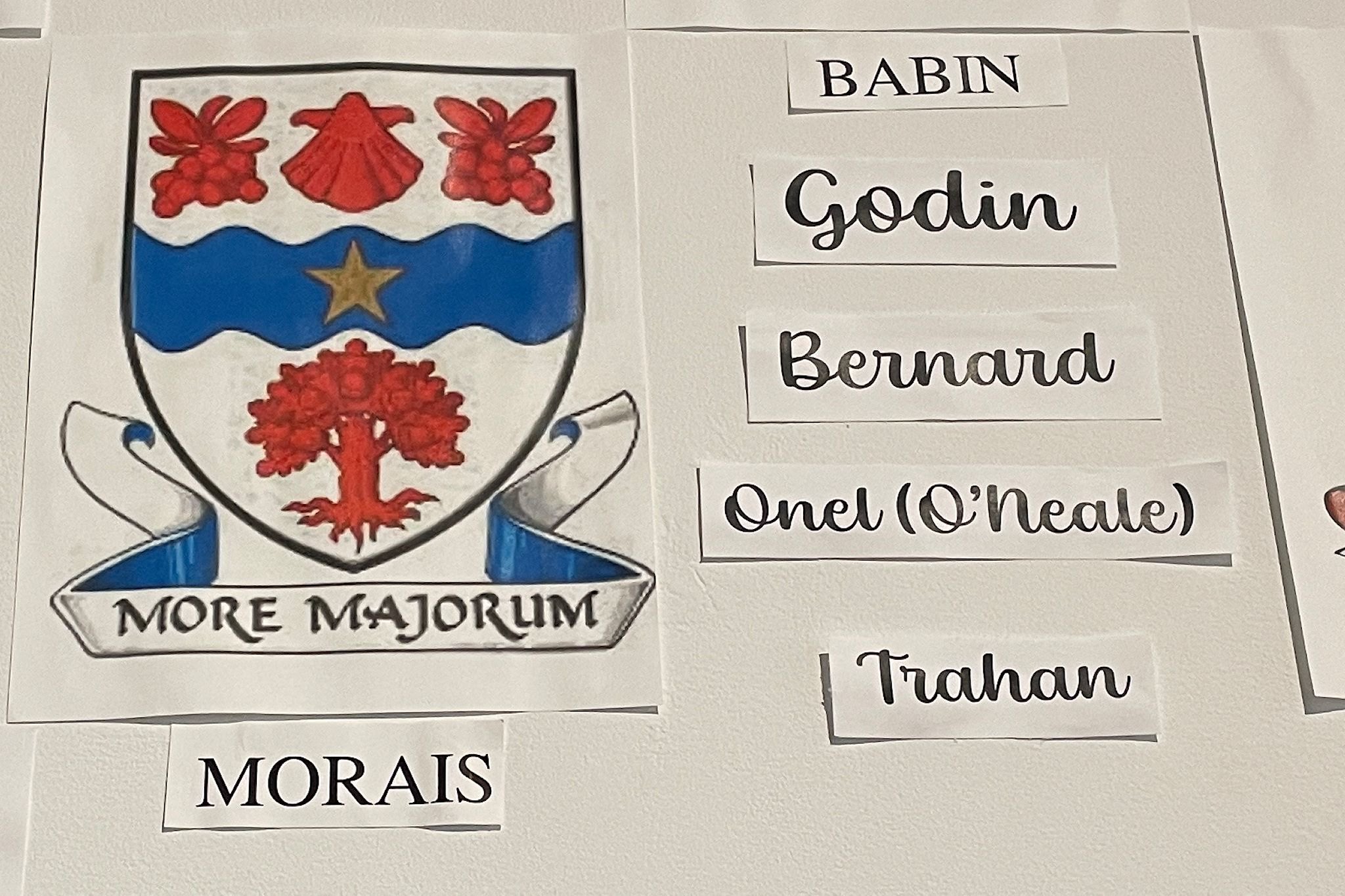
When chatting with the museum staff, I mentioned that my mom’s family was Acadian. They took an interest and asked about the names. Yes, the Morais and Godin families were, in general, impacted by Le Grand Dérangement/ Deportation. And, they were able to find a copy of the Morais family crest – something interesting to add to my family geneaology.
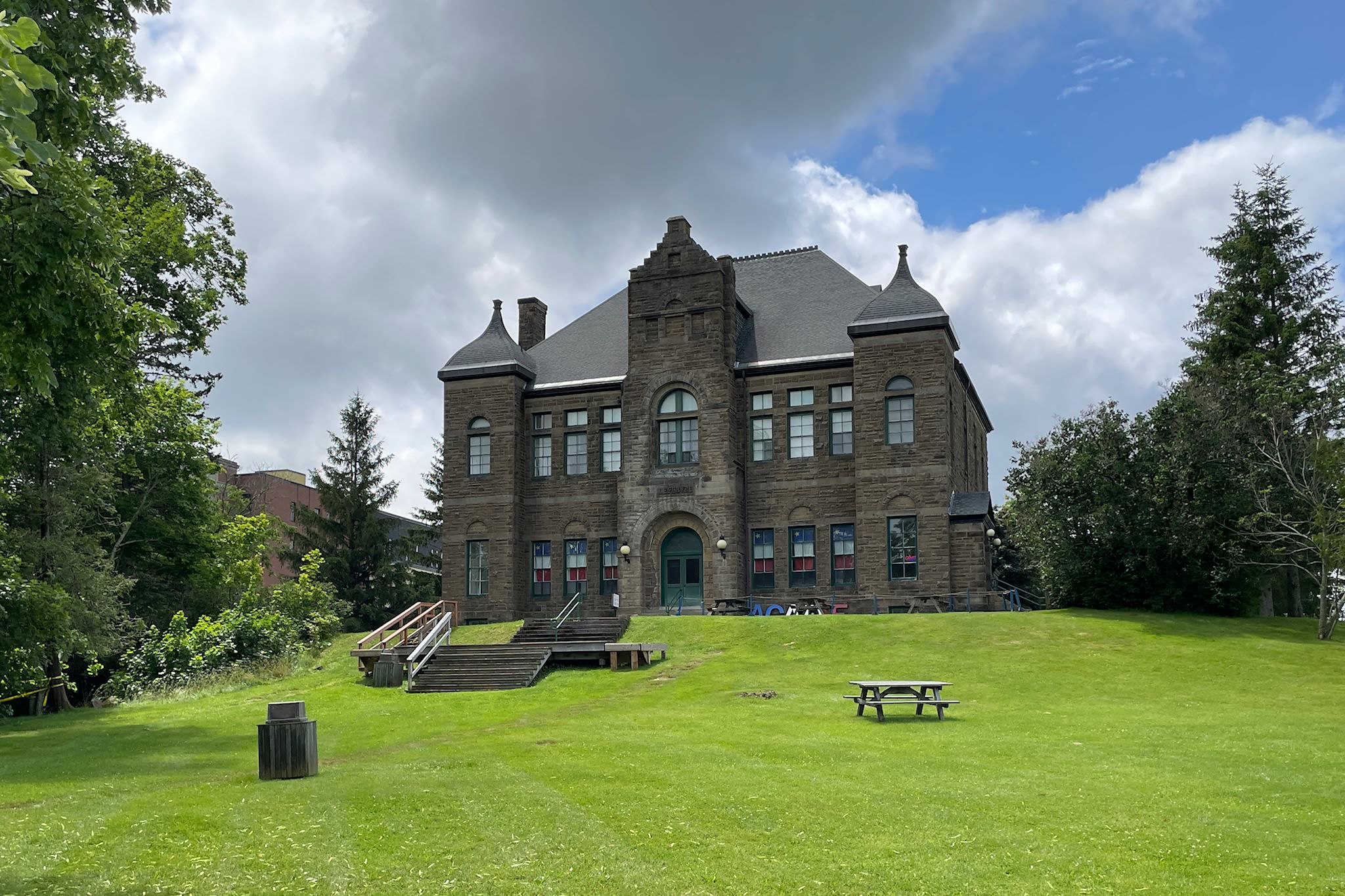
The Monument Lefebvre in Memramcook, NB, was all about the Acadians from a very different perspective – the renaissance of the Acadian culture after Le Grand Dérangement/ Deportation. In 1764, Acadians were allowed to return to Canada. However, their original homeland – fertile farmland managed for generations with dykes – was now owned and occupied by others who had taken or been granted title to the land that had been theirs. They were permitted to settle in other areas throughout Nova Scotia, New Brunswick and Prince Edward Island, generally in areas where farming was more challenging.
The Acadian culture was deeply influenced by self-sufficiency, living a simple life within a community. Education was not a high priority. By the mid 1800’s, despite their successful return, the Acadians were very much second-class citizens. A Catholic priest, Camille Lefevbre, believed strongly that education would allow the Acadians to fully integrate. To that end, he founded College Saint-Joseph, the first French language educational institution in Atlantic Canada to grant university degrees. The college served as the spark that ignited an Acadian renaissance, creating a social and economic transformation that stands today.
Although College Saint-Joseph was fully absorbed by the University of Moncton in 1963, the Monument Lefevbre remains an Acadian cultural center. The building, sited on a hill in Memramcook, NB, was built of New Brunswick sandstone using classic Romanesque Revival details. It’s beautiful! The main exhibit, Reflections of a Journey – The Odyssey of the Acadian People, comprises half of the first floor. The other half houses a cafe and education centre, and upstairs is a grand performance theatre, all with the goal of sustaining Acadian culture. The Société Nationale de l’Acadie was founded in 1881 during the first National Acadian Convention, which took place at College Saint-Joseph. Today, the SNA sponsors an international gathering of Acadians (Congrès mondial acadien) every 5 years in the spirit of keeping the culture alive and well. The next one, in 2029, will be in the Baie-des-Chaleurs region of Quebec and New Brunswick.
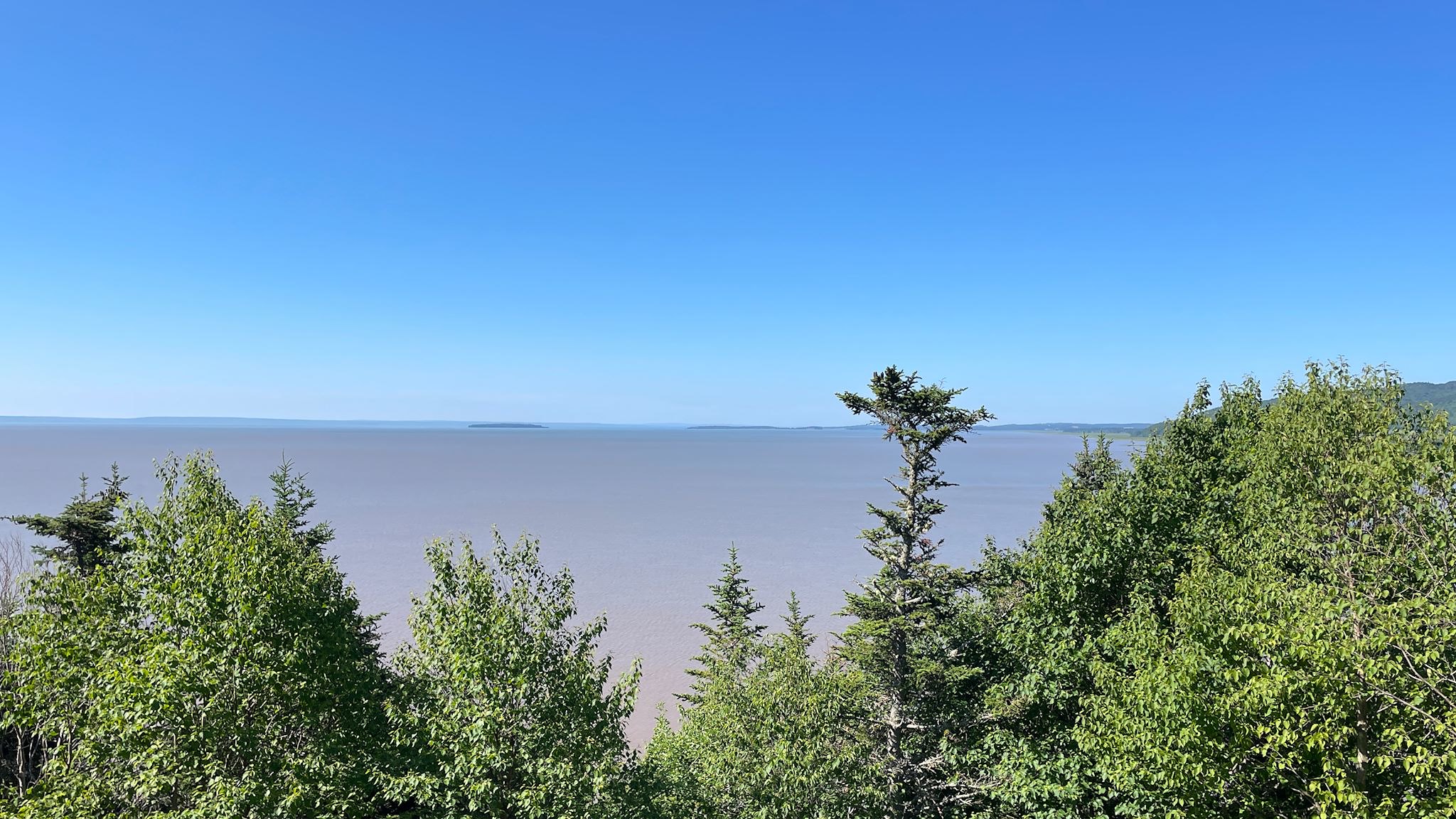
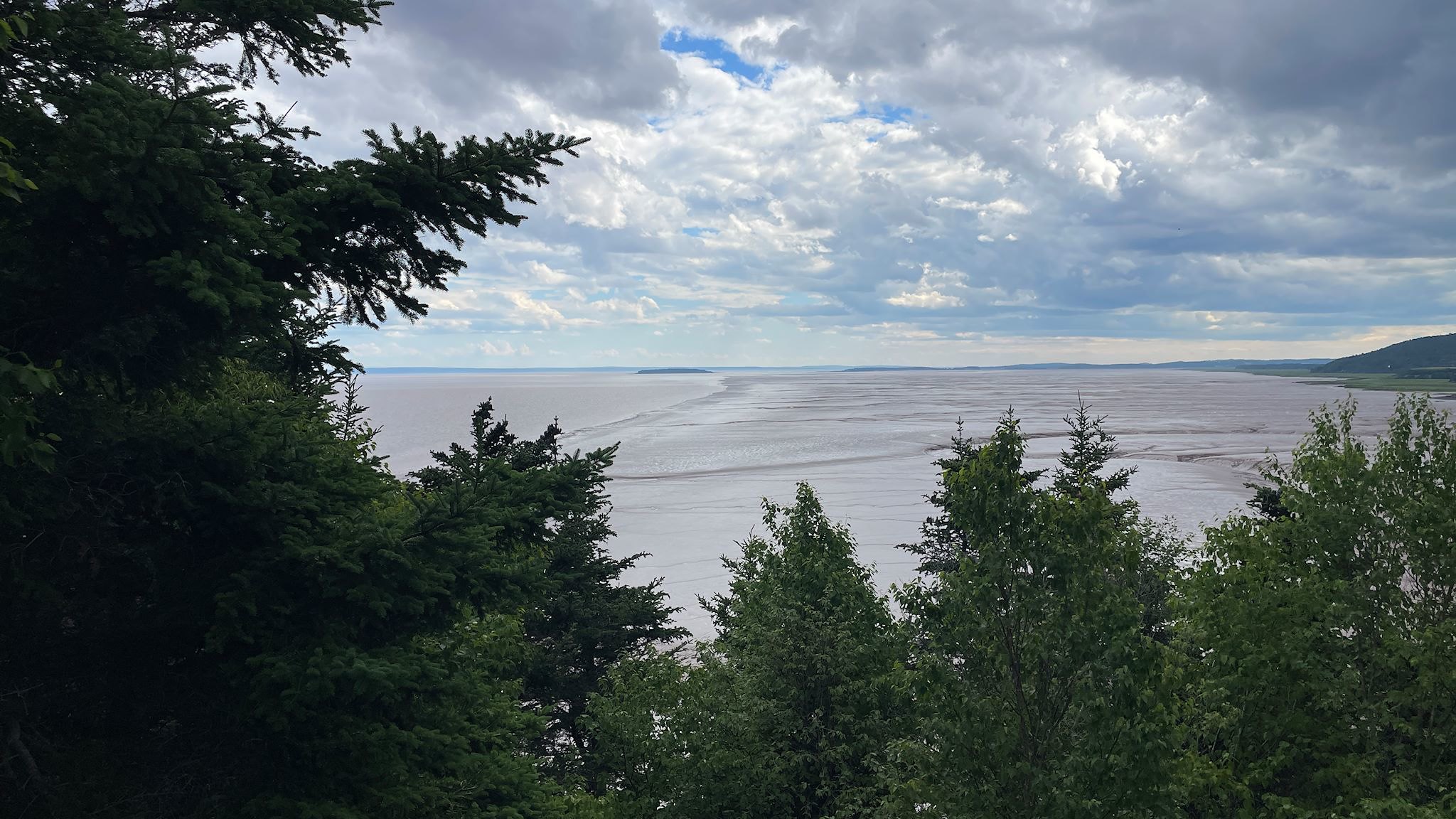
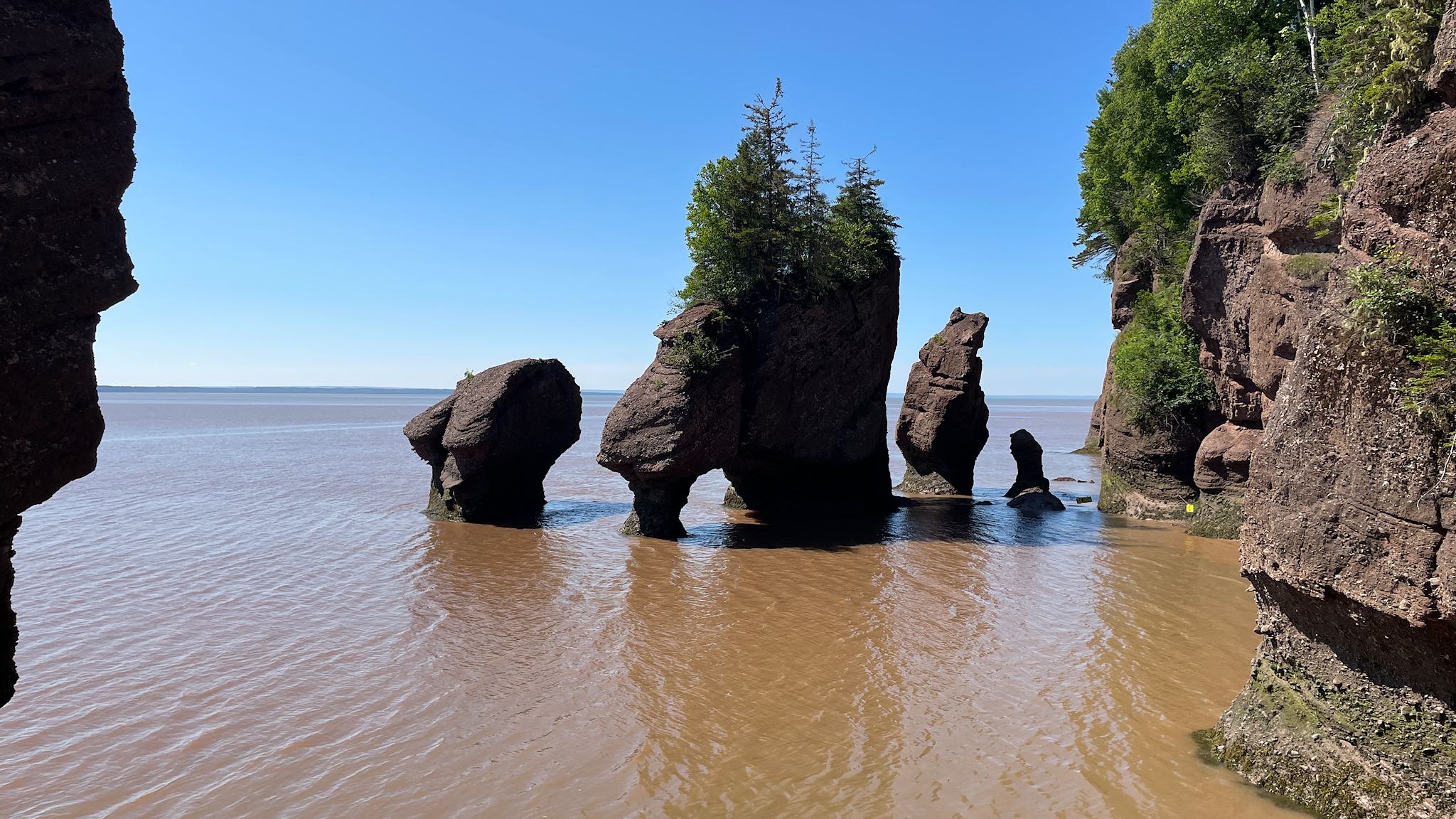
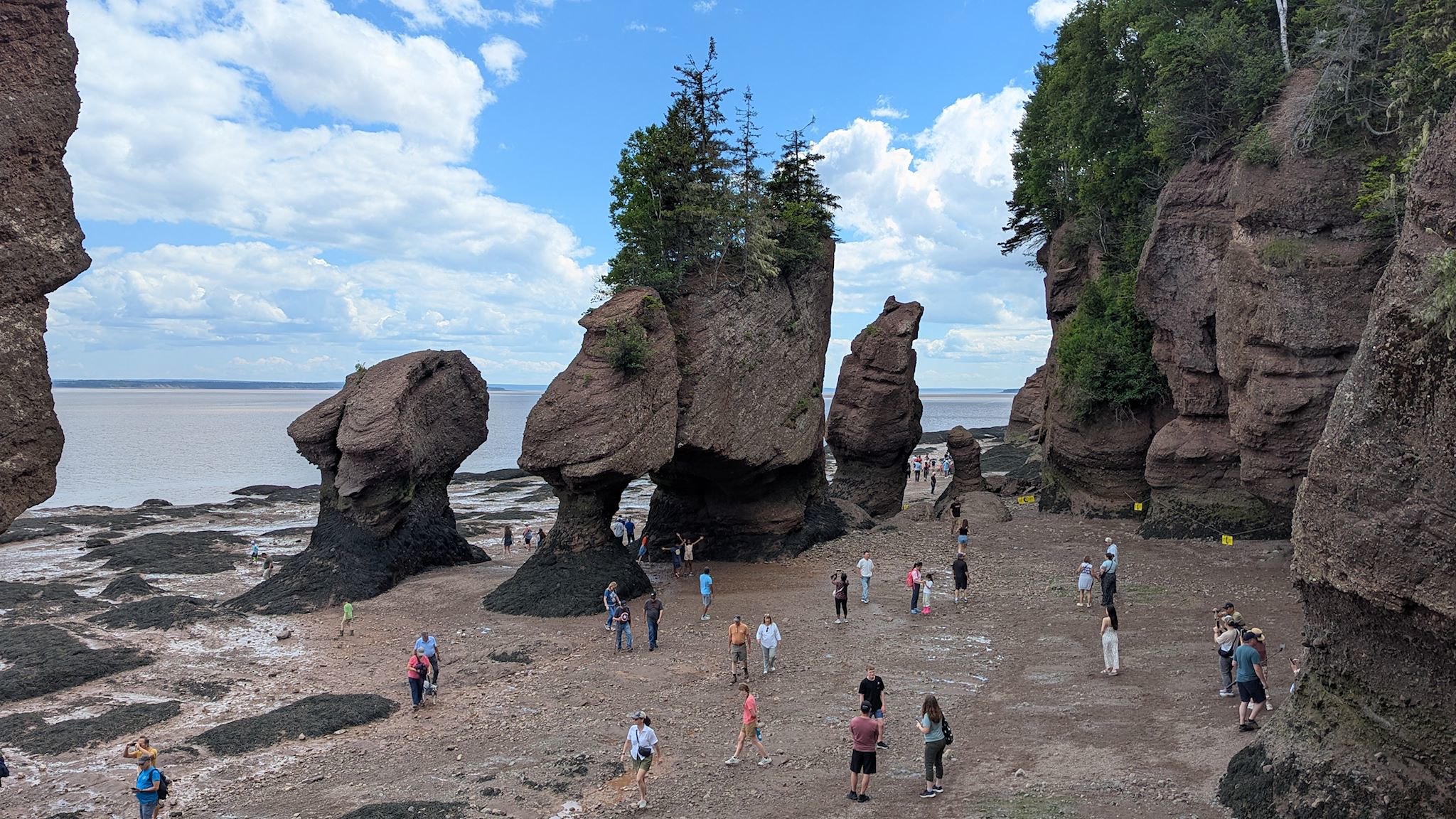
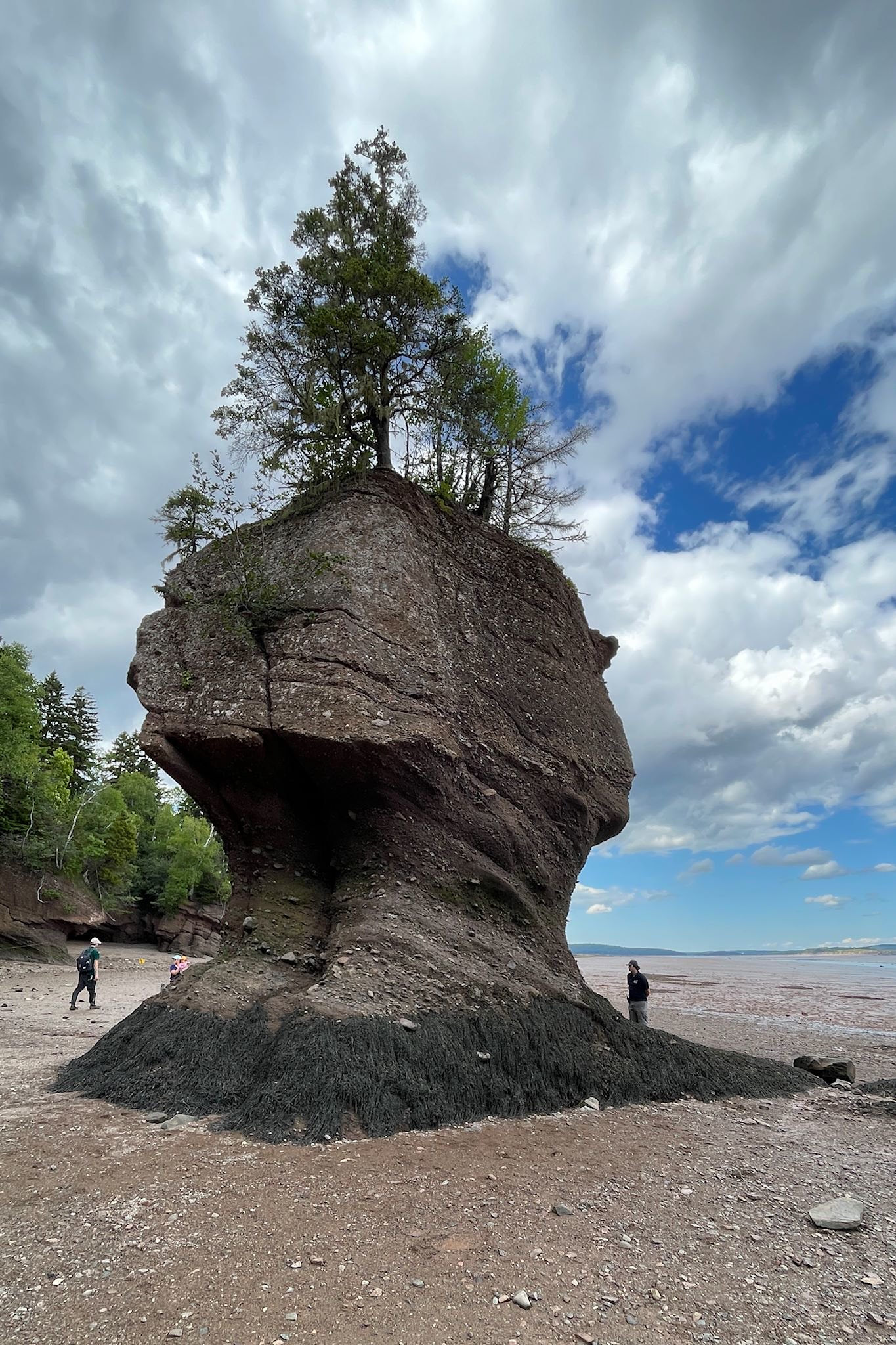
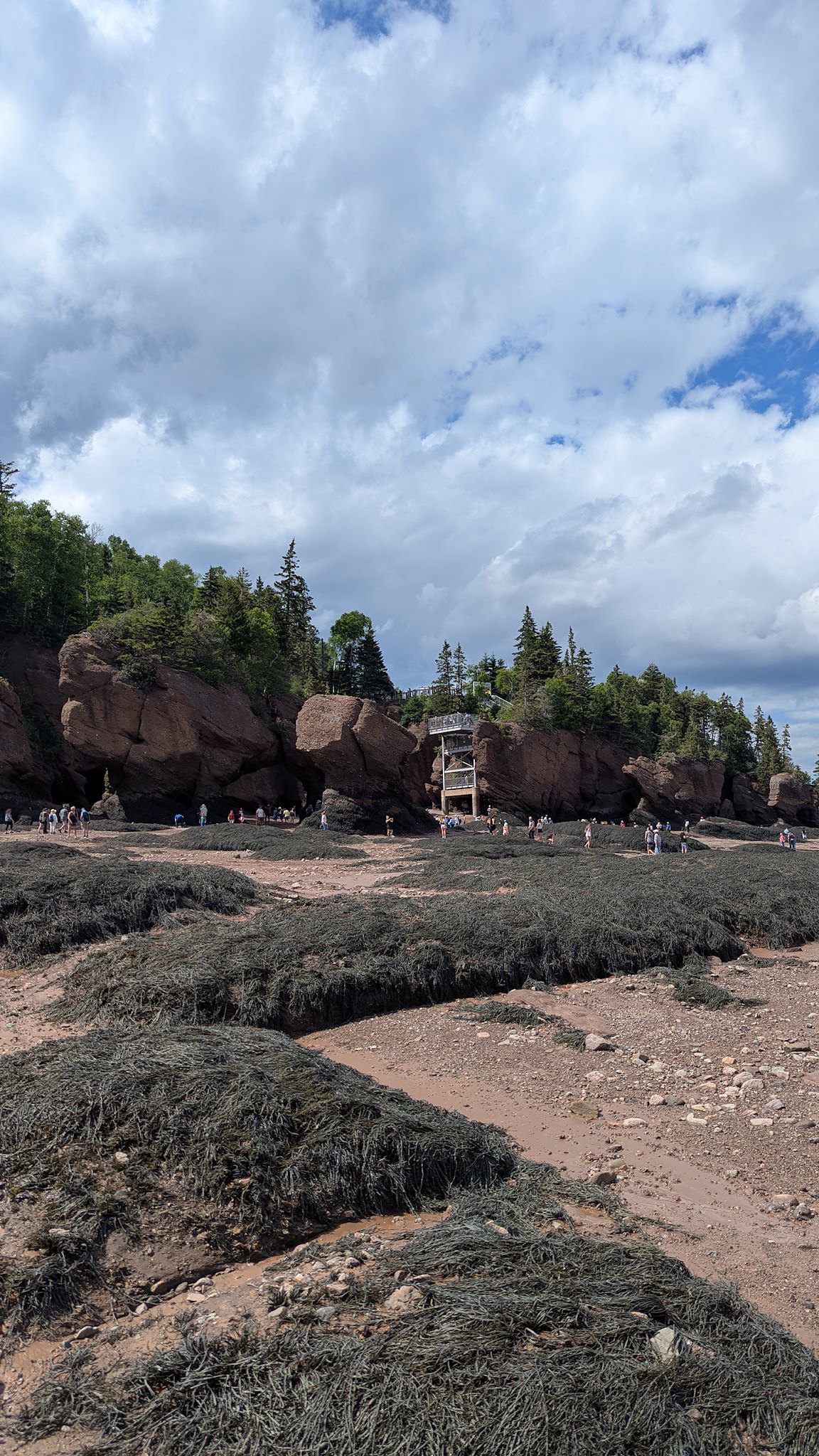
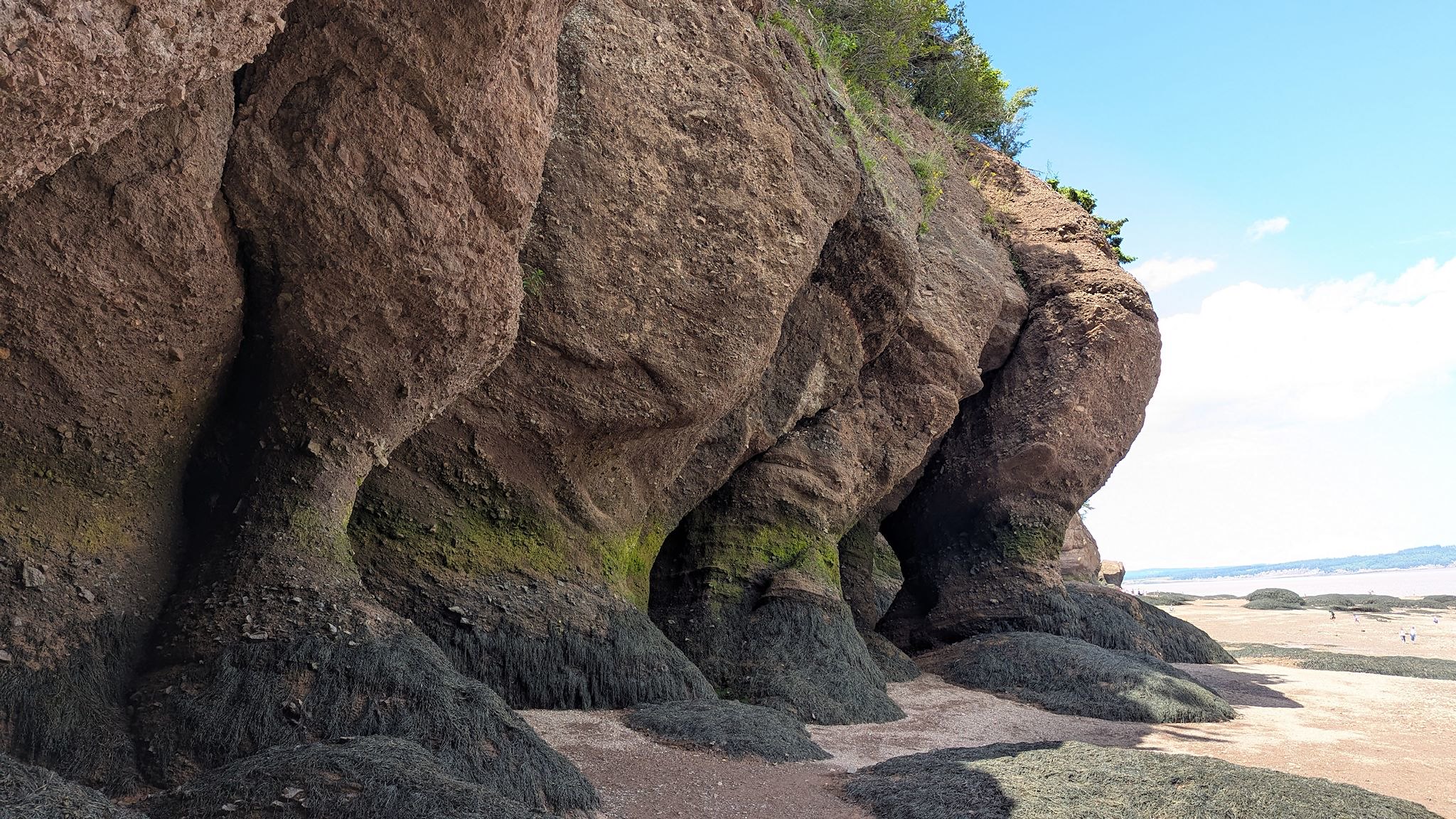
The flowerpots at Hopewell Rocks Provincial Park illustrated something unique about the Chignecto Bay – the soft rocks that are shaped by wind and tides into unusual shapes and sizes. The (relatively) soft Chignecto rock erodes differently in the powerful tides than the Minas cliffs – compare the straight-sided stacks in the previous post with these top-heavy flowerpot rocks at Hopewell Rocks.
The flowerpots are easily accessible via the ocean floor at low tide, and become islands at high tide. And they’re just plain fun! We arrived in the morning at high tide and took some photos from viewing platforms at the top of the cliffs. Later in the afternoon, we returned to take the 101 step stairway down to the ocean floor and just walk around marveling at nature’s art.
For anyone who’s interested, more Fundy Geological Museum, Joggins Fossil Cliffs & Centre, Fort Beauséjour – Fort Cumberland, Monument Lefevbre and Hopewell Rocks pix…