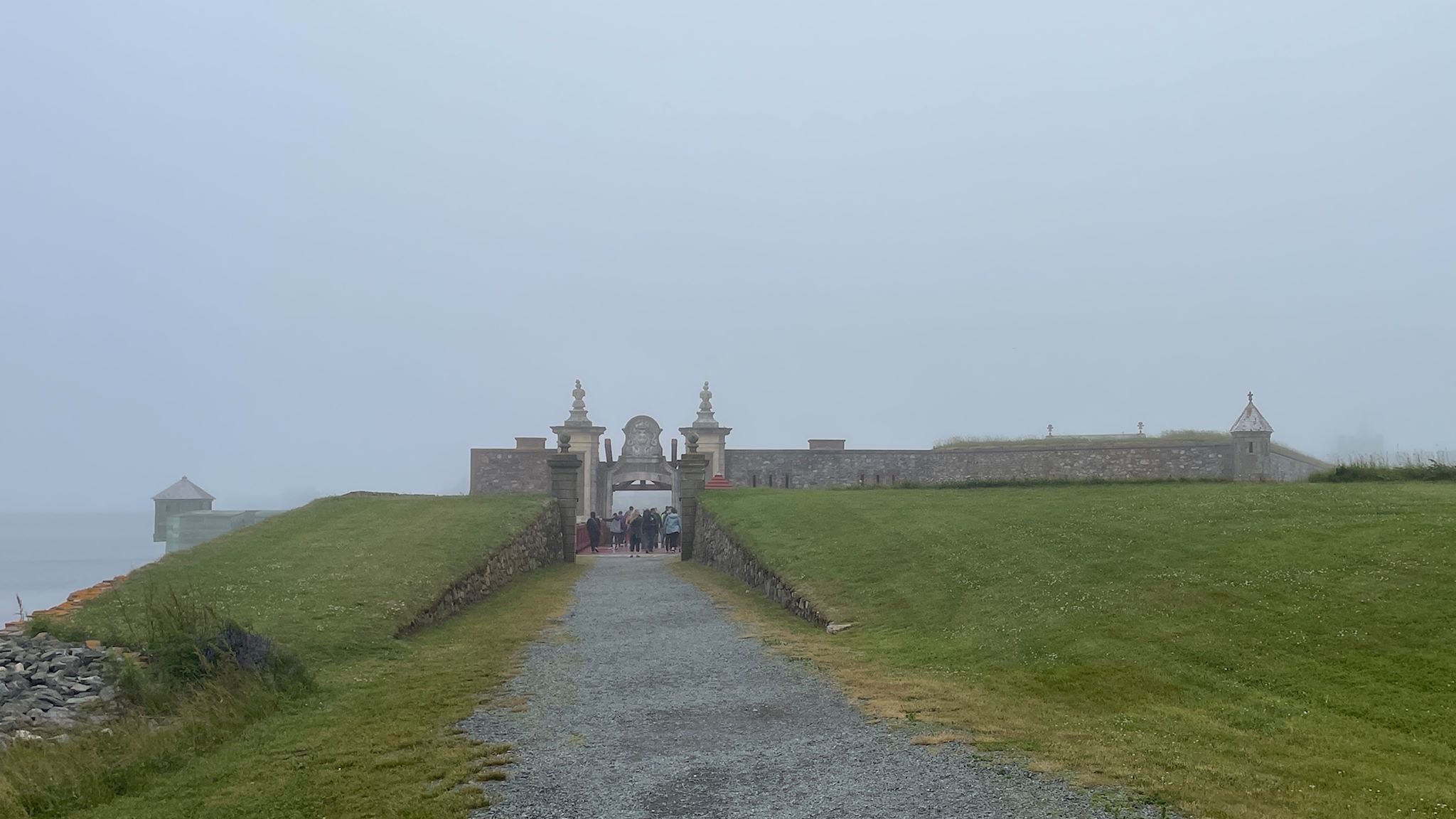
Friends Mark and Linda said – insisted, even – that we had to visit the Fortress at Louisbourg. Ok, let’s put it on the list. They said we’d spend a day there. We had doubts about that, however within our first 10 minutes on-site we found ourselves wondering if we should spend two…
We learned in our introduction that the Fortress at Louisbourg is a fortress, not a fort. A fort is a fortified military structure (or a site with several structures) for defense and protection as well as housing soldiers and military equipment. A fortress is a whole town protected within high, defensible walls, not just for soldiers but for business people, families, shops, offices and all that, as well as a garrison for soldiers – a 1700’s version of a gated community (with an exceptionally robust resident security team). The fortress was built in 1713 to prevent attacks on the town from the sea. However, the French lost possession of the fortress to the British twice, once in 1745 and again in 1758, both in attacks from the land. Between the two turnovers, the French regained possession of the fortress in a treaty settlement. Both times, the residents of the town surrendered without a fight and were deported back to France.
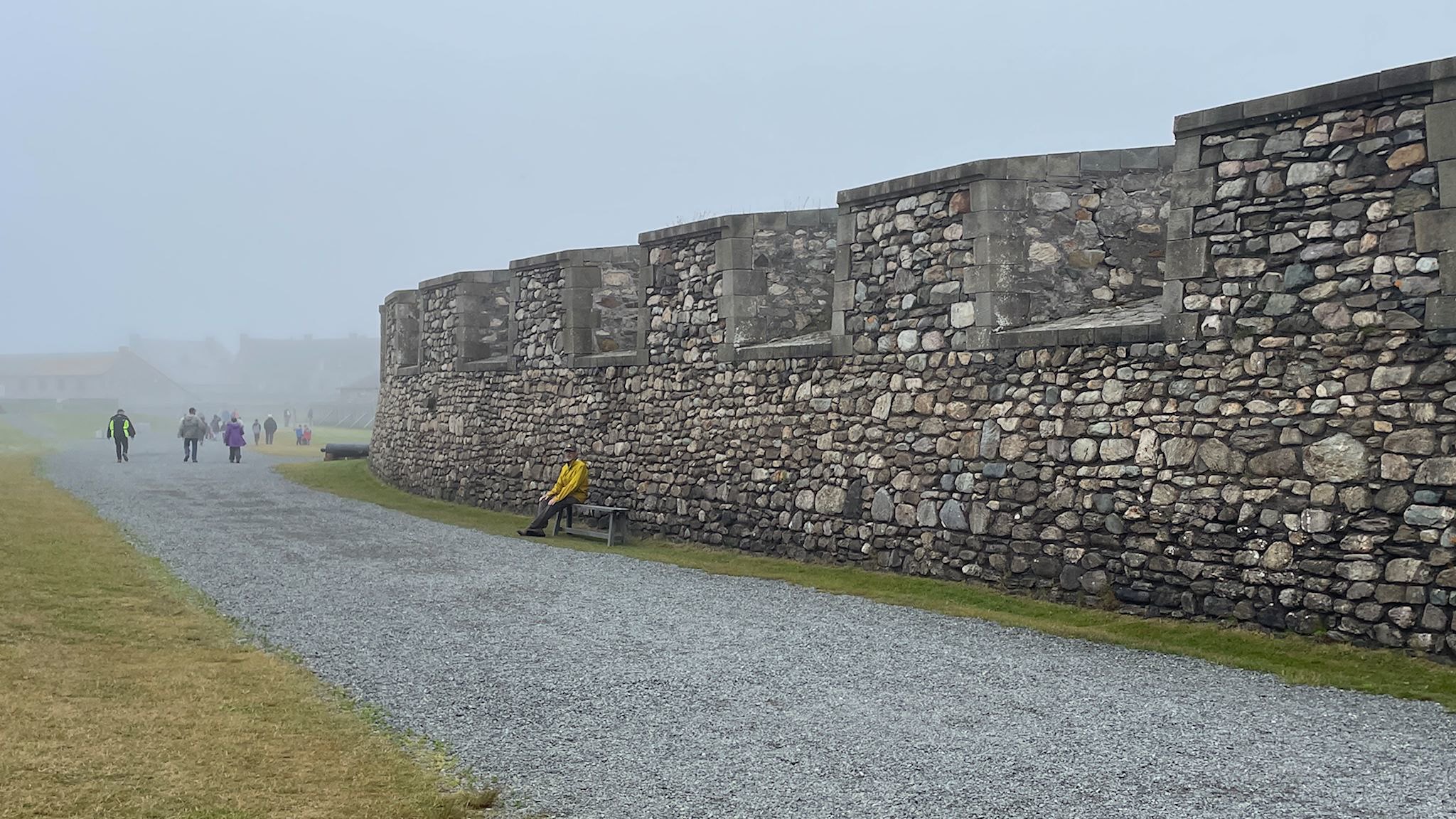
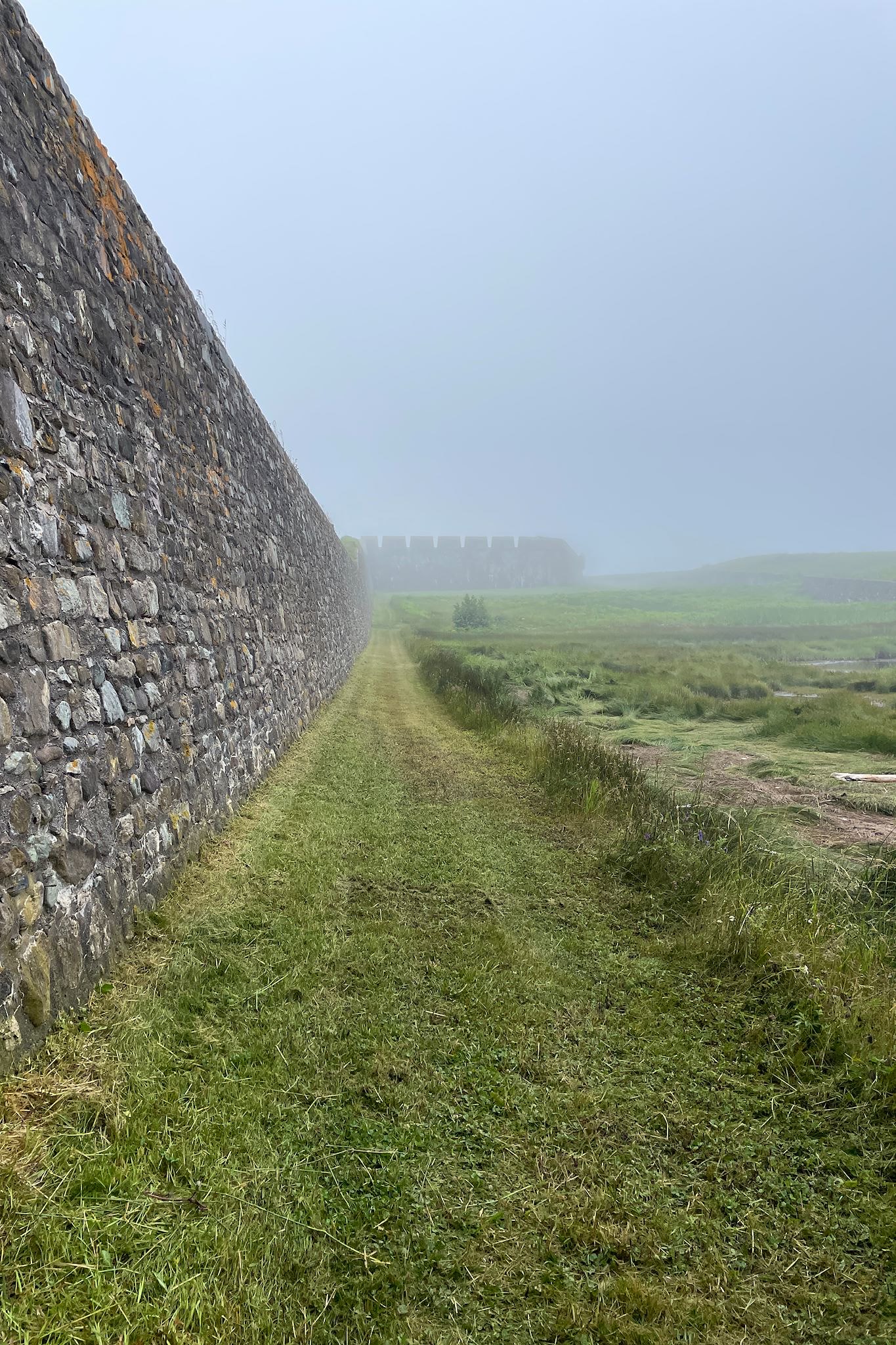
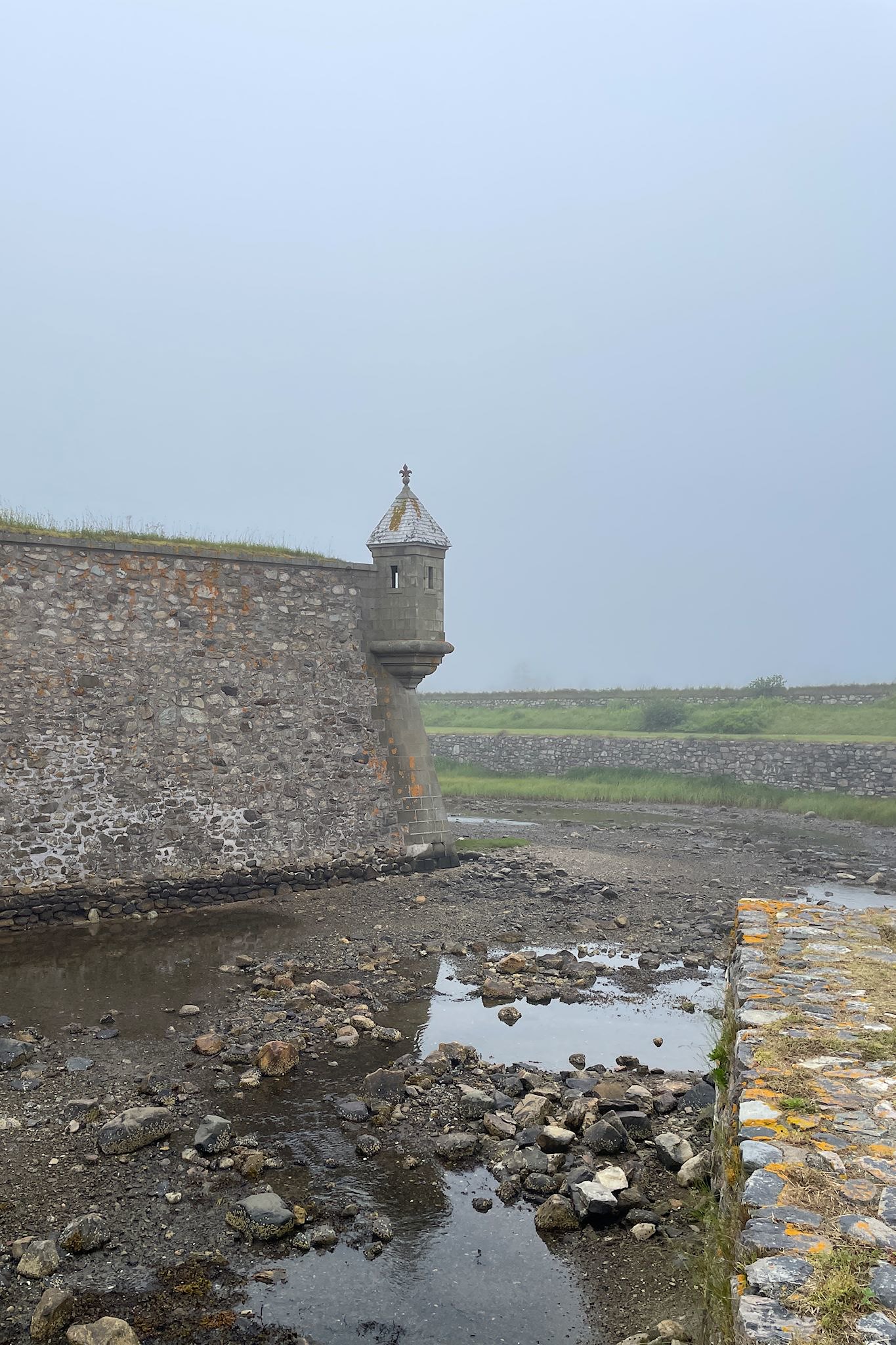
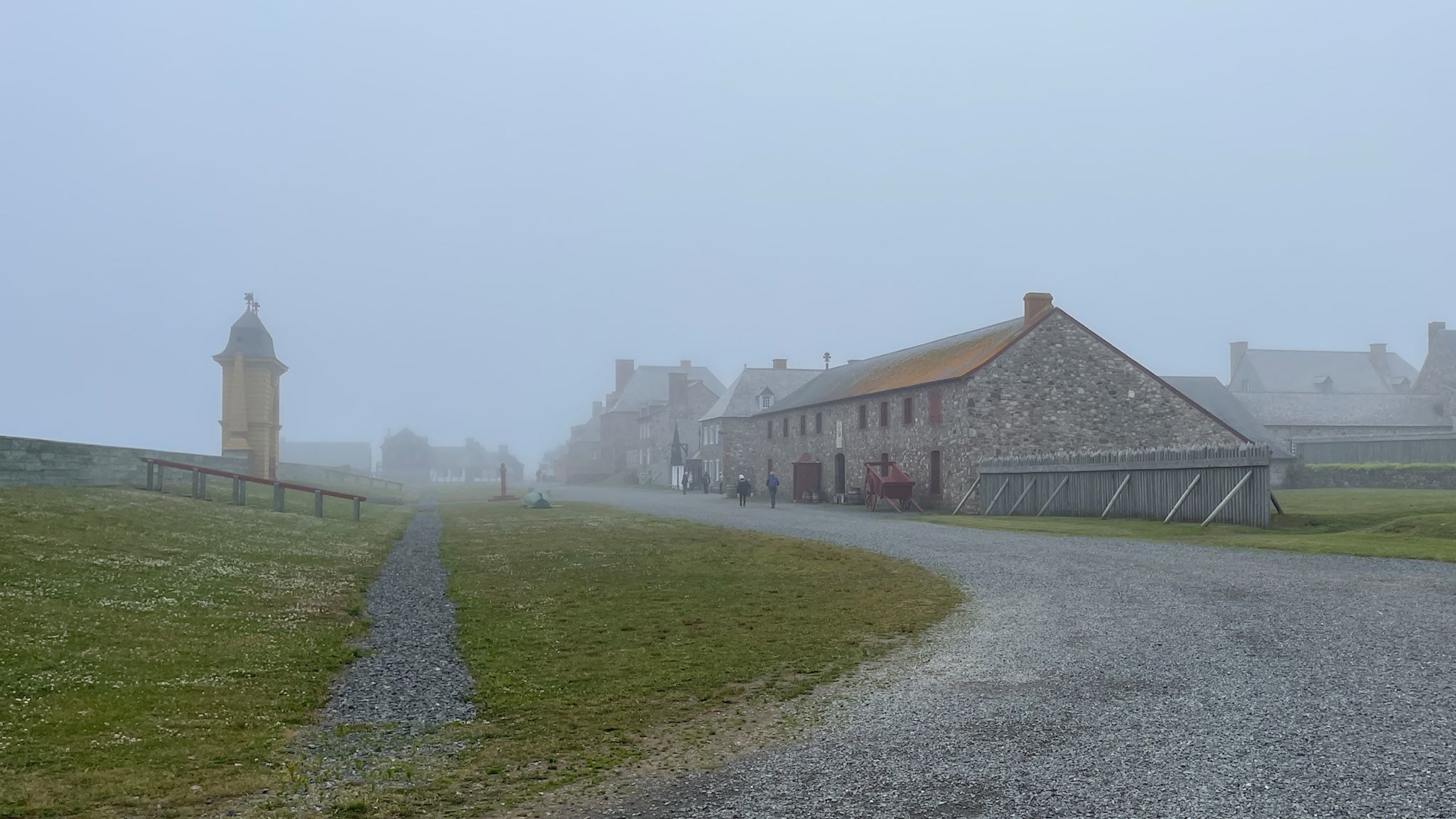
Louisbourg (population ~3,000 in 1745) was the capital of what was then Île Royale, now called Cape Breton. A predominantly French community governed by France, the town was sophisticated and cosmopolitan. Due to the extensive trading and fishing industries, the town was diverse with people from Acadia, France, Spain, the Basque region, and other places. At the time, Louisbourg was one of the 3 busiest port cities of the New World, competing with Boston and Philadelphia.
By 1768, Halifax, well defended by surrounding forts, had become the key British port, supplanting Louisbourg which they abandoned. Through intentional demolition, vandalism, and scavenging, the entire town was reduced essentially to cellar holes over the next 2 centuries.
During the 1960’s when the mining industry in Cape Breton was imploding and threatening largs scale unemployment, the Canadian government invested $26 million into a historically accurate reconstruction of one quarter of the Fortress. The goal was to create a living museum to help visitors envision life as it was in 1745 – and to create jobs.
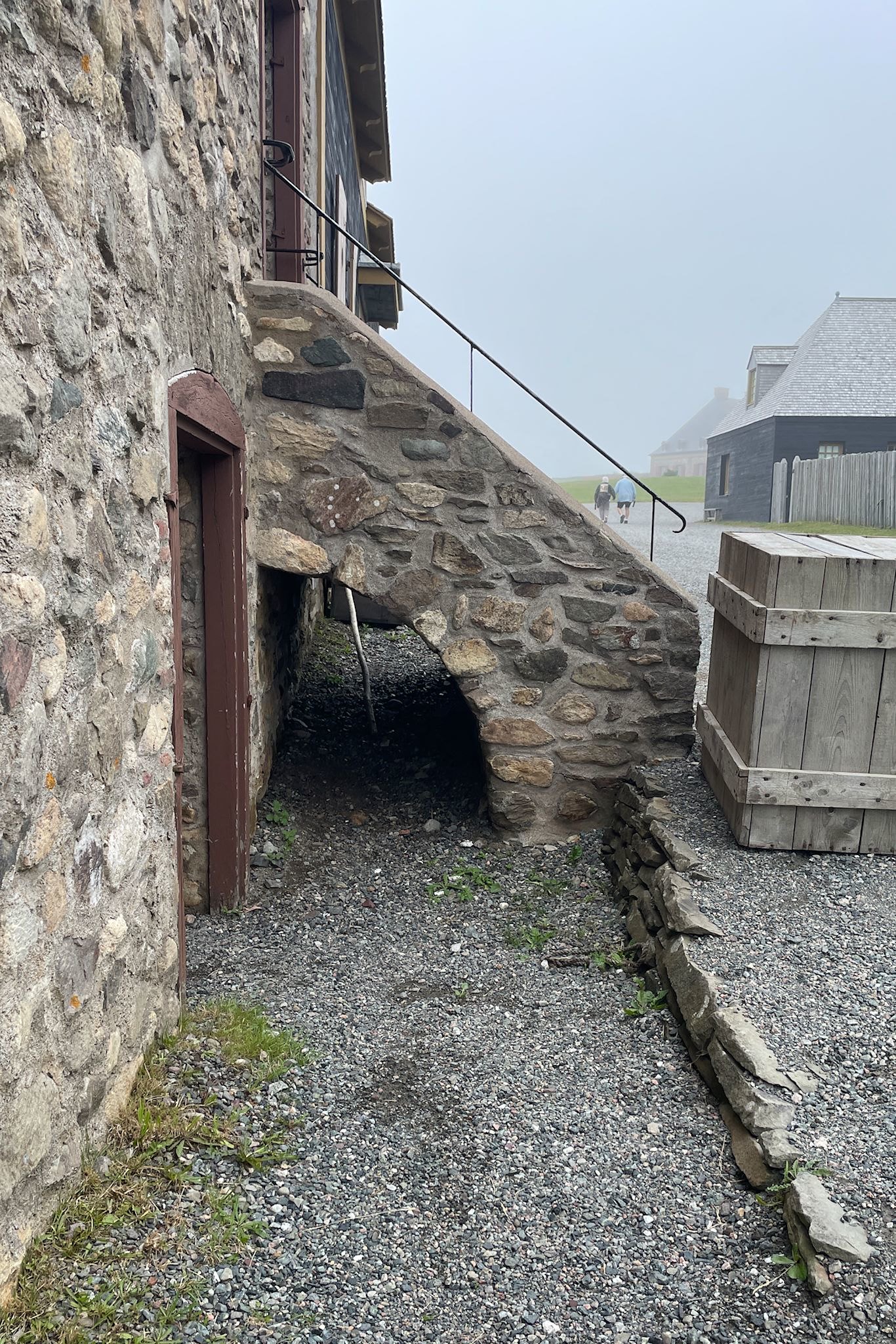
The project started with years of research by historians, architects and engineers who reviewed 750,000 microfiche documents and over 500 maps and plans for the development of the fortress (the 18th century French bureaucrats were fastidious with documentation, and all the original plans and inventories had been sent back to France for review and retained for safekeeping). The information gained was converted into detailed plans for the reconstruction. Meanwhile, hundreds of miners who’d lost or were losing their jobs when the mines closed were retrained in carpentry, masonry and other trades in order to reproduce the original fortress using period tools and materials.
It took 2 decades to convert this area of Cape Breton from economic devastation with widespread unemployment into a world-class national historical site in a growing coastal town. The operation of the historic site became a huge source of employment. The fortress, run by Parks Canada, currently employs about 160 people including a mix of operational staff, interpreters, and enactors dressed in period costume and taking on the persona of an actual person who lived in the town in 1745. It created a huge boost to tourism (that would be people like us…).
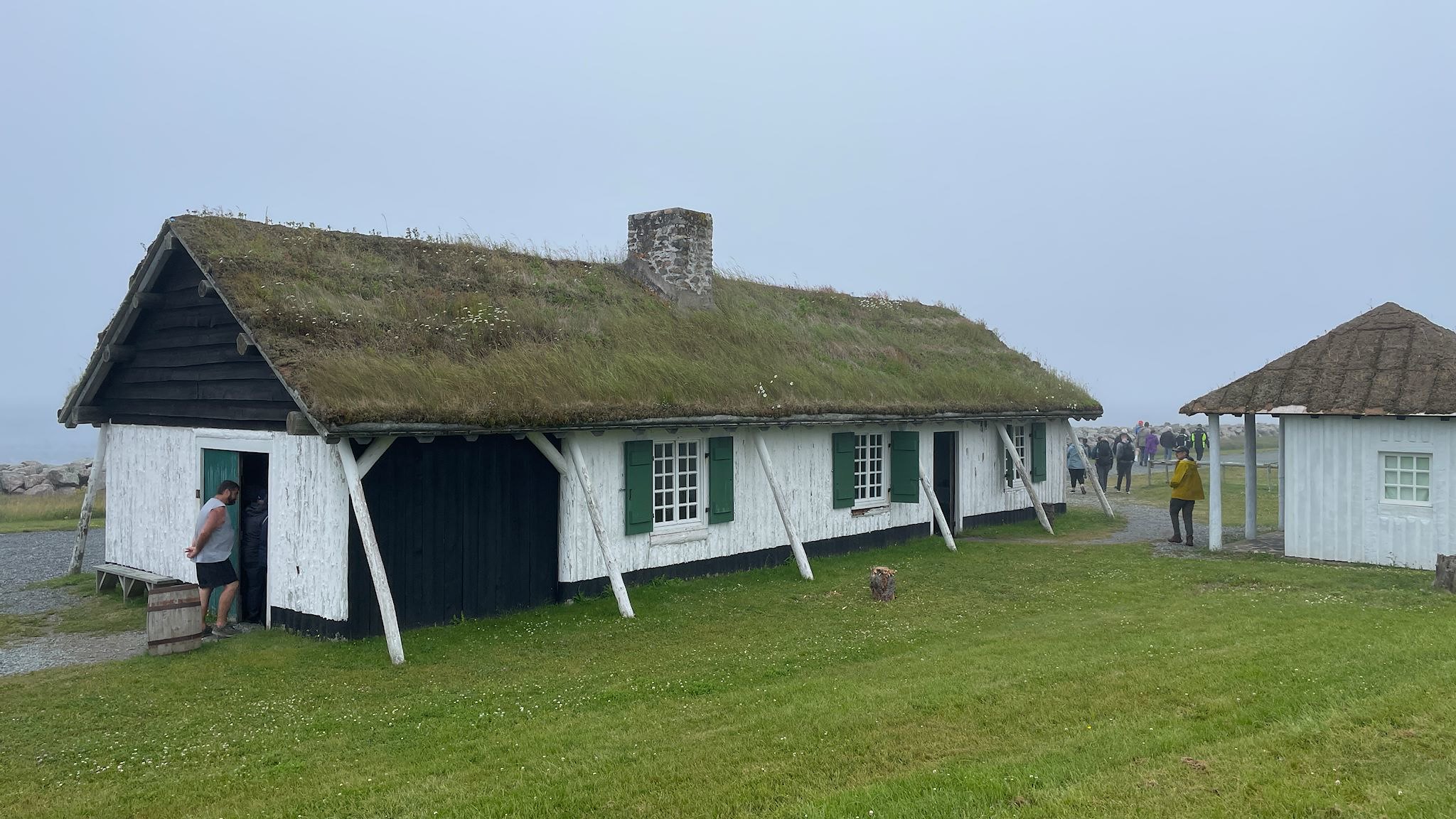
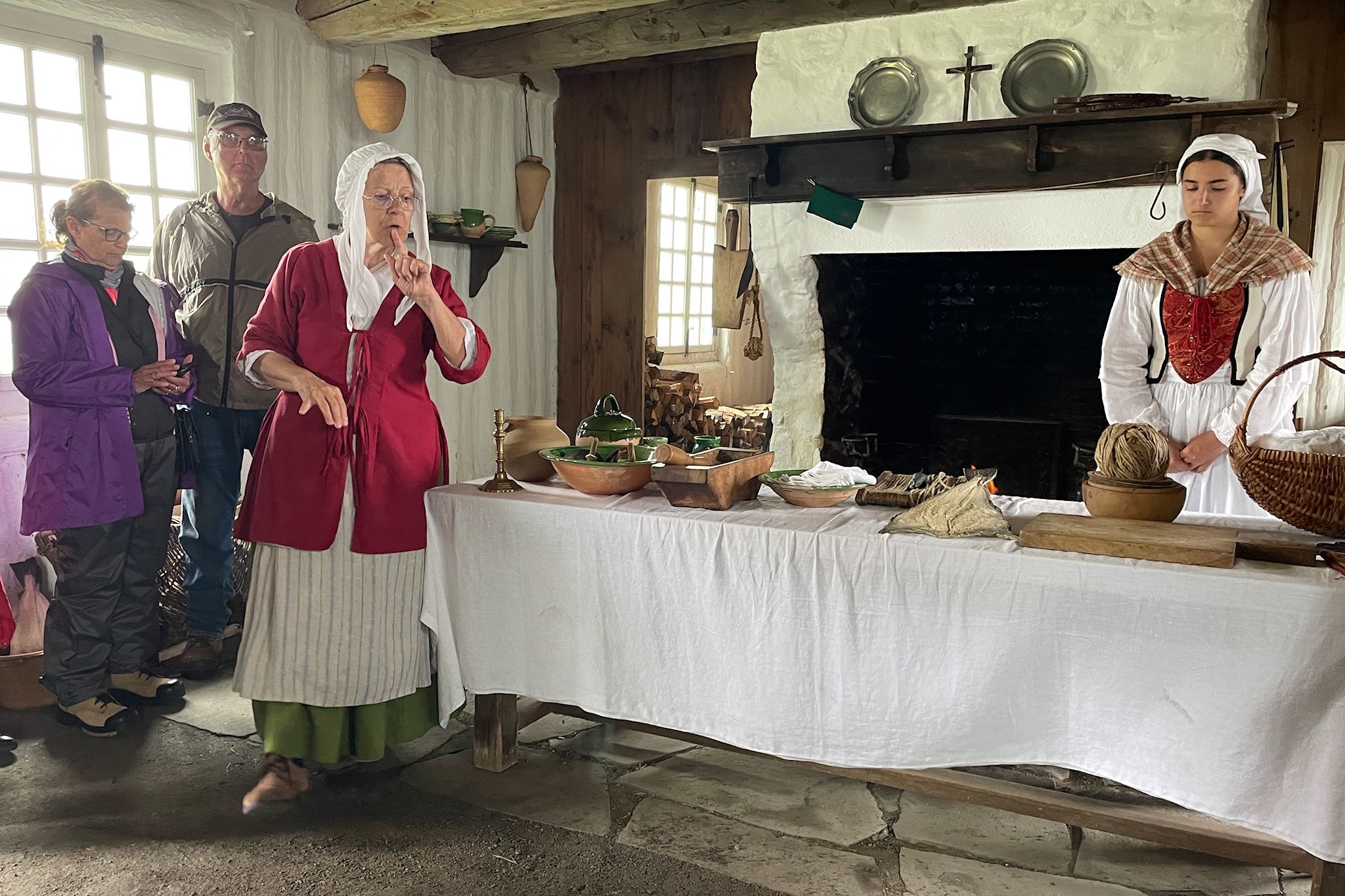
We were greeted by an enactor in a reconstructed fisherman’s home outside of the fortress upon our arrival. Her detailed explanation of the fisherman’s home and status relative to residents of the town within the fortress as well as a primer on what we were about to visit inside the fortress was helpful – and fascinating. We decided on the spot to sign up for a guided walking tour of the fortress, which required us to strategically pick a time for lunch within the fortress.
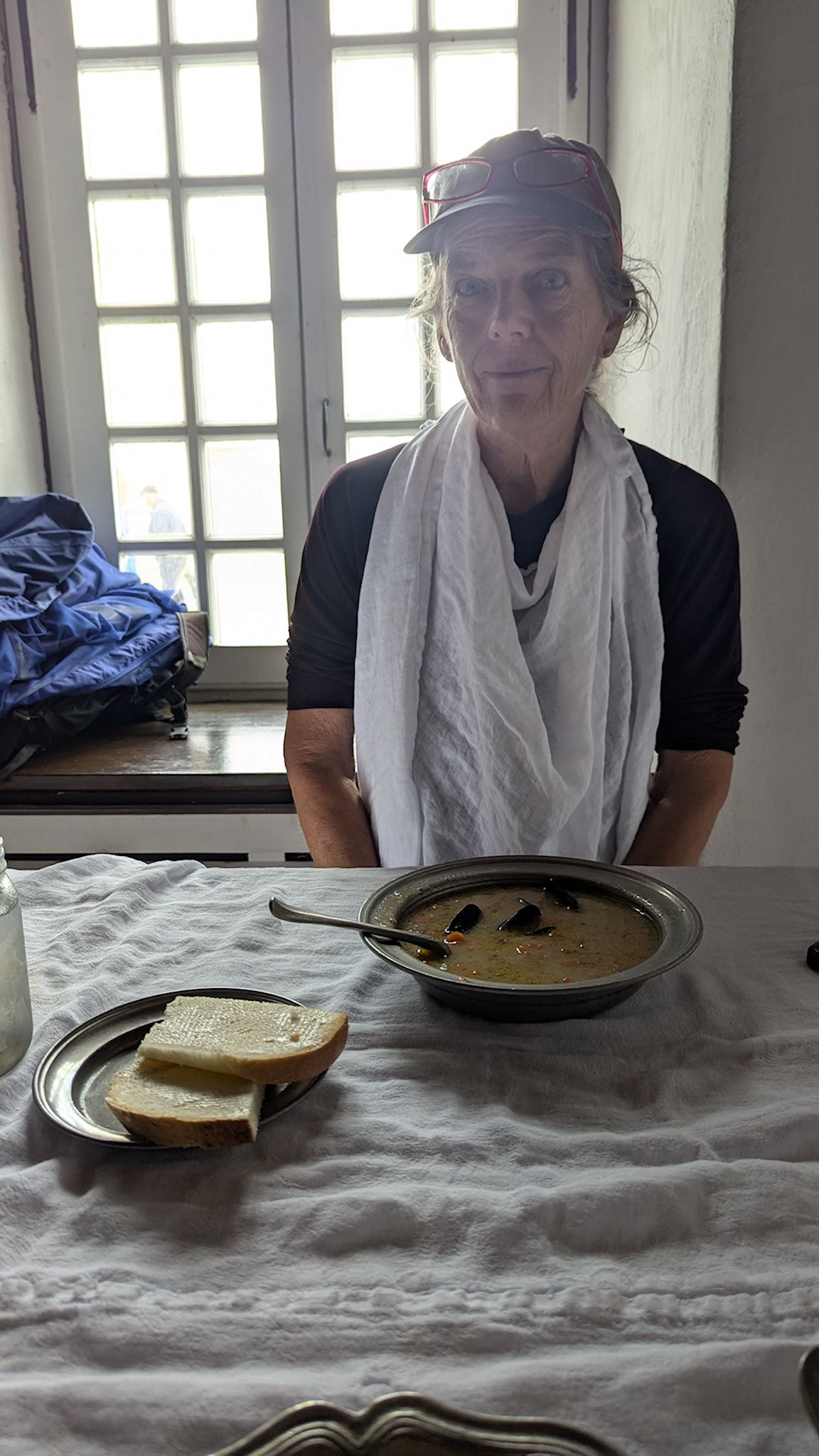
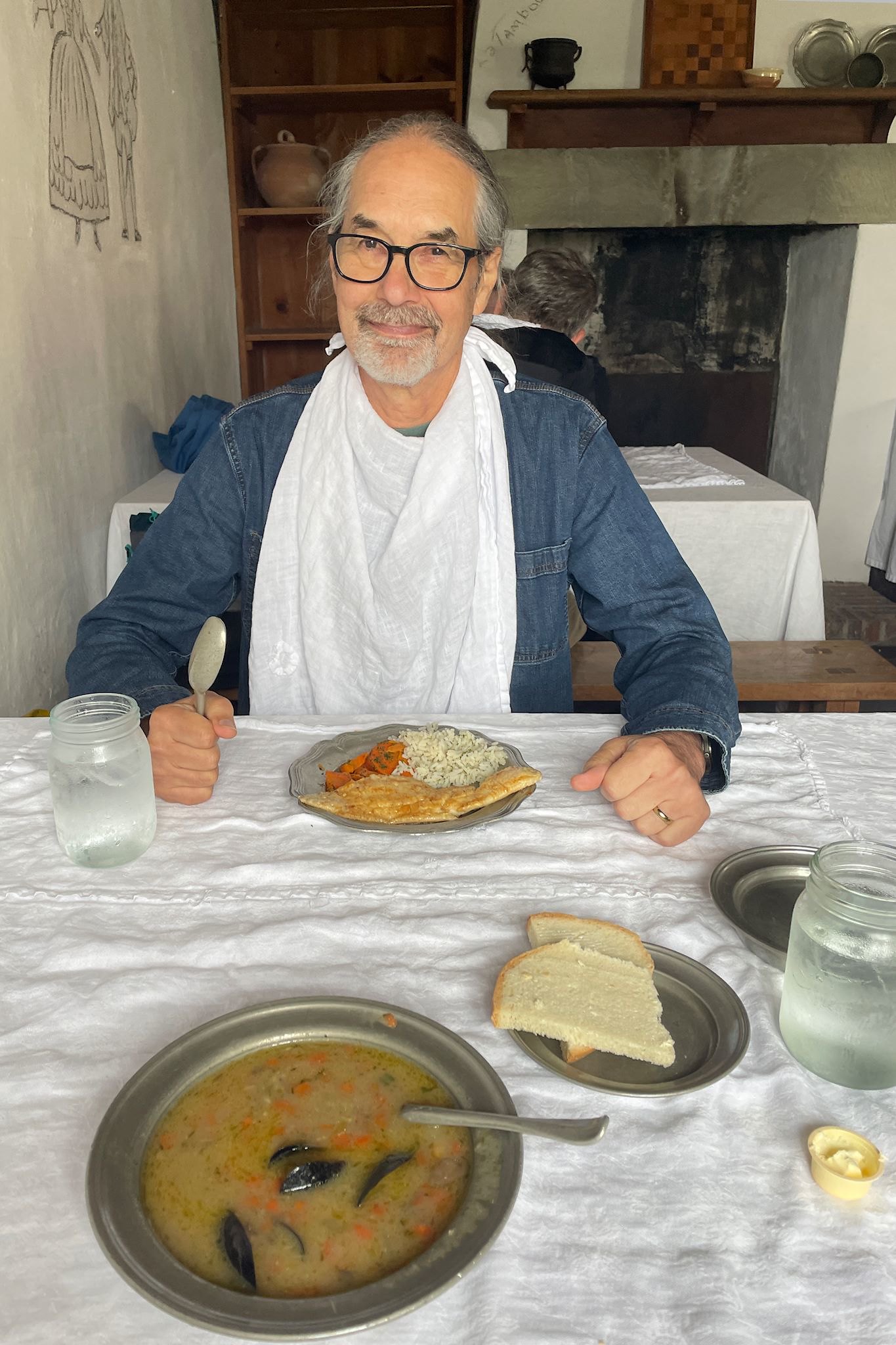
That was easy… We enjoyed a fabulous lunch at the Hotel de la Marine, offering traditional (1745) meals with period serving dishes and settings by an enacting waiter – a living (and delicious) exhibit. We were taught to properly tie our napkins around our necks to keep our garments clean. We each were given a pewter spoon as our sole, all-purpose utensil for everything from eating soup to buttering bread to cutting meat or fish. (Apparently, or allegedly, wealthy merchants and military officers brought their own knives to restaurants. We made do with our spoons.)
We visited several homes and a number of other commercial establishments. Two stood out… One of the exhibits visited was of the home of Mary Marguerite Rose, a freed slave who became the first black woman to run a business in Canada. We also came across the home of Jeanne Dugas, an Acadian who grew up in Louisbourg, was deported, and returned to Canada to found the village of Cheticamp on the west coast of Cape Breton, which we visited (and loved) in 2023.
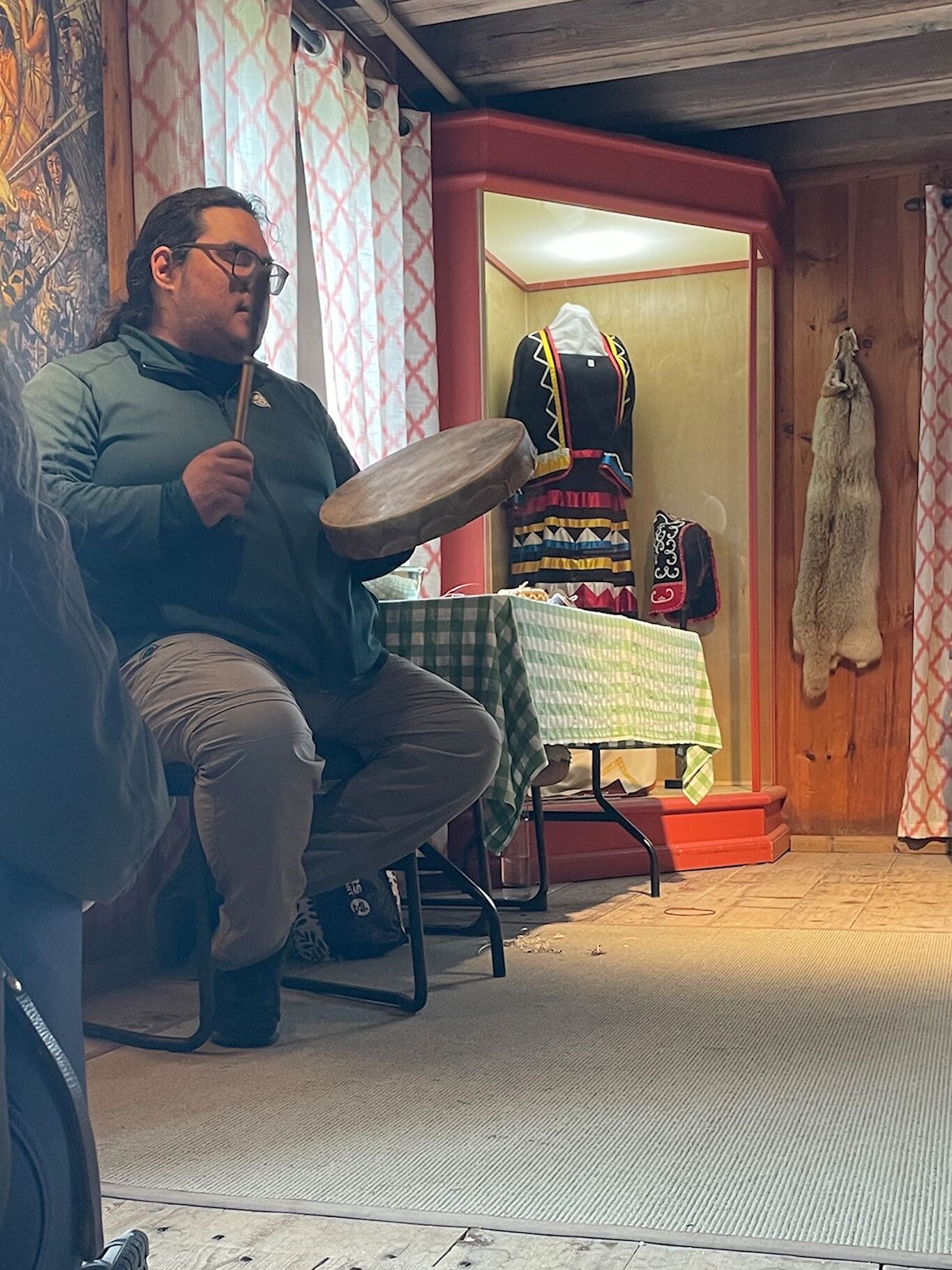
Although not residents within the fortress, the Mi’kmak (pronounced MIG-mah) had lived for a long time in the area of Louisbourg and were friendly with all of the residents. One of the park service employees, a Mi’kmak, provided a narrative of the daily life of this indigenous group in 1745, including traditional songs from different life stages and milestones.
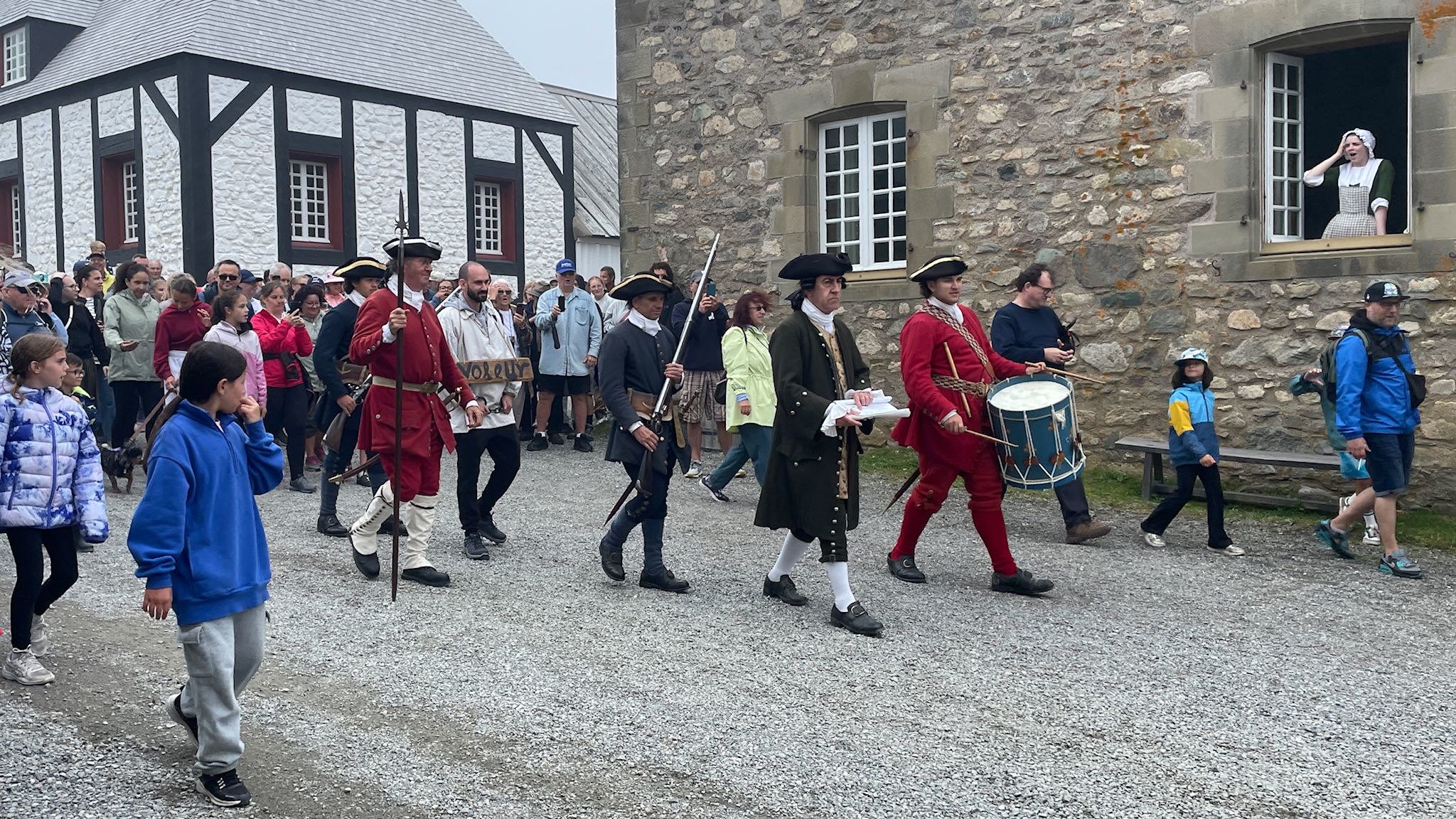
The living exhibit of the criminal justice system was fascinating… The criminal of the day was convicted of stealing (le voleur). He was kept in a locked cell in the King’s Bastion and, once a day, brought out and paraded through the streets, accompanied by a drum corps, hands shackled and wearing a sign to signify his offence. Residents were invited to join the parade and encouraged to (verbally) humiliate and harass the prisoner. At the end of the parade, the crowd would determine if the prisoner had received his deserved punishment and was sufficiently rehabilitated, or if he should return to the cell. I asked our tour guide if this system of punishment was effective – the response was a hearty yes.
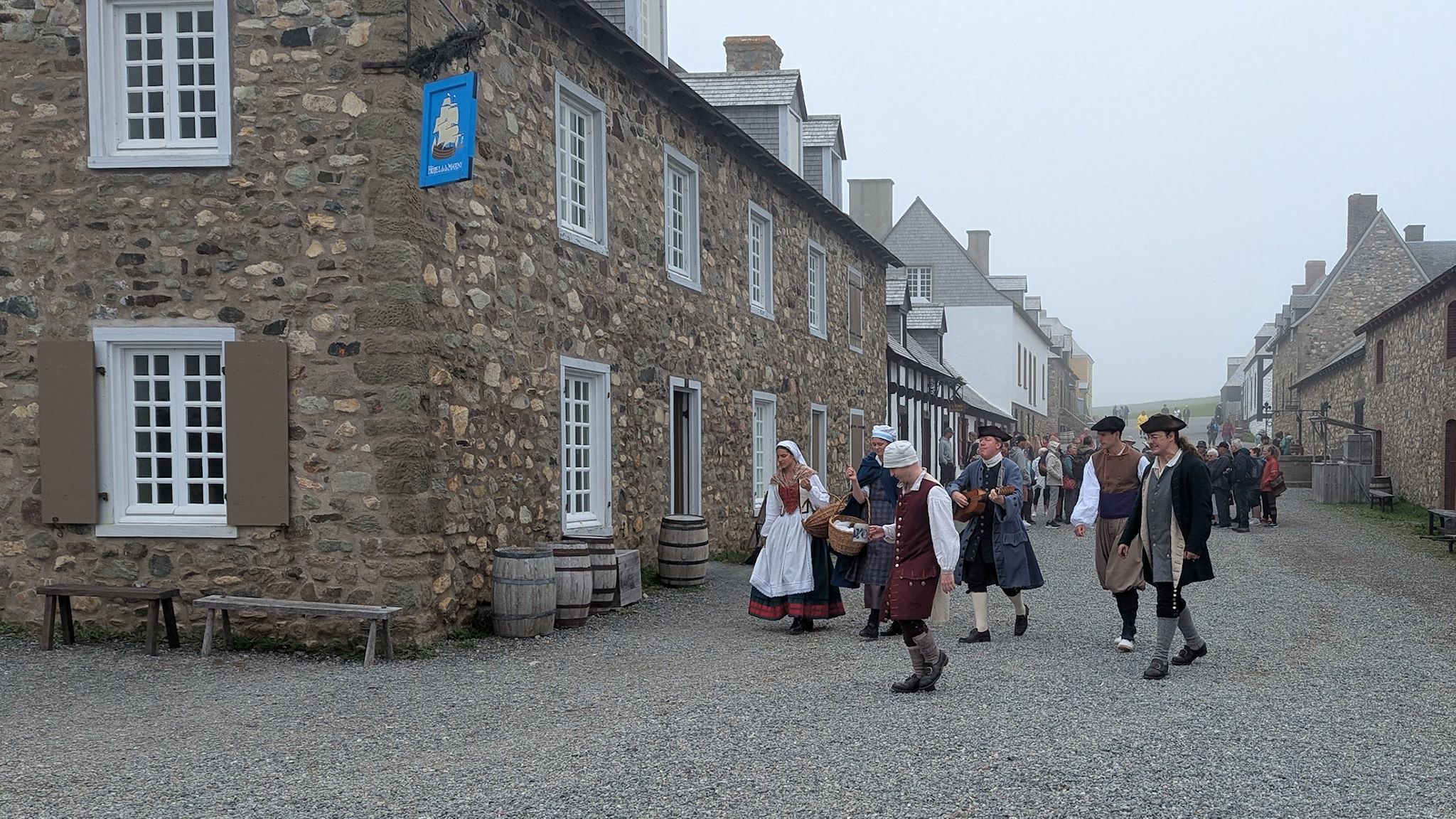
We enjoyed spending our whole day at the Fortress – We couldhave spent more. And we were lucky this day! As the photos show, there was lots of fog all day long, however the forecast in the morning had called for rain all day and we got… none! The universe was taking care of us. Thanks to Mark and Linda for this great recommendation!
For anyone interested, more Fortress at Louisbourg pix…