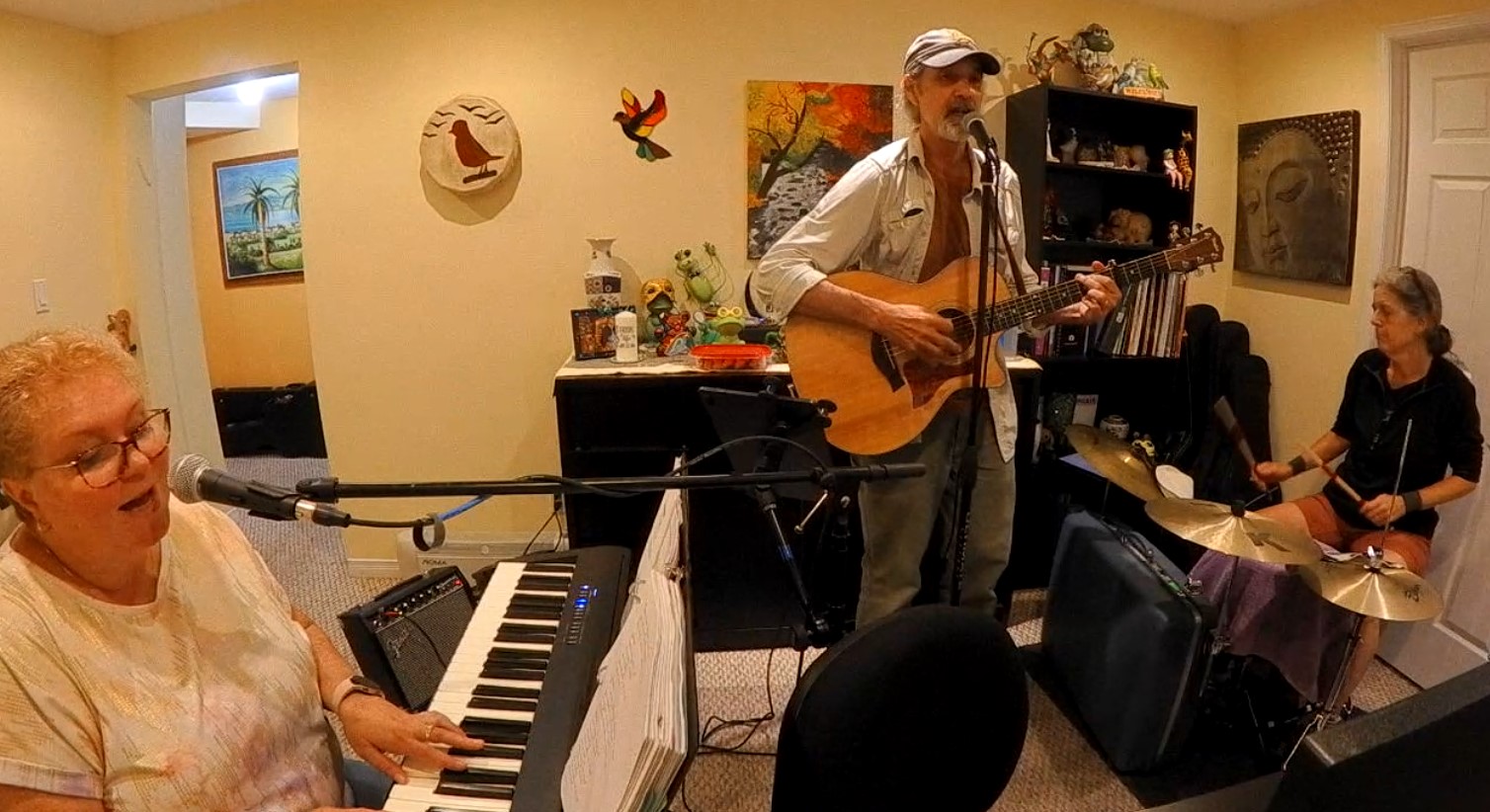
Our loyal readers may recall we jammed with Iris last July while enroute to Toronto. It was so much fun, we had to do it again!
Continue reading “Toronto, ON – again”
Music festivals, jams, open mic’s, shows, camp sessions, etc.
Our loyal readers may recall we jammed with Iris last July while enroute to Toronto. It was so much fun, we had to do it again!
Continue reading “Toronto, ON – again”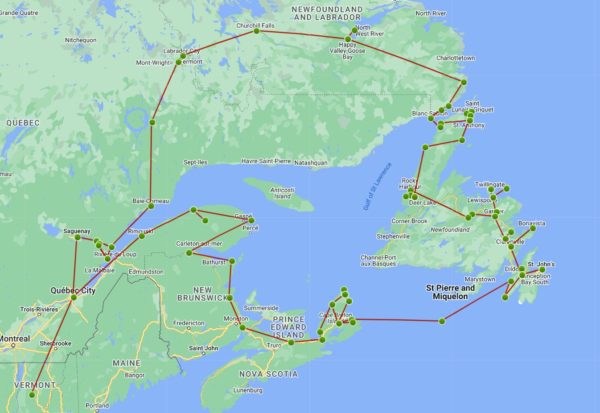
The first night of this trip, on June 10, was spent in Quebec City. After 100 days on the road covering 11,000 km/7,000 miles and 5 provinces, we’ve come full circle back to Quebec City. We’re quite proud of that circle! And now, the adventure portion of this trip is behind us. Ha! Not without one more quick visit to the city… ‘Je me souviens!’
Continue reading “Quebec City, partie 3 – fermer le cercle”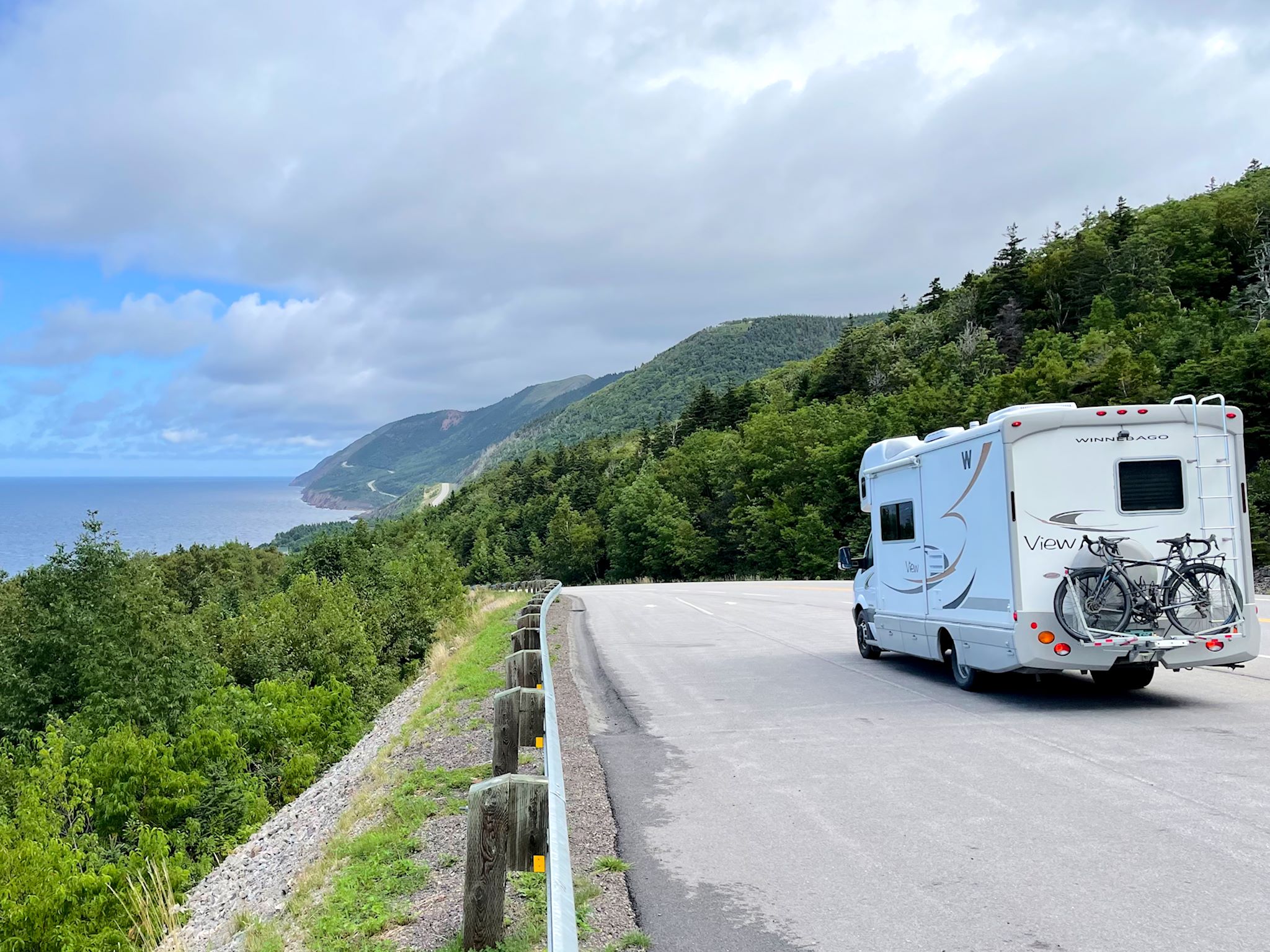
The Cape Breton Highlands comprise a tall, slightly rounded, mountainous plateau on the northeastern end of Nova Scotia. It was formed by the same collision of continents that created the unique mountains in Gros Morne National Park as well as the Appalachian Mountains, back in the really old days. Although not insanely tall at the highest point on White Hill (533 metres/1750 feet), the plateau drops dramatically from the edges – about 350 metres/1150 feet – to the ocean below.
Continue reading “Cape Breton Highlands National Park”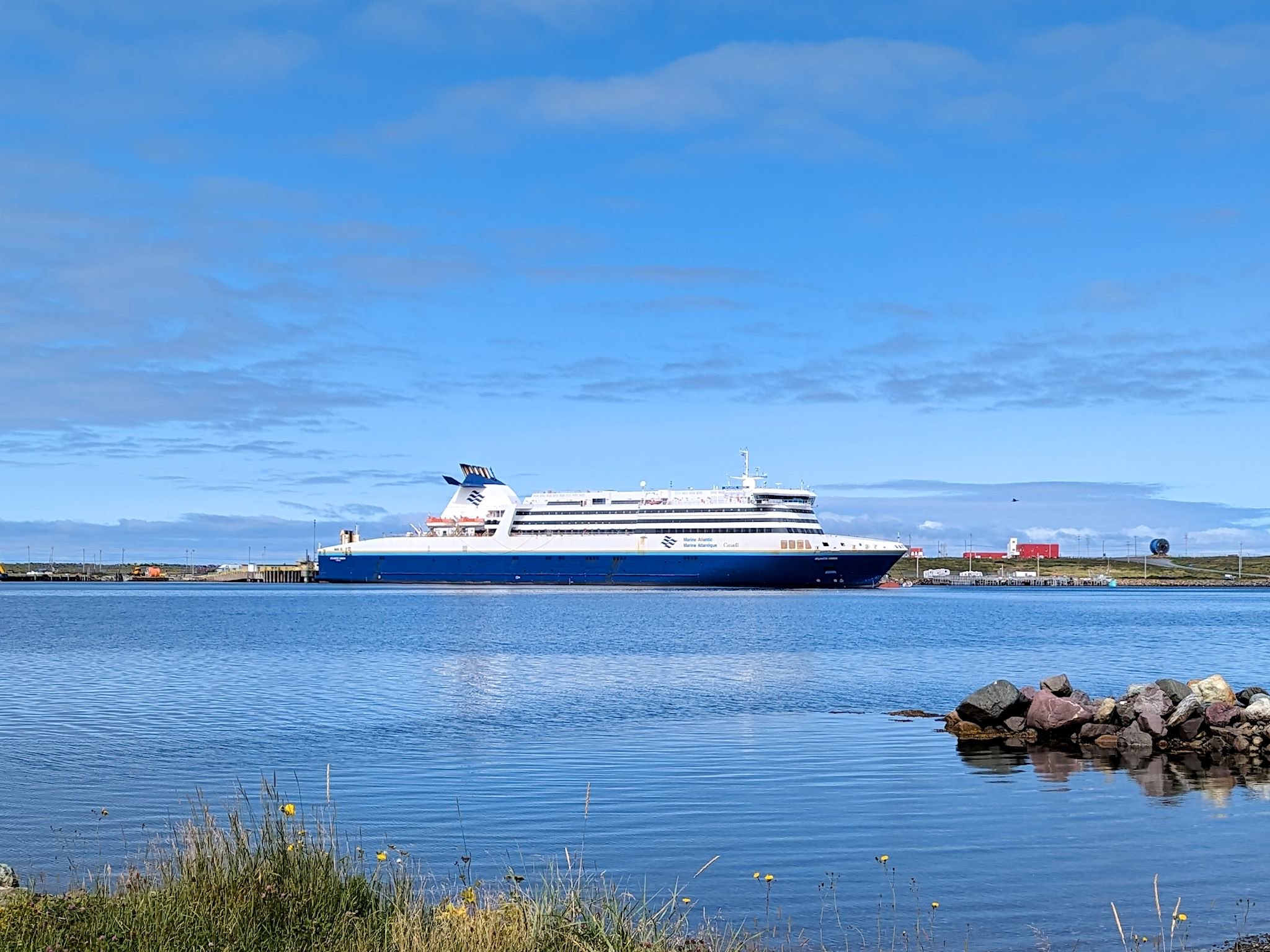
With the joy of our stay in Bonavista fresh in our hearts, the realization that our ferry reservations would take us away from Newfoundland in just a few days meant we needed to head toward the ferry dock in Argentia. We wanted to arrive there a few days early to take care of a few road necessities like long hot showers, laundry, cleaning the waste tanks, washing the rig, paying bills, updating the blog, why not another round of long hot showers, yadayada. We’d just head on over and maybe see a few sights along the way. We even agreed to a no photo rule, so we wouldn’t have to spend time sorting and processing – just do the drive and take it all in as it came. Yeah right…
Continue reading “Argentia, NL”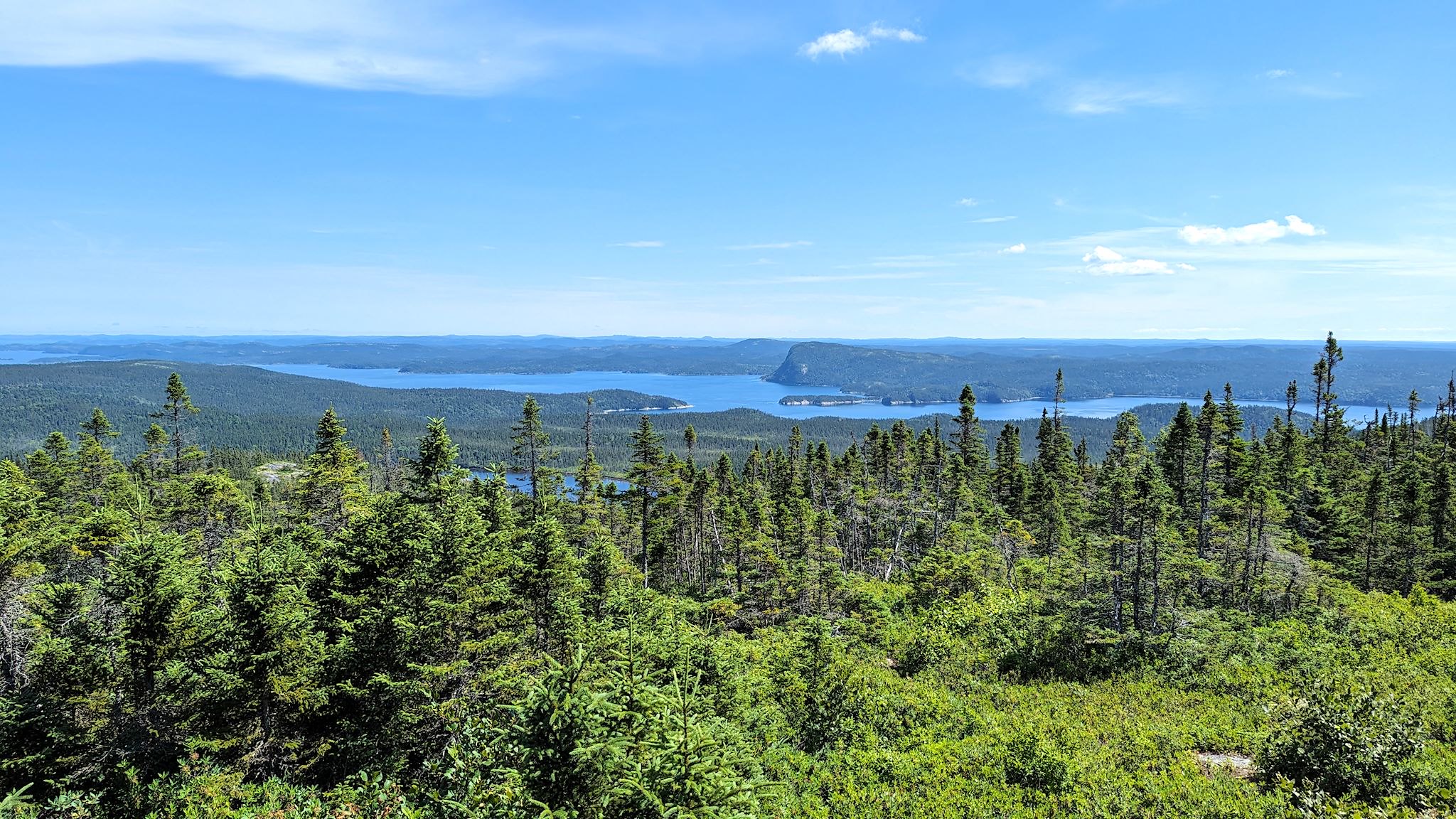
Terra Nova National Park is situated on the northeast coast of Newfoundland. It encompasses 238 km/150 miles of shoreline, all of it within a north to south span of 45 km/30 miles and within 5 km/3 miles of the coast. It comprises islands, sounds, points, fjords, bogs, headlands, inlets, forests, ponds, fingers (of land), arms (of water), tickles (look it up), and straits. The park’s PR people share our penchant for superlatives… Brochures boast that Terra Nova is Canada’s easternmost National Park (yes, we’ve been to Pacific Rim National Park) and Newfoundland’s oldest, established in 1957 (Gros Morne was established in 1970). As with all National Parks, Terra Nova manages access to the beautiful parklands and its primary mission is conserving and restoring ecological integrity.
If Gros Morne is about the rocks, Terra Nova is about balancing the health of the forest that supports the critters that eat the lichen that grows on the rocks, the rocks down in the valley-o (oops, Newfoundland music…).
Continue reading “Terra Nova National Park”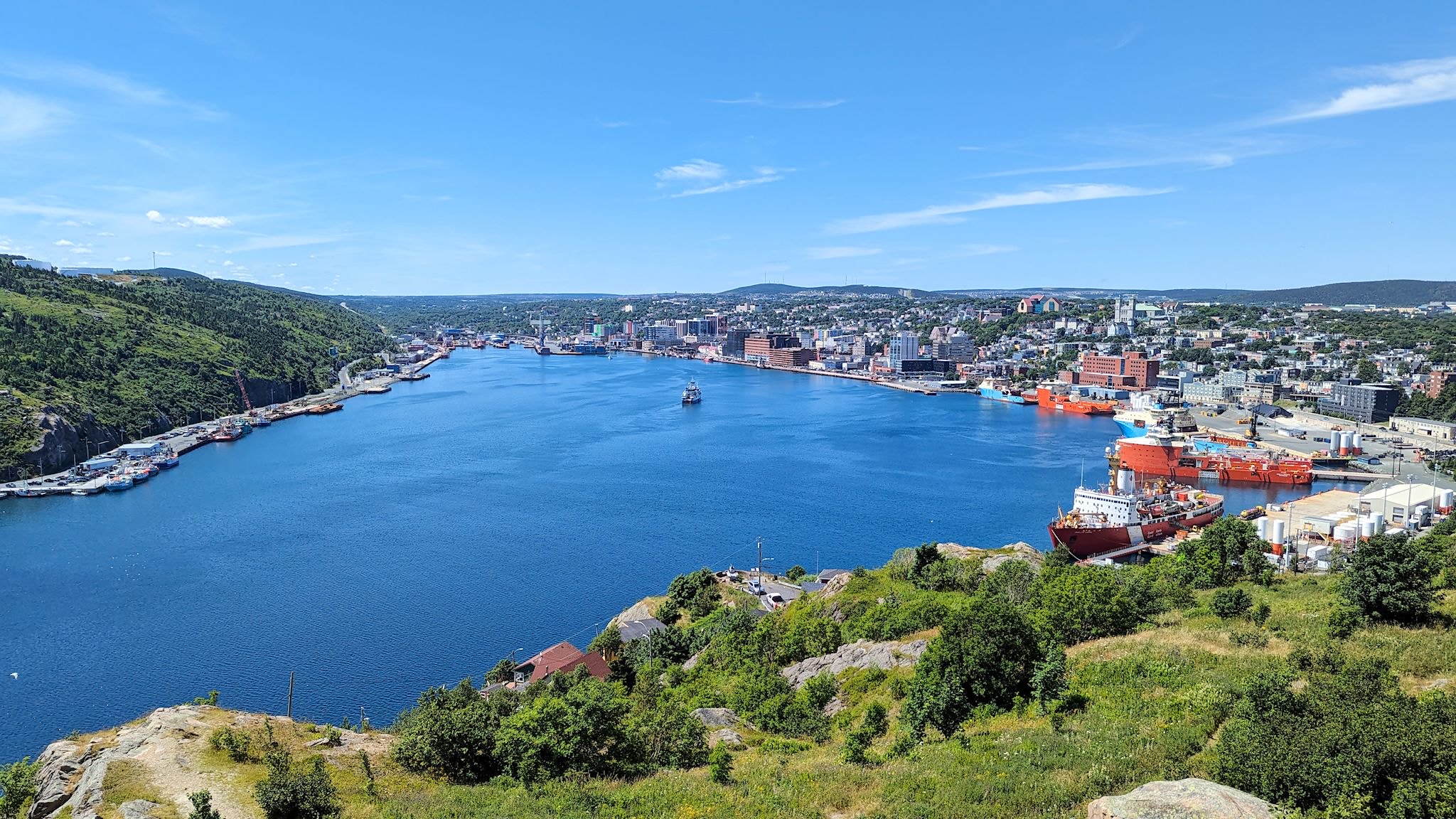
At the southeastern corner of the island of Newfoundland, St John’s is the largest city in Newfoundland and Labrador. At this moment, about 530,000 people live in NL, and 212,000 of them (40%) live in the St John’s metro area. [By contrast, just 26,650 (5%) live in all of Labrador, though Labrador accounts for 72% of the land area of the province.] Anyway, statistics aside, we were eagerly anticipating our visit to the urban St John’s for several things we would find there: music, history, hiking, sightseeing… and a Sprinter service center.
Continue reading “St John’s NL”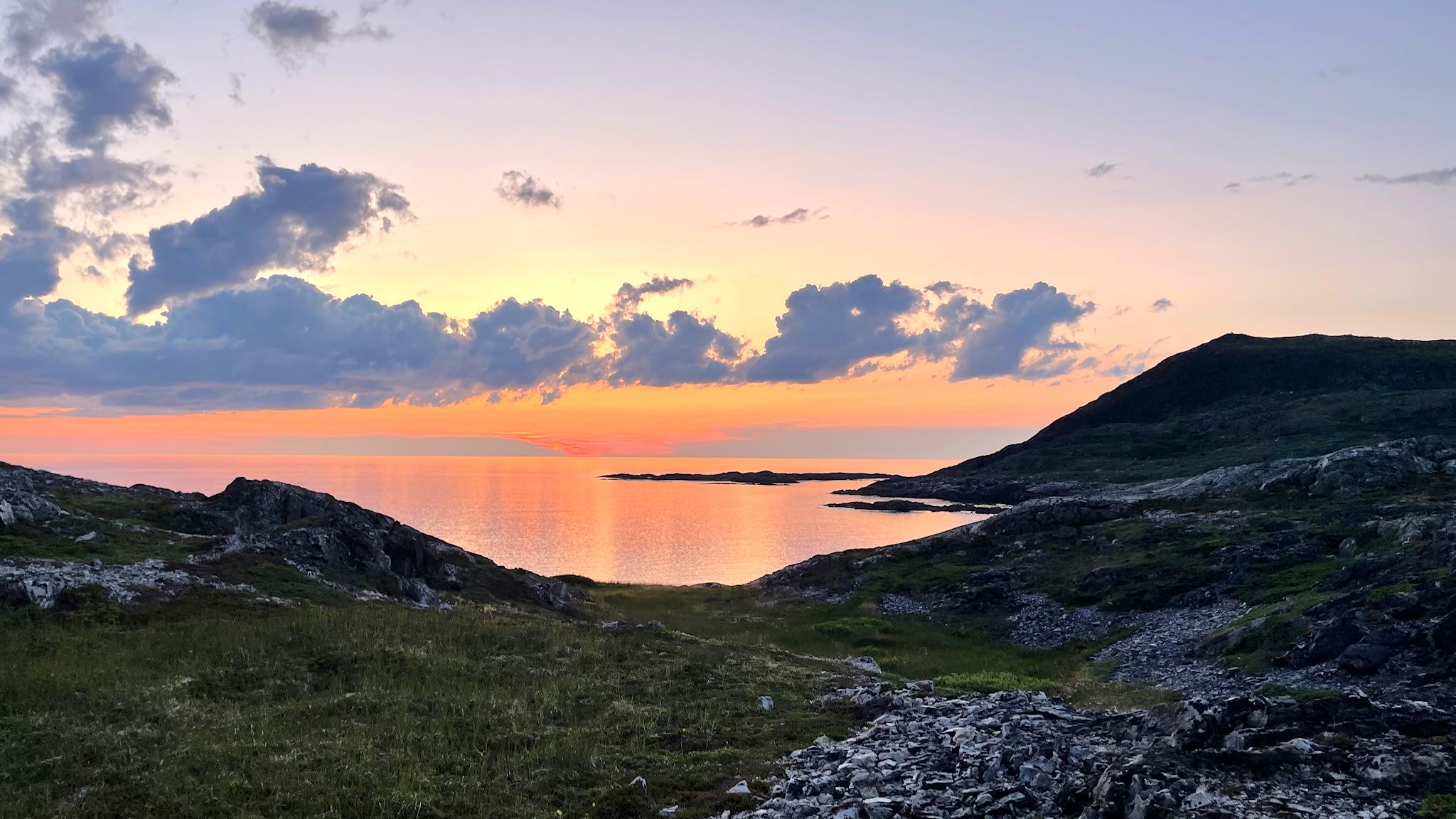
Newfoundland and Labrador covers a pretty large area. If the province were a state in the US it would be the 4th largest, after Alaska, California and Texas based on landmass. (Based on population, it would be the 2nd smallest, right in between Vermont and Wyoming…). Similar to Alaska, it’s a big space up north with very few roads. What that means is that people touring Newfoundland in RVs often find themselves moving around in cohorts based on which of the 3 ferries they took and when they arrived, and we just keep running into each other over and over again.
As we chatted with people in our northwest Newfoundland cohort (because that’s where we arrived on July 7), they all mentioned plans to visit Fogo Island and Twillingate. Those 2 places were on our list, as well. As we crossed paths and chatted with travelers in other cohorts, heading in the reverse direction, they all said you’ve got to see Fogo Island and Twillingate. Newfoundland and Labrador Route 340, known as the Road to the Isles, heads north from Gander – and so did we.
Continue reading “The Road to the Isles”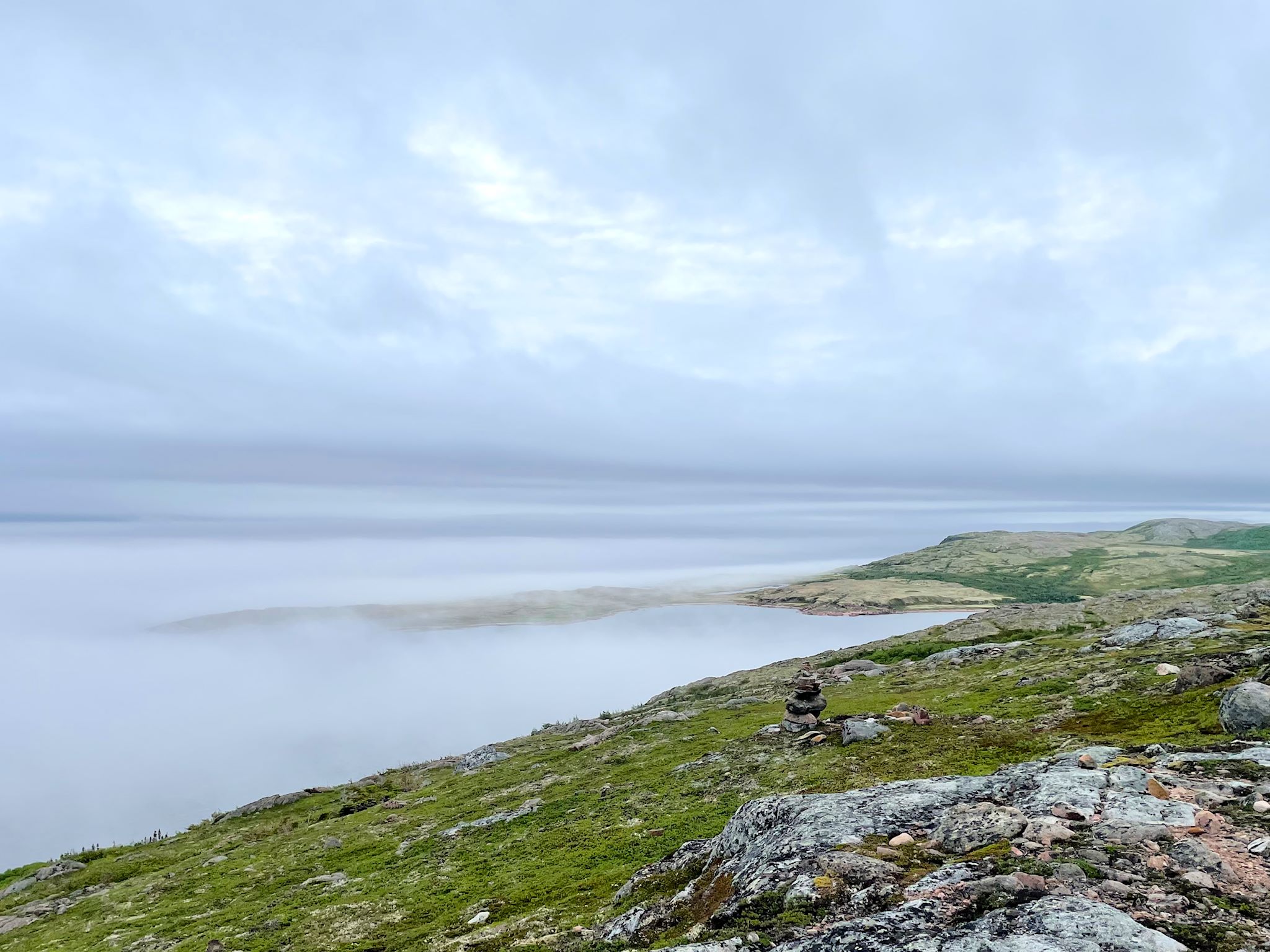
It’s getting to be about time for a musical post. We’ve been learning and practicing a particular song with an eye towards recording it to use as a joint “summer recital” piece for an online music school we’re both involved with, also as a recording we can share, as well as just to add the song to our repertoire.
This would be the most elaborate on-the-road recording we’ve done, and a first test of our latest traveling studio gear.
Continue reading “Recording: The Studio On The Road”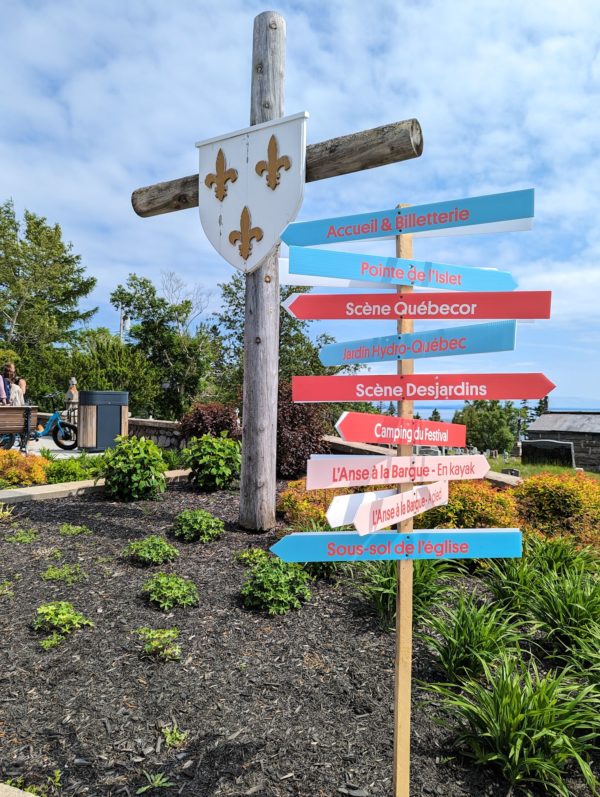
Tadoussac was the site of the first Canadian trading post along the St Lawrence in 1599. Its location where the Saguenay River and fjord meets the St Lawrence River made it an ideal trading site between the European and indigenous people of the region. The location is also beautiful! Current-day Tadoussac, home to fewer than 1000 people along with scores of whales, has become a popular destination for tourists (many in search of a glimpse of said whales) and second homeowners from the more southern parts of Quebec. It was also the site of the 37th annual, 4-day Festival de la chanson de Tadoussac (Tadoussac Song Festival).
Continue reading “Festival de la chanson de Tadoussac/Tadoussac Song Festival”
It used to be that in the spring we’d restart our blog with a recap of the previous year’s trip. That tradition was suspended in 2020 because of COVID and has remained so until now for that and a couple of other, unrelated reasons.
Continue reading “What on Earth happened?”