
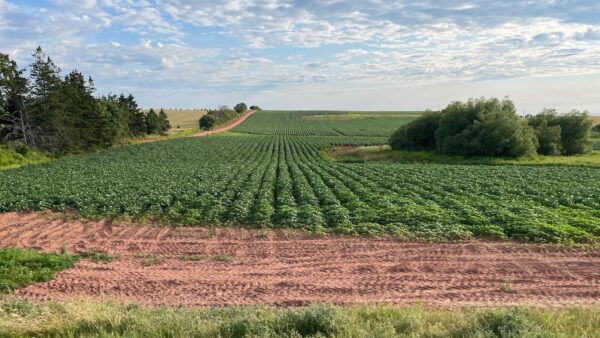
From the north coast we set off to explore the west coast of PEI. The drive was quite pretty as we passed miles of tidy, colorful potato, corn and wheat fields. Relatively flat with rich red soil, it seems every bit of land that is not used for a house, a church or a music venue is used for agriculture. Taking back roads as much as possible, we also passed through bunches of tiny towns, a handful of big ones, and more of the red coastline’s alternating cliffs and beaches.
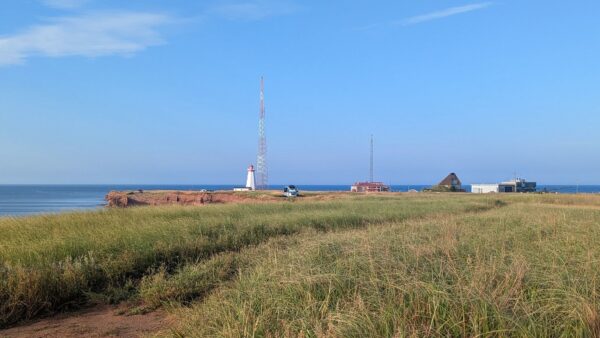
Our loyal readers know of our penchant for end-of-the-road visits. Our drive to North Cape, the absolute northernmost point of PEI, did not disappoint! As we approached the end of the road, we found a bit more than the expected visitor/interpretive center…
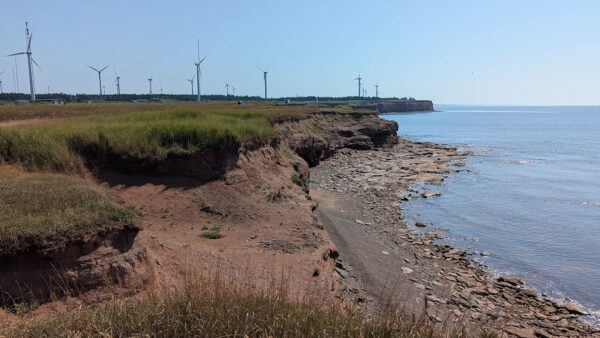
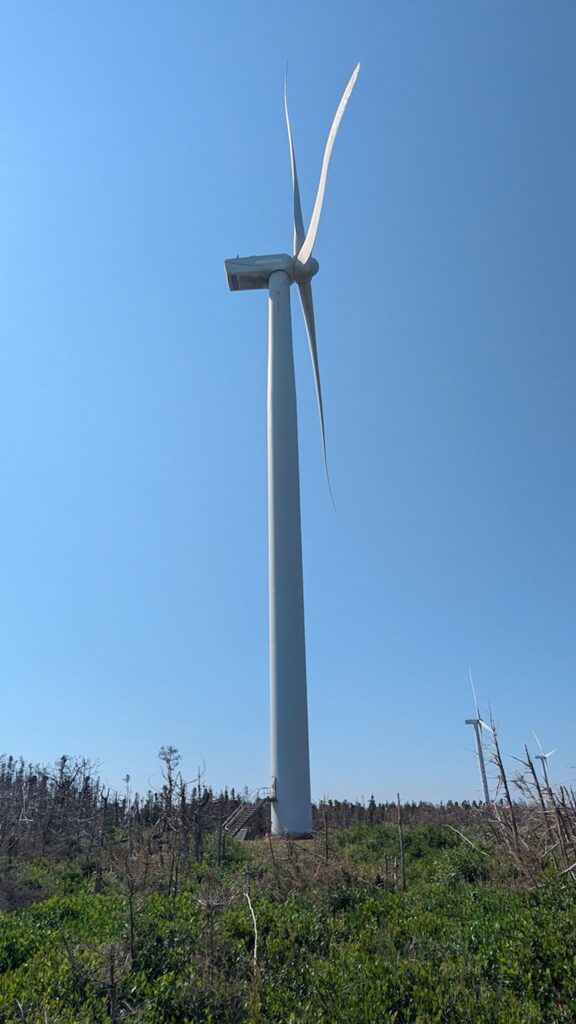
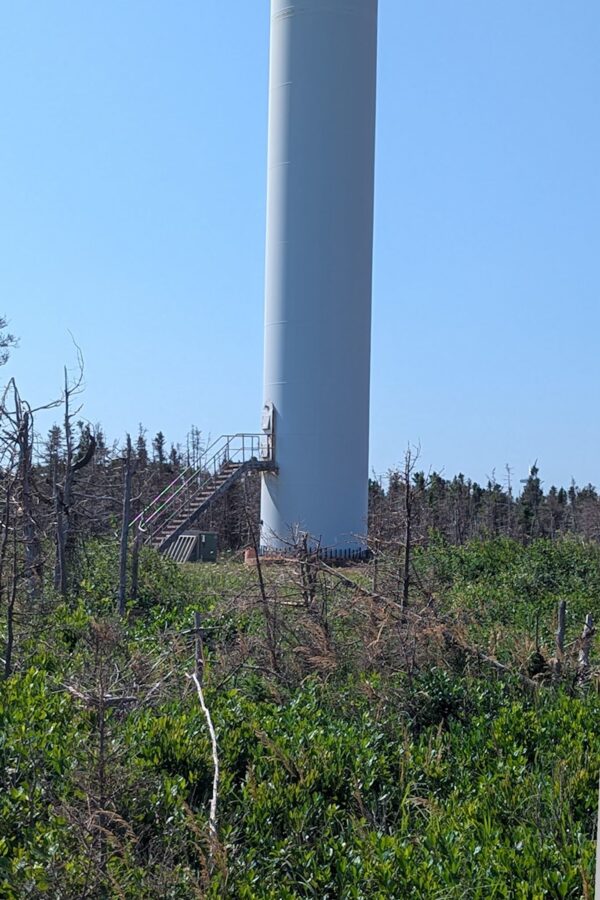
There’s a large wind farm operated by the Wind Energy Institute of Canada (WEICan) where research is conducted on alternative energy generation as well as storage and battery technologies. The interpretative center provided more information at various levels of detail. One exhibit replicated the inside of the nacelle of a wind turbine – the pod atop the 80 m/260 ft tower where the 23.5 m/77 ft blades are attached and within which the generator, drive shaft, and blade control mechanisms live, with just enough space left for techs (who climbed up the ladder inside the tower) to do maintenance and repairs.
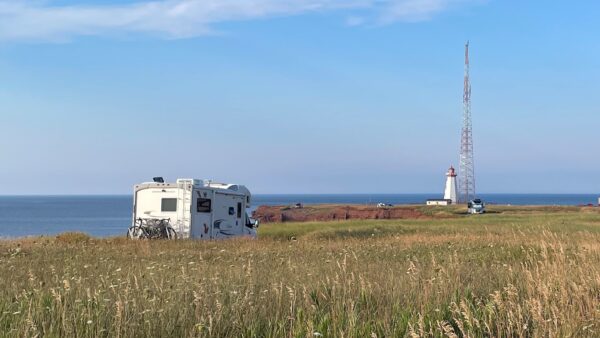
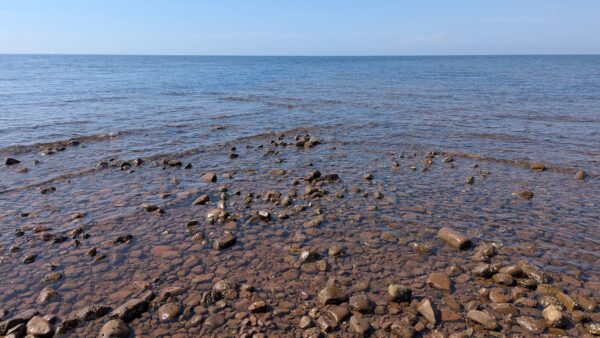
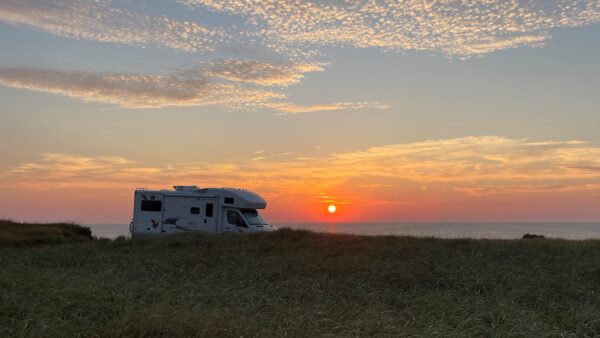
The end of the point (not surprisingly) is the site of the North Cape lighthouse and offers offered a 300 degree seaview – where the Gulf of Saint Lawrence meets the Northunberland Strait causing overlapping, diagonal, crashing waves over a long, rocky reef. A road along the cliffs had a few areas available for boondocking, and dry camping was also permitted in the main parking lot (for the less-adventurous, or late arrivals). We found a nice spot on the road to spend a couple nights – adjacent to 2 hiking trails, walking distance from a restaurant, and surrounded by harlequin ducks and seals barking their hellos to us from time to time. Oh, and the sunset!
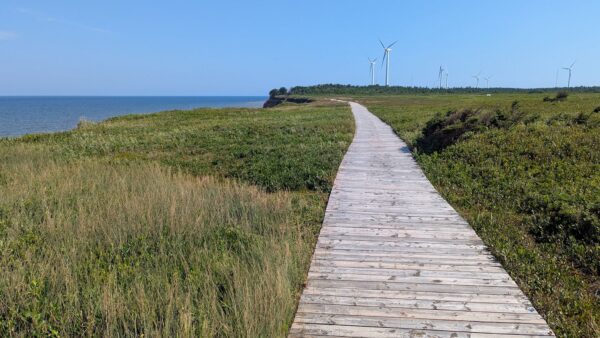
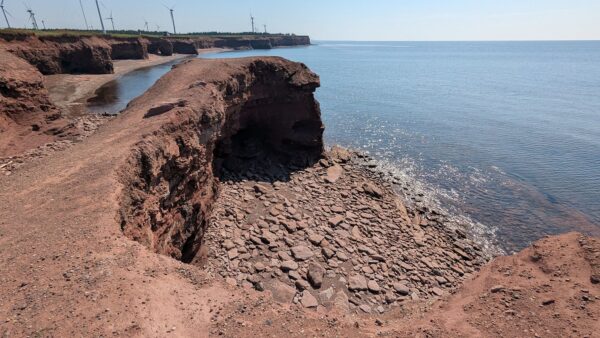
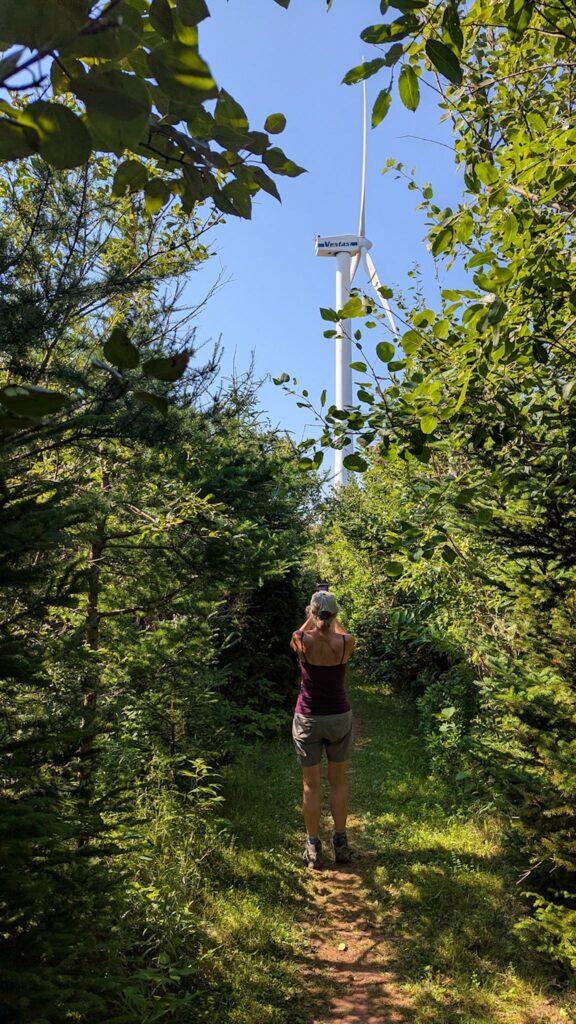
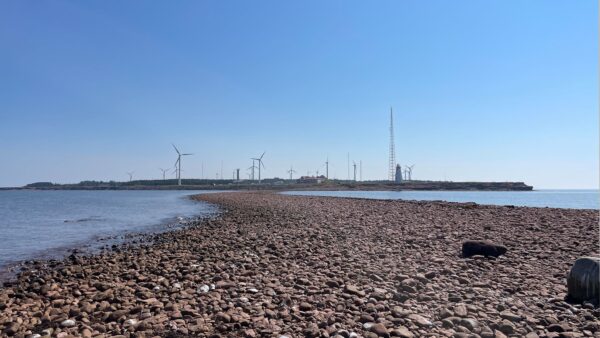
We spent a day at North Cape hiking the Black Marsh Trail. (Technically it’s a bog, but they’ve been calling it a marsh for a long time). The trail revealed the transitions from the cliffs and sands through a forest and into a bog across boardwalks over the soft surface, with spurs to interesting stops along the way. When we returned to the point, we waited for low tide and walked out to the end of the rock reef to watch the crashing waves and get a seal’s eye view of the North Cape compound.
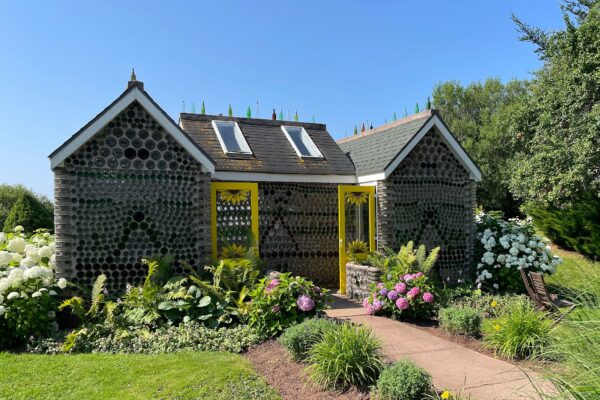
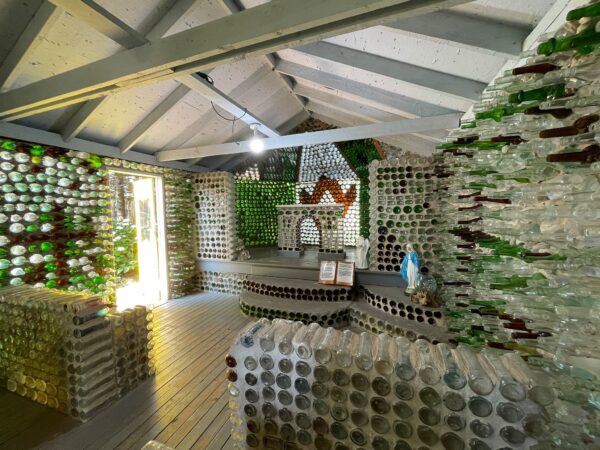
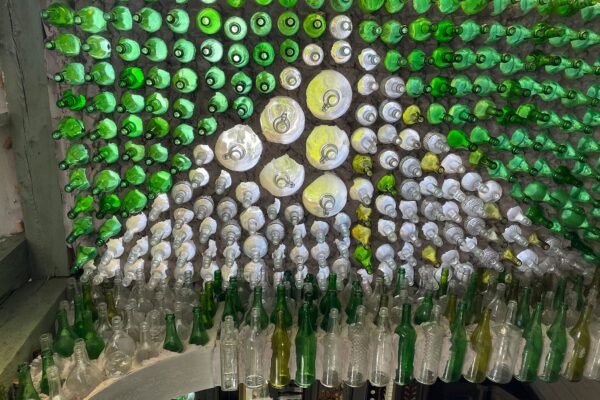
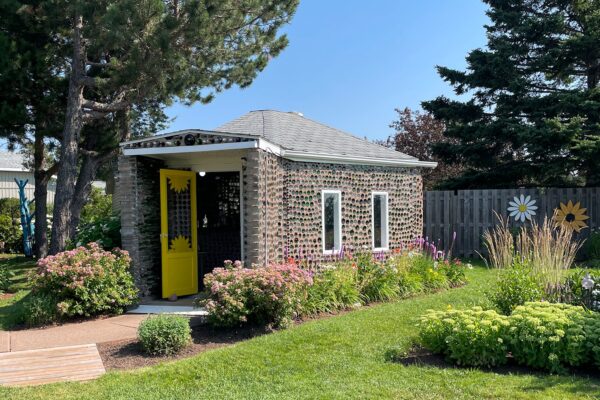
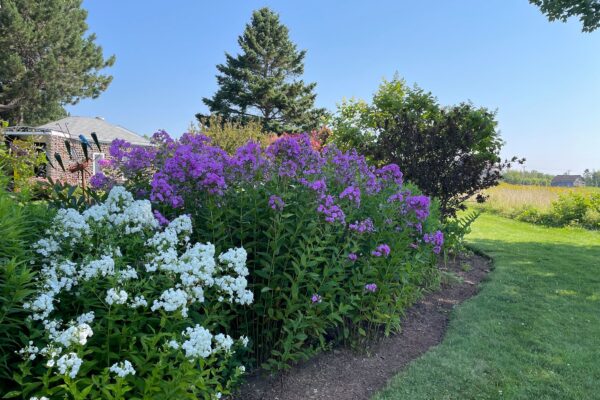
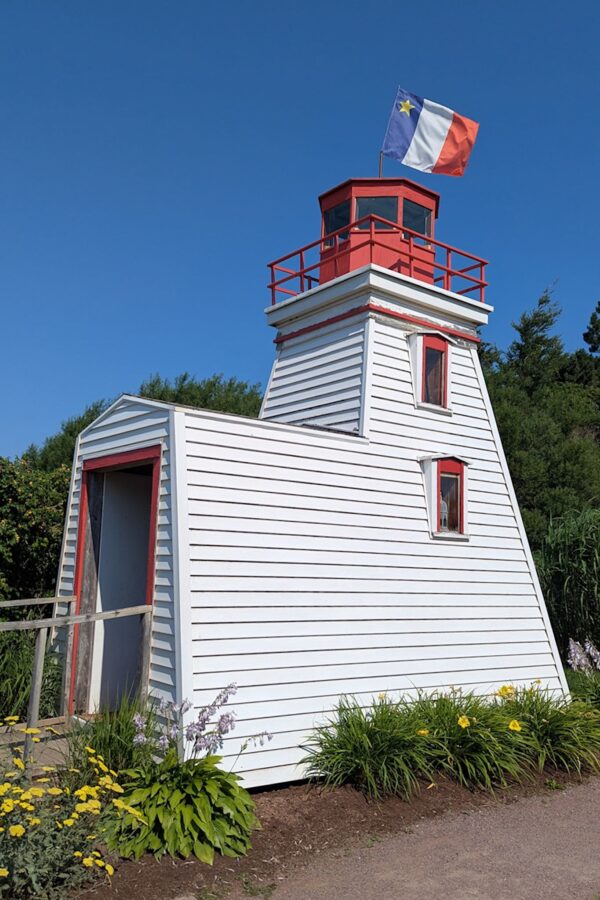
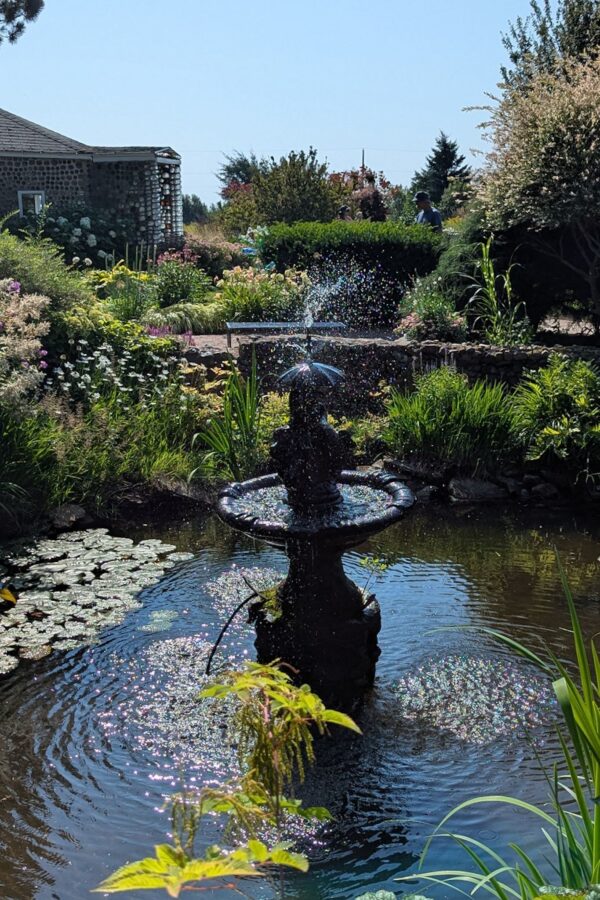
A couple of unusual-sounding PEI attractions caught our interest. The first was the Bottle Houses and Gardens in Wellington. Lobster fisherman, carpenter and boatbuilder, with a stint as lighthouse keeper, Edouard Arsenault needed a project when he retired. Having seen a photo of a house made of bottles in western Canada, he decided to build one in his back yard. He collected, cleaned and sorted well over 30,000 bottles of all shapes, colors and sizes. Using his skills as a carpenter along with imagination and sense of humor, he built 3 such houses – the six-gabled house, the tavern, and the chapel – between 1980 and 1984. Adding a goldfish pond with a fountain, a trail through the gardens, and a scale model of the Cape Egmont Lighthouse (where Arsenault was caretaker in the 1950s) created a pleasant space, now open to the public, where we were impressed by the dedication and determination used in creating this backyard retreat.
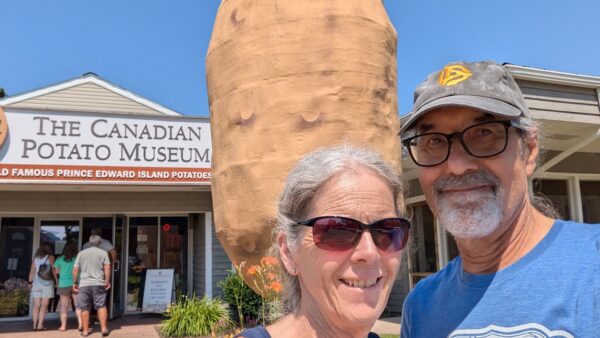
The Canadian Potato museum was a far less whimsical place than the Bottle House and quite a bit more serious than we’d imagined it would be. We’d expected to find a mostly amusement-oriented attraction, yet it turned out to be much more than that.
PEI farmers do take their potatoes seriously (though it seems they are open to a potato joke now and then). If PEI were a separate country, it would rank in the world’s top 30 potato producers. However, it is just a small Province. Every year PEI harvests about 10,000 kg of potatoes per capita! That and the bright red soil here with a perfect balance of moisture drainage and retention, make PEI the Potato Capital of the World.
Potatoes originated in South America. Over 100 varieties of potatoes are grown in PEI, which is astonishing, however there are over 5,000 varieties in the world – 4,000 of them in the Andes, alone. There are also over 260 potato diseases, and the museum demonstrated the 14 that are most common in PEI. Mechanized potato harvesters cut the greens and dig the potatoes up, lifting them onto a rack that shakes them to remove the loose soil before loading them into trucks. We learned how to properly pronounce the name of PEI’s most famous crop (according to a farmer whose family has been here for generations) – it is ‘po-day-do.’
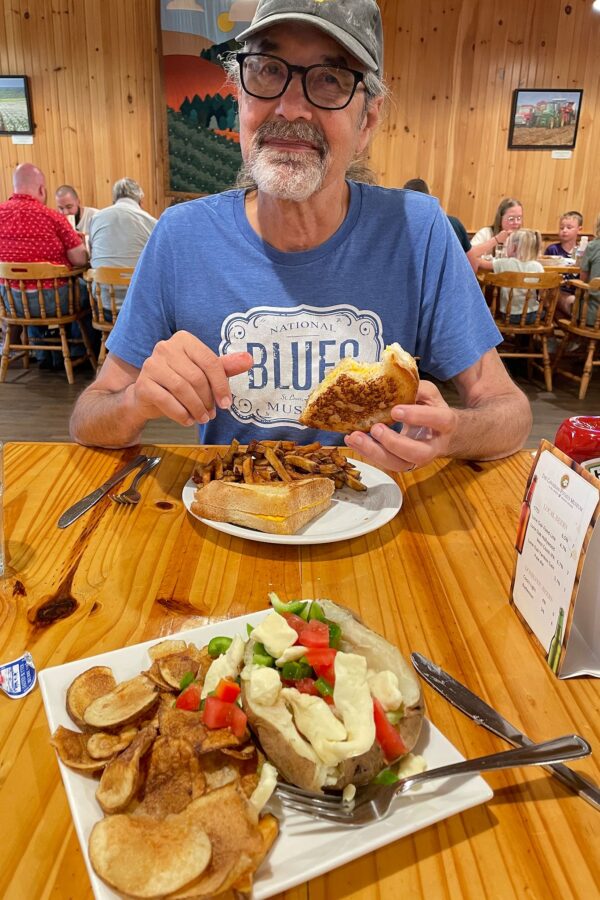
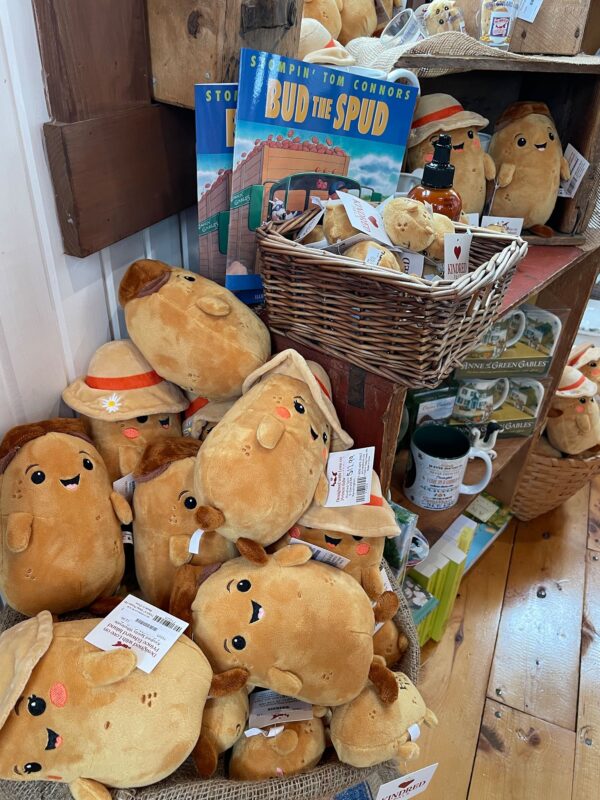
Nobody will be surprised to hear that the potato museum included a restaurant/cafe that featured a potato-themed menu. Doug enjoyed a grilled cheese on potato bread with fries, while I loved my veggie-loaded baked potato served with hot, freshly made potato chips. And every gift shop, convenience store and big box store on the island sells stuffed potatoes – the plush toy kind, not the culinary ones.
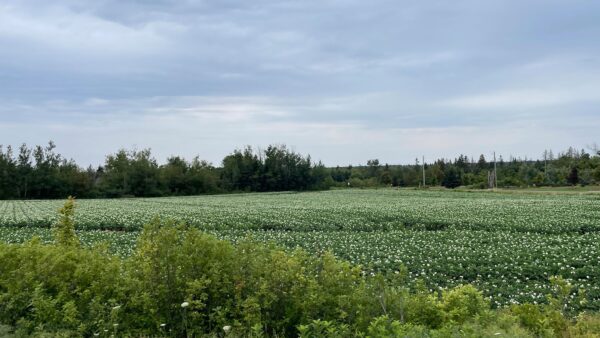
Soon after potatoes bloom (as I write, that is right now) immature, soft, thin ‘new potatoes’ are ready to harvest. We couldn’t go a kilometer/0.6 miles without being offered a chance to buy them from the farms. And we did.
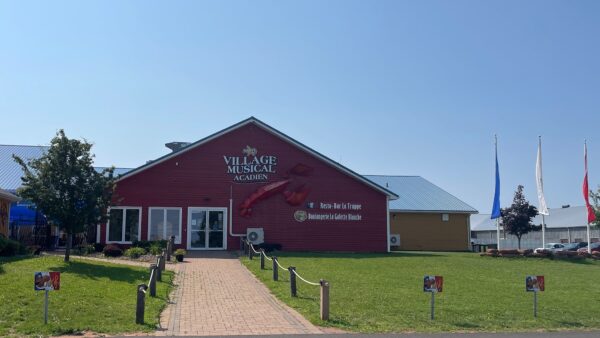
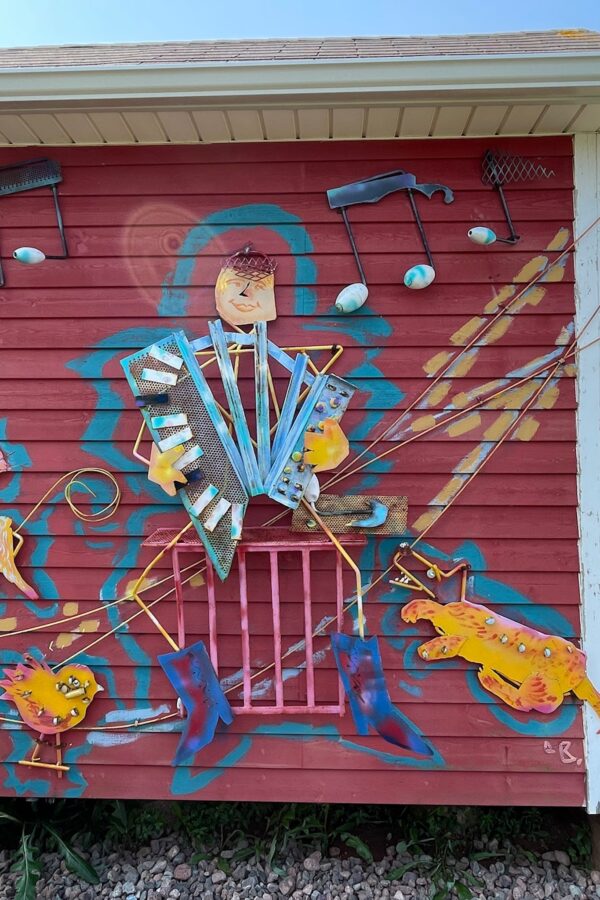
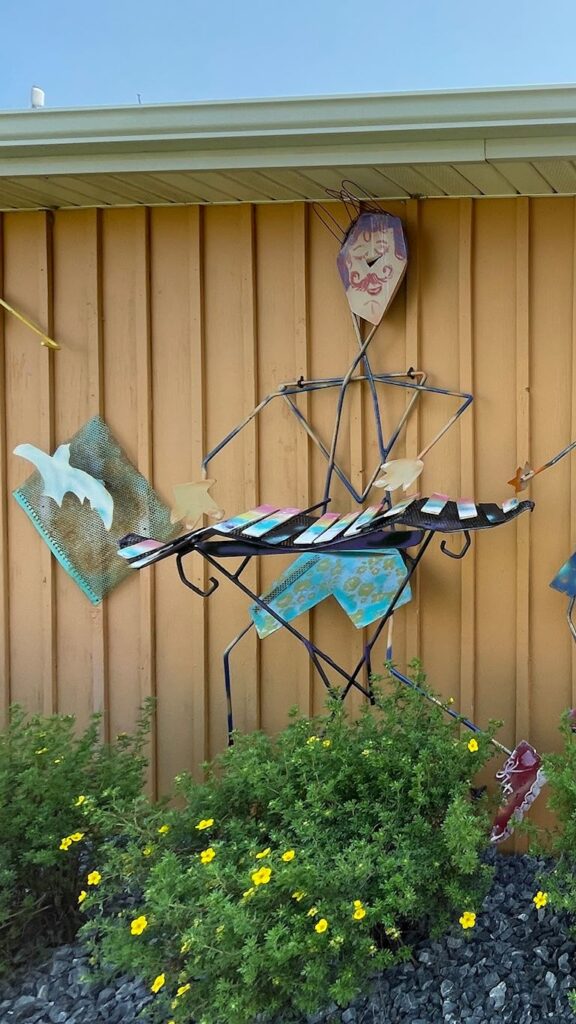
Abram-Village (pop ~300) is the cultural and musical center of the mostly French-speaking Evangeline region of PEI. The village is home to the Village Musical Acadien which houses a restaurant serving Acadian food, a gallery showing works from Acadian artists, and a huge number of absolutely joyful welded sculptures. And there was music – an Acadian band performance in the barn 4 afternoons a week, and a dinner-theatre type performance of Acadian music 4 evenings each week. Of course, we attended both!
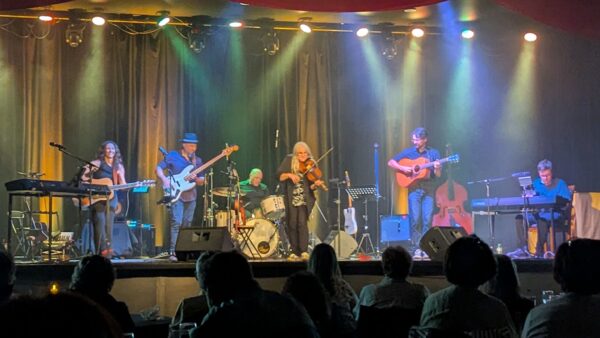
The 6-member dinner theatre troupe performed a show called La Veillée au Village/An Evening in the Village. The show surrounded a couple of short gameshow-inspired comedy skits (en Français, bien sur) that inspired laughter (very proud, we were, that we understood it well enough to get the jokes) with Acadian and Acadian-adjacent music (switching smoothly between French and English) that inspired mostly awe. Each band member played multiple instruments (keyboards, guitars, violins, mandolins, bass guitar (electric and acoustic stand-up), drums, percussion (including washboard and spoons), accordion. One member, Caroline, played at least 6 of these! Four members also sang, combining their powerful voices and solid harmonies on a wide variety of songs. They ranged from traditional Acadian tunes and high energy Cajun pieces to popular Acadian songs from the past several decades including, some from nationally known performers who came from this part of PEI (and Stan Rogers from NS). Songs also included a hilarious adaptation of Michael Jackson’s Beat It with an Acadian twist.
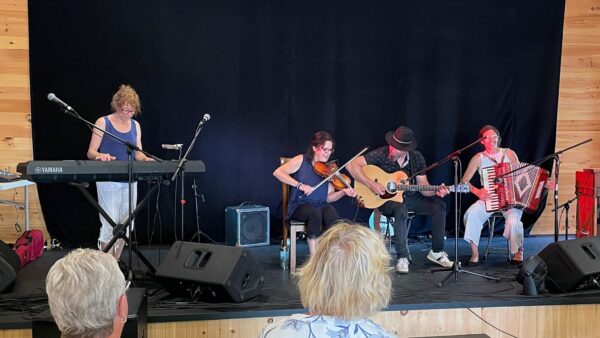
The next day’s afternoon show featured Gadelle, a 4-piece traditional Acadian band that included 2 of the performers from the previous night’s show – the multitalented Caroline (she played 5 instruments the night before – accordion, keys, guitar, violin, percussion) and her husband Remi, the show’s bassist, guitarist, and musical director. The other two members of Gadelle were cousins Louise and Hélène, both formerly members of the award-winning and internationally celebrated traditional Acadian musical group, Barachois. Louise played fiddle and foot percussion (stomping!) with notable skill and enthusiasm. Hélène played pump organ as well as piano and guitar, and a lot of the vocals, also some dancing. The two worked together for a chair-stomping duet that was amazing! After the show we enjoyed a long chat with Remi about music and performing, and learned that he and Caroline have three sons, all musicians, and they are in the process of developing a family band.
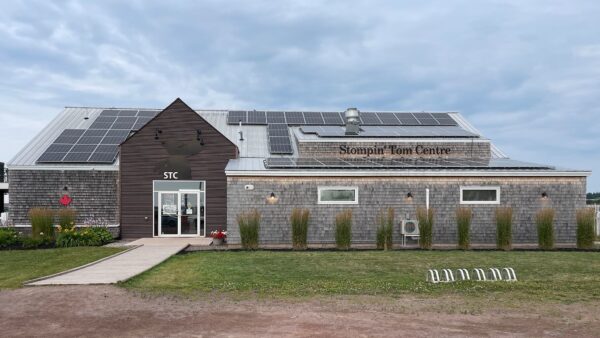
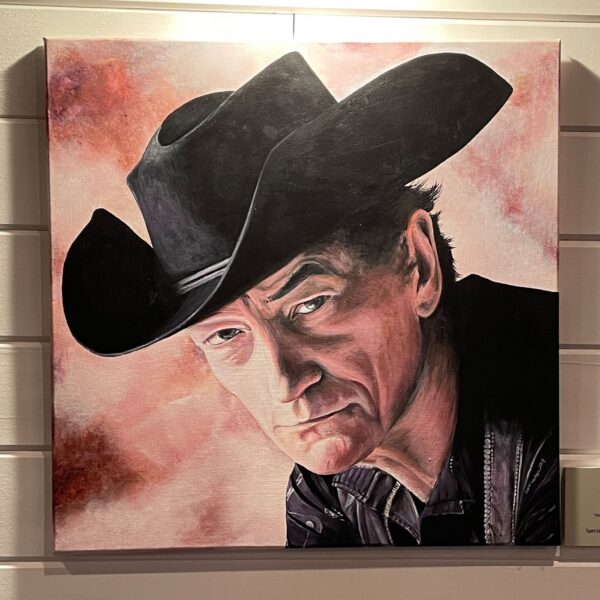
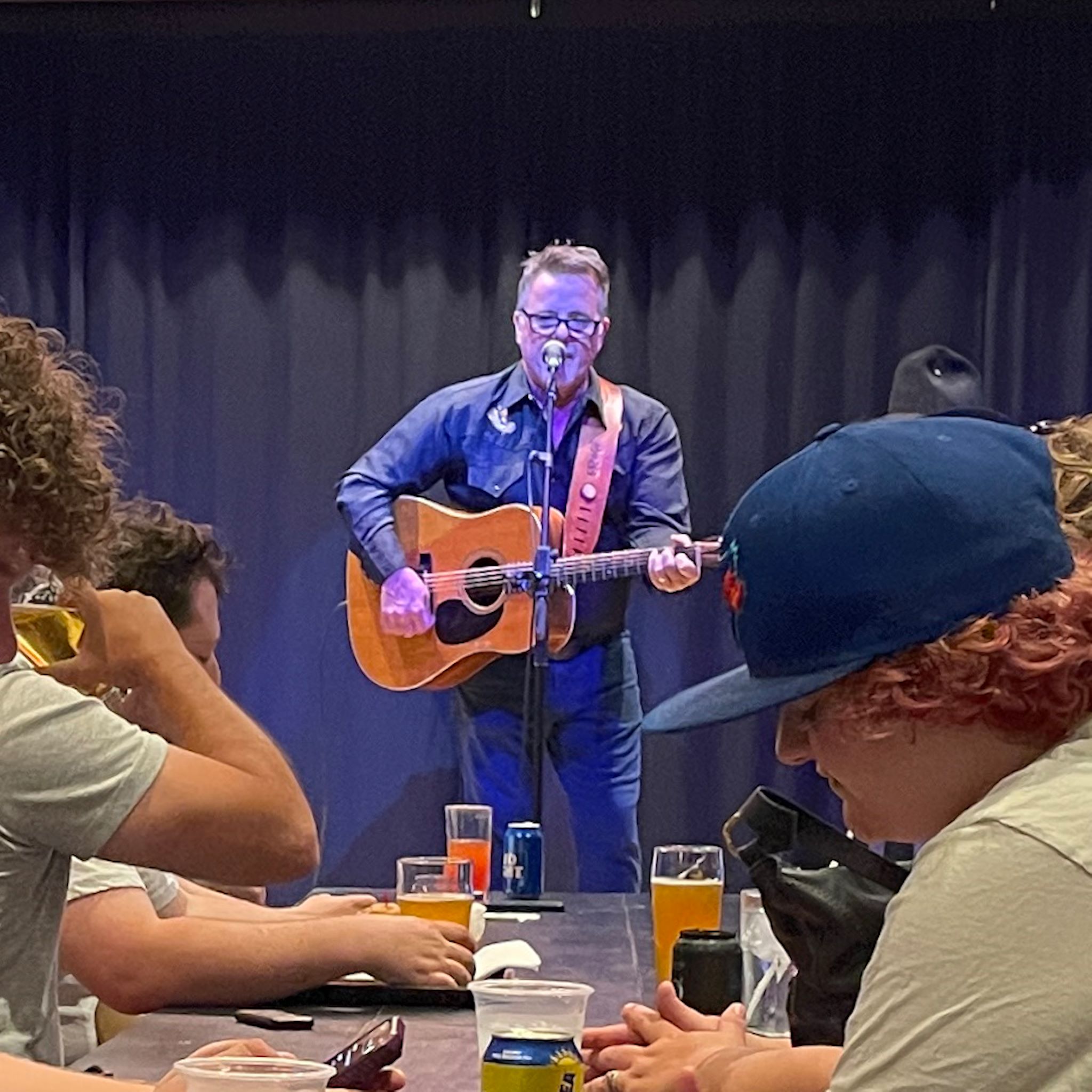
The Stompin’ Tom Center in Skinners Pond (pop. not measured – too small) was another outstanding cultural center with a different focus – keeping alive the music and spirit of Stompin’ Tom Connors, a Canadian country and western artist, folksinger and songwriting icon who died in 2013. The STC included a set of exhibits about Tom’s life and another about his most famous songs, which include Bud the Spud (did you notice it in the photo above?), The Hockey Song (in Canada!?!? Every Canadian knows every word!), Sudbury Saturday Night and the Ketchup Song. The center also features a daily afternoon performance by local artists to showcase Tom’s songs. We loved the songs, humor and sound effects provided by Kurk Benard on the day we visited and enjoyed learning more about Tom’s songs.
Twice a week, on Tuesday and Thursday, the STC holds tribute performances where music, stories and videos create a celebration of Tom’s life. These shows are hosted by different ‘Toms’ in a dinner-theater setting, and they are very popular. We were not able to get tix to any of these Stompin’ Tom shows during our PEI visit, however on Saturday nights, the STC has live music with (non-Tom) artists from all around. We scored tix for an Acadian band – Jonny Ray and Louise – on a Saturday when we would be nearby (and where we could spend the night in their overflow lot after the show!).
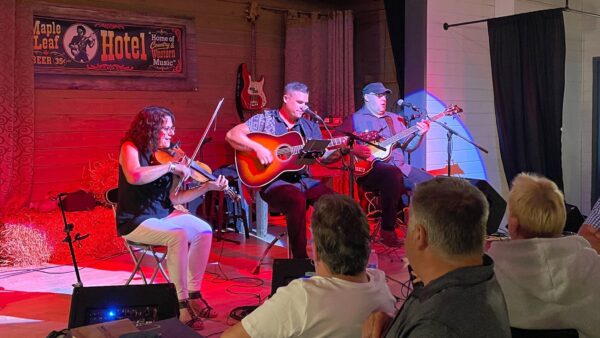
What we didn’t know when we bought our tickets (before we visited the Village Musical Acadian at Abram Village) is that Johnny Ray is the son of Gadelle’s fiddle player Louise, and that Louise plays the fiddle in this band fronted by her son. Johnny plays a mean acoustic guitar, has an amazing vocal range with a soaring and dynamic voice and is a natural showman, keeping the audience engaged, laughing and singing. His mom’s skill and enthusiasm are even more evident in front of the large audience at this sold-out show, and it’s clear that she passed it on to her son. (She told me after the show that Johnny traveled with her when Barachois was touring all over Canada, the US, and Europe over 10 years, so he’s been in the business all his life – OK, since he was 2!). In addition to a mix of traditional French Acadian and Cajun and songs, Johnny led a Zydeco singalong (les haricots sont pas salées – that phrase in this song is where the word Zydeco came from). They played Irish and English folk songs including the Newfoundland seafaring song Heave Away, and a medley of Stompin’ Tom songs. They had the house rocking with Acadian-flavored versions of Steve Earl’s Copperhead Road, John Denver’s Country Roads, songs by John Prine and Johnny Cash, and an amazing take on Kenny Loggins’ Footloose. High energy!
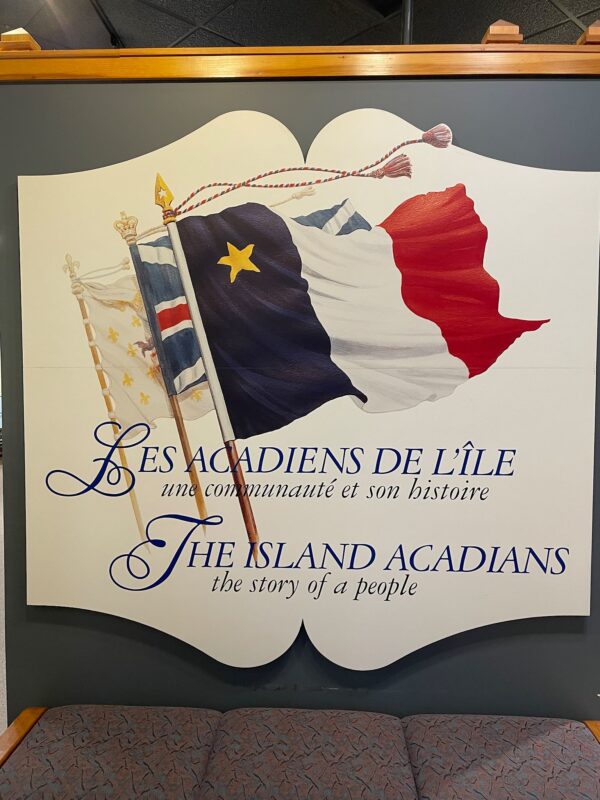
Making our way to western PEI we drove by an Acadian Museum in Miscouche, closed at the time we passed, that I’d somehow not found in my research. I asked about the museum while we were at Abram-Village, and they highly recommended a visit, so we did make this stop on our way back toward central PEI. Each of the Acadian museums we’ve visited have had a specific focus – Mischouche highlighted Acadians in PEI. The museum curated a high level history from 1720 when Acadians moved to PEI from NS when the British took control, through 1758 when the British made a coordinated effort to deport all Acadians in Le Grand Dérangement, through today.
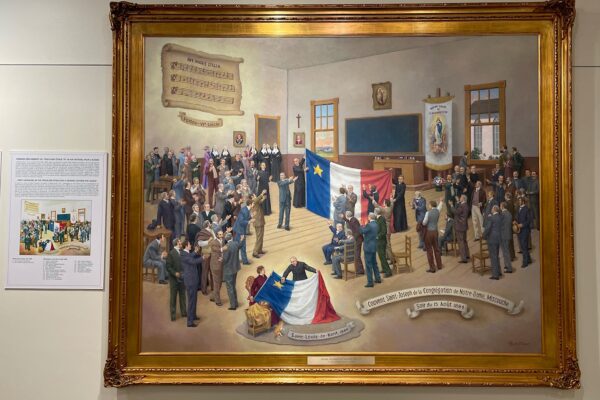
As the deportations started in 1755, many Acadians fled from NS and NB to PEI. When the British took control of Louisbourg in 1758, they moved on to PEI. The roundups and deportations of 3,000 men, women and children were especially brutal, and half did not survive. Having been settled in the Maritimes for generations, cruelly deported, and eventually allowed to return, (though stripped of their belongings and their property), many returned over time and Acadian communities have been established throughout the lands that were once called Acadia. In the late 1800’s, the Acadians held regional meet ups to help each other keep their traditions and culture alive. Eventually an international convention was organized with the first being in Memramcook, NB in 1881. Three years later, the Second International Convention was held in Miscouche, PEI to reveal and celebrate a new Acadian flag and anthem (Ave Maris Stella). Interestingly, the British were the first to congratulate the Acadians on their new flag. These Conventions continue every 5 years, the next being in 2029.
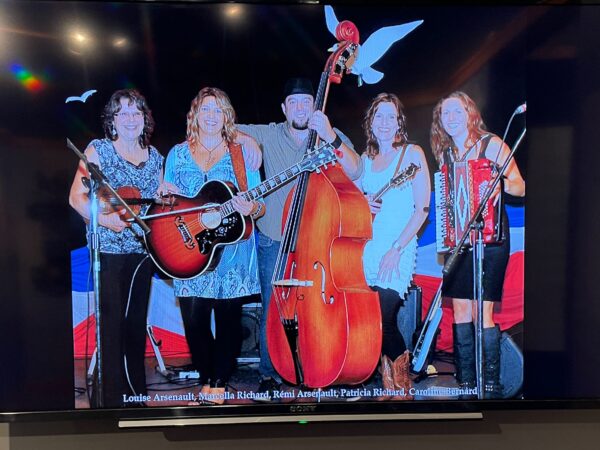
The last exhibit in the museum was on Acadian music. Essentially all of the musicians we’ve met in western PEI, including Louise, Caroline, Remi and Hélène were included in the photo montage.
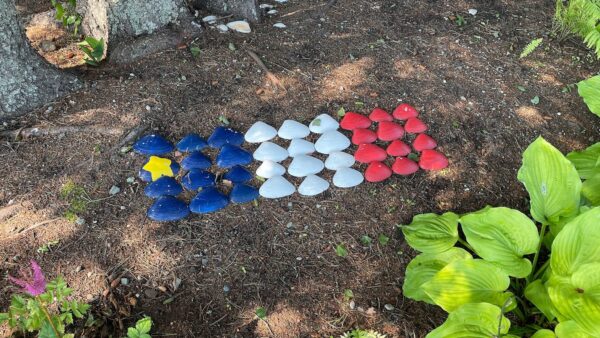
The Evangeline section of PEI was special for us, from a historical and musical experience. The week, experience and people we met all get a yellow star!
For anyone interested, more North Cape, Bottle Houses, Potato Museum, Village Musical Acadien, Stompin’ Tom Centre and Miscouche Acadian Museum pix…
Wow, what a journey! Thank you for documenting it so thoroughly. It might serve as a travel guide for a future trip. I especially loved reading about and seeing photos of the bottle house as well as learning about the history of the Acadians. So glad you’re having such a fabulous trip!
Merci, Zan! It has been wonderful. Learning more about my heritage was a goal for this trip. The amazing music was all bonus points! Yes, do plan a visit. À bientôt!
We also caught up with Pat and Shevonne. Check out south/central PEI. Outstanding time with them!
We visited the glass bottle house as well and the Acadian museum you mentioned. Their history was fascinating. You must feel like you’re discovering your French-Canadian roots!
Thanks for stopping by, Linda! It is kinda cool to be learning more about my roots. The Acadians were known for being Catholic and resourcful with great music. I believe my ancestors missed the latter…