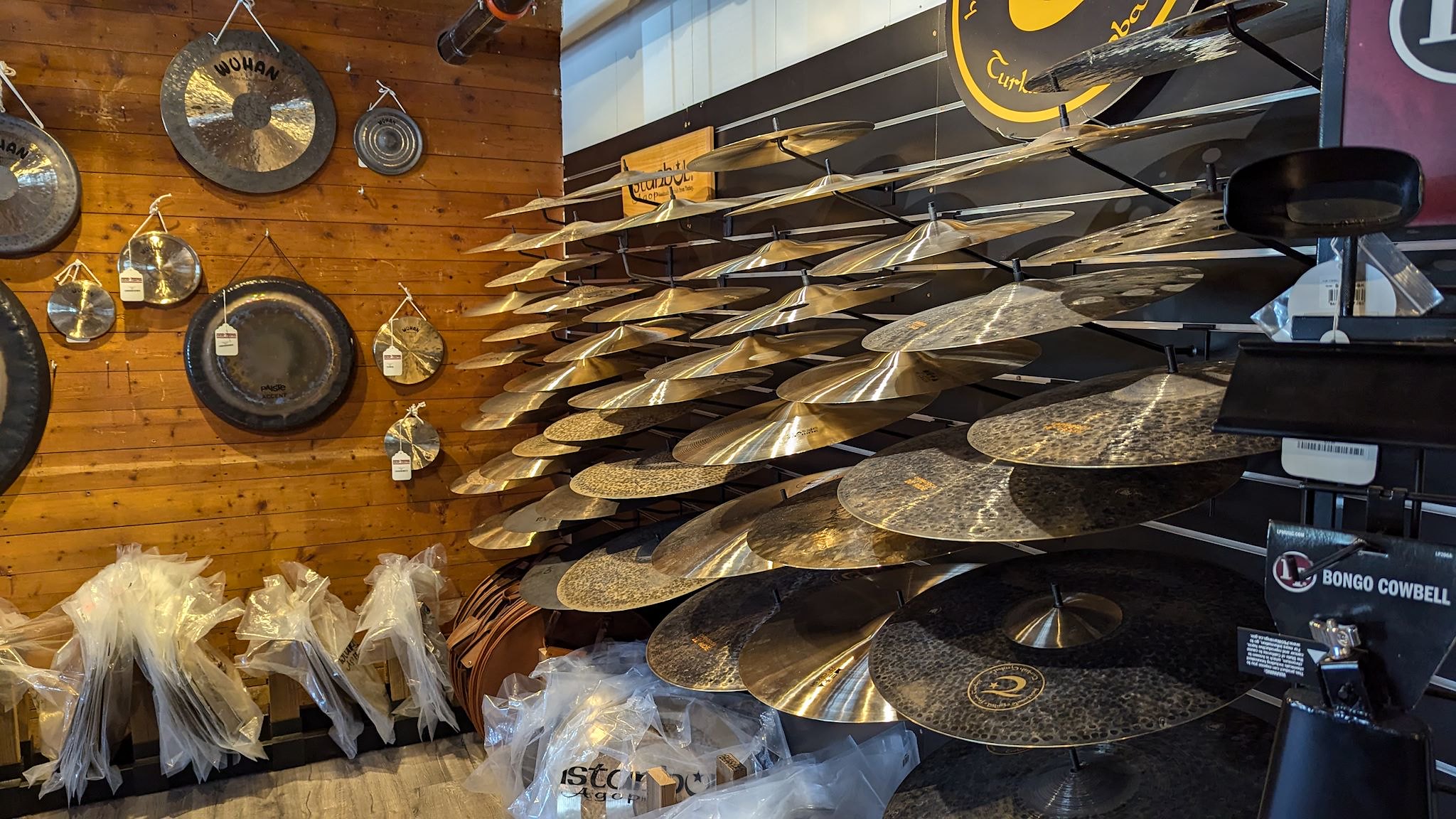
I first heard about Drum Center of Portsmouth about 6 years ago. Their byline is the Largest Drum Shop in the World! Ever since then I’ve been determined to visit sometime when we might be near. Well, we were near!
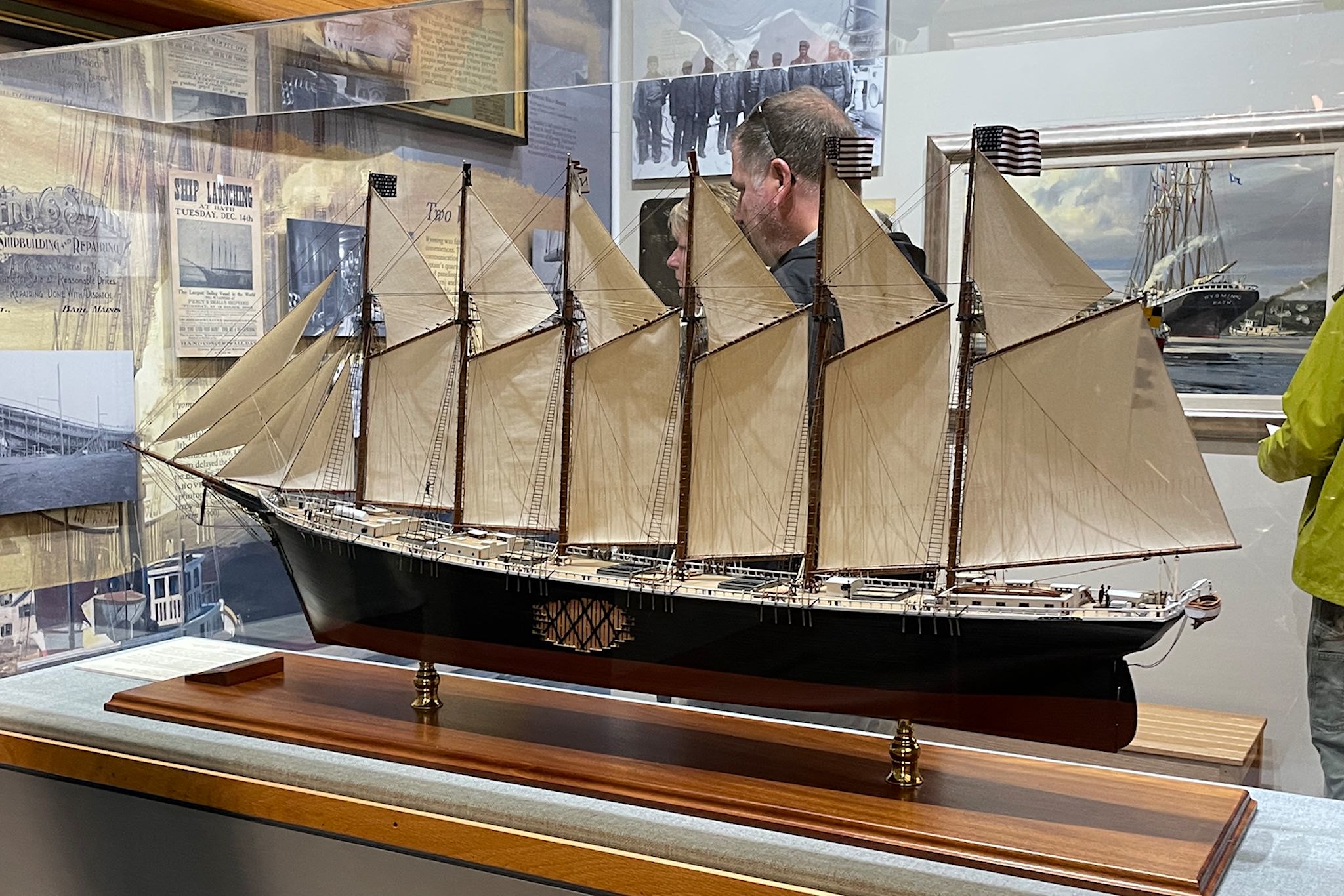
The weather forecast was calling for 90% chance of rain, so it seemed like a good day for an indoor tourist thing. We headed over to the Maine Maritime Museum, on the original site of the Percy & Smalls Shipyard in Bath. Uh oh. A big part of this museum is outdoors or inside the preserved original buildings connected by footpaths across the 20-acre site. But as luck would have it, the forecast was mostly wrong. The sky cleared up nicely after a 10-minute downpour, and stayed that way for the rest of our day at the museum.
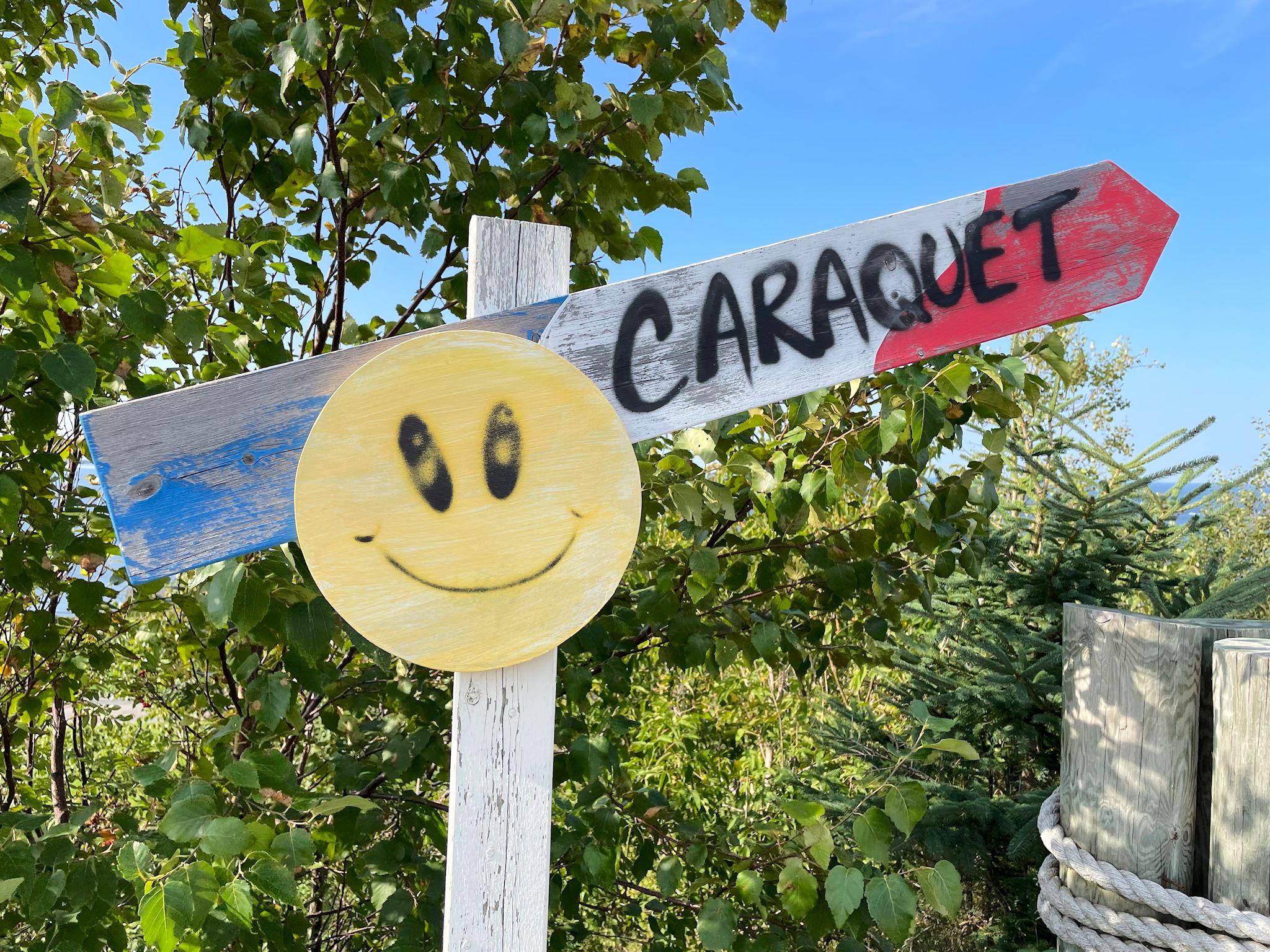
I’ve been hearing about Caraquet, New Brunswick, my whole life. My mom’s family (ok, the men in my mom’s family) made their living fishing in the Caraquet area for 8 generations. During the Great Depression, jobs dried up and people, including my ancestors, were struggling to find work. My grandfather Ferdinand (‘Fred’) Murray moved his wife, Marie-Louise (Godin) and the first 7 of their kids (of the eventual 13) to Berlin, New Hampshire, where the paper mill was hiring. The rest is history…
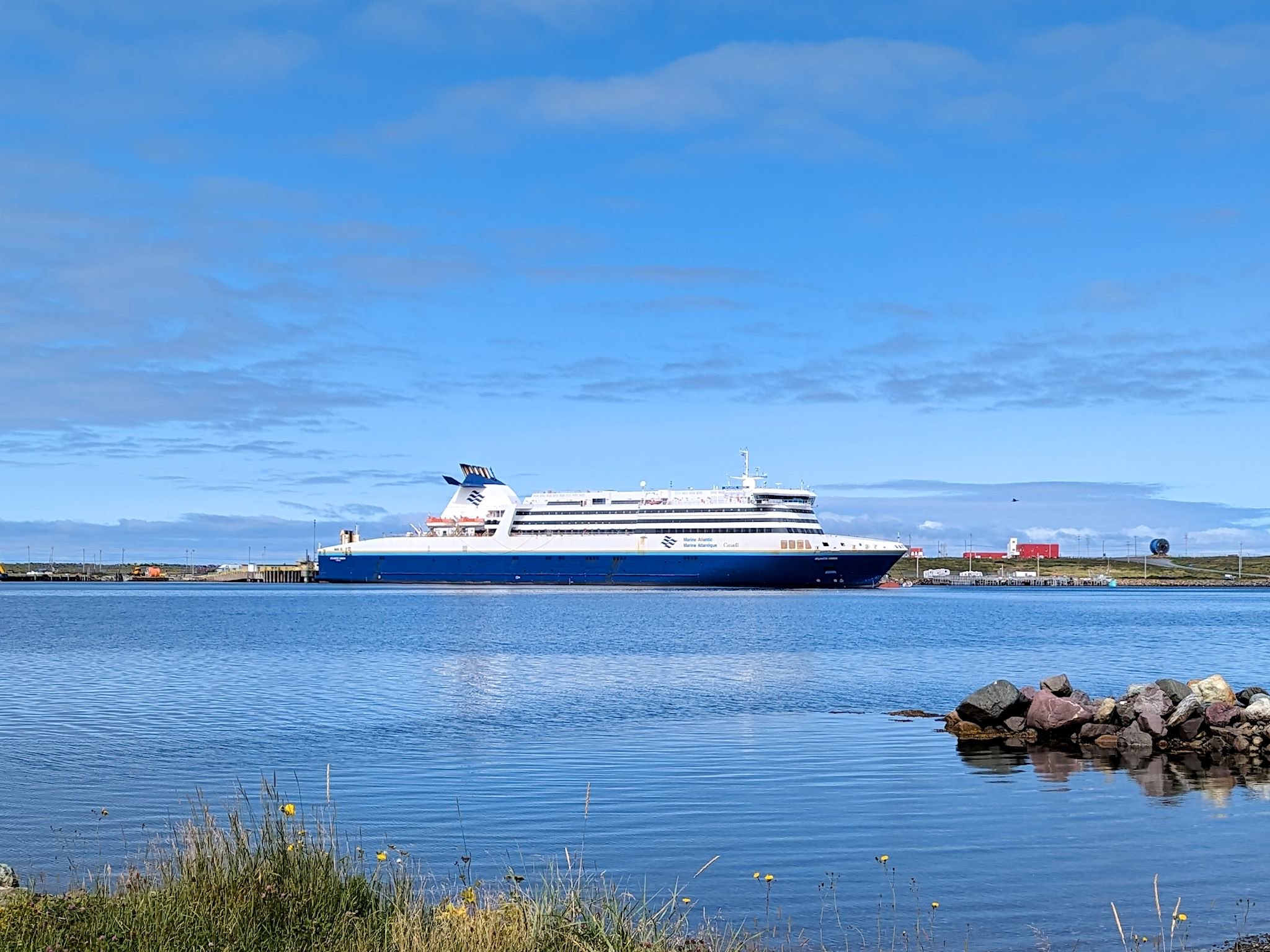
With the joy of our stay in Bonavista fresh in our hearts, the realization that our ferry reservations would take us away from Newfoundland in just a few days meant we needed to head toward the ferry dock in Argentia. We wanted to arrive there a few days early to take care of a few road necessities like long hot showers, laundry, cleaning the waste tanks, washing the rig, paying bills, updating the blog, why not another round of long hot showers, yadayada. We’d just head on over and maybe see a few sights along the way. We even agreed to a no photo rule, so we wouldn’t have to spend time sorting and processing – just do the drive and take it all in as it came. Yeah right…
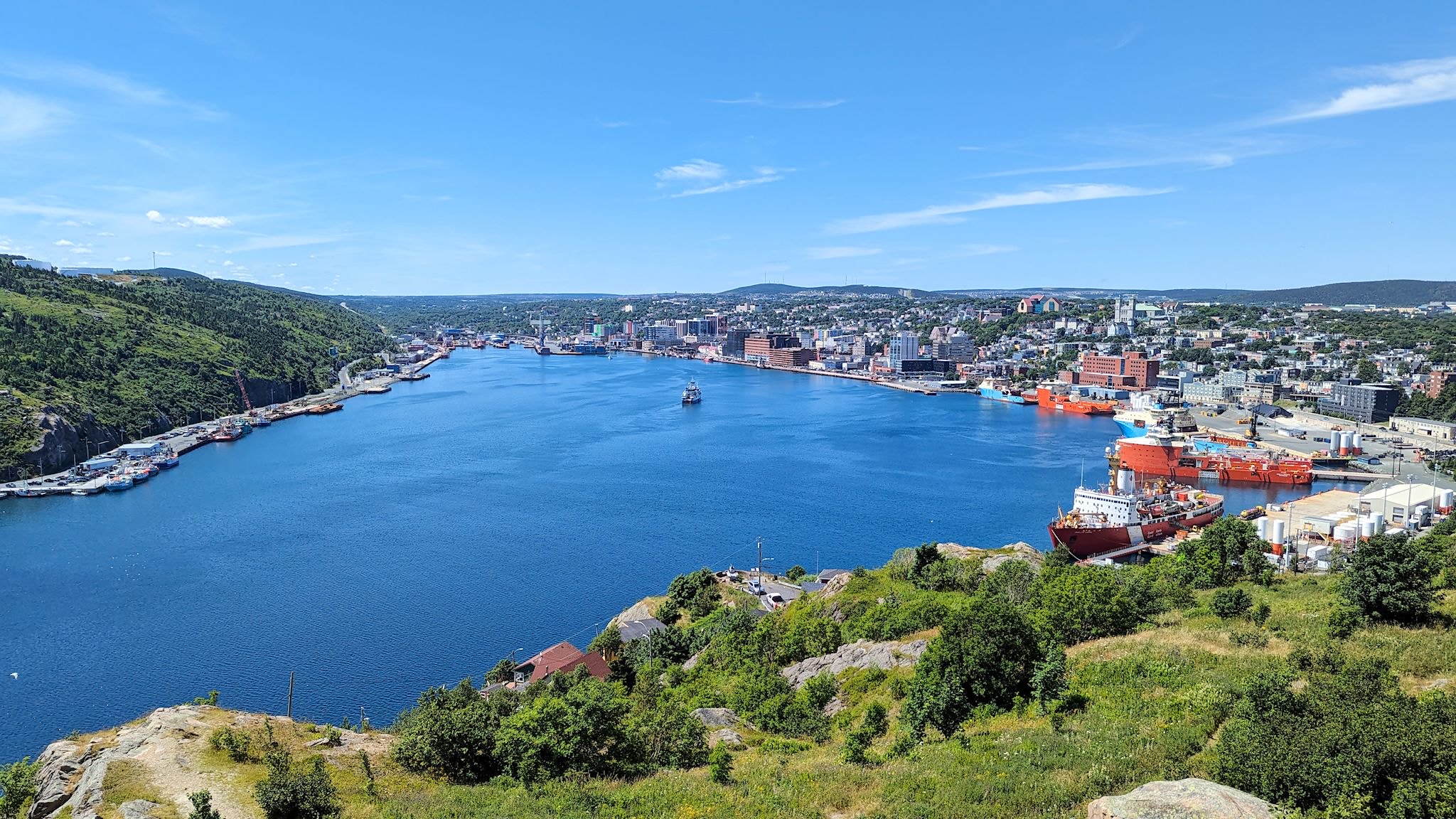
At the southeastern corner of the island of Newfoundland, St John’s is the largest city in Newfoundland and Labrador. At this moment, about 530,000 people live in NL, and 212,000 of them (40%) live in the St John’s metro area. [By contrast, just 26,650 (5%) live in all of Labrador, though Labrador accounts for 72% of the land area of the province.] Anyway, statistics aside, we were eagerly anticipating our visit to the urban St John’s for several things we would find there: music, history, hiking, sightseeing… and a Sprinter service center.
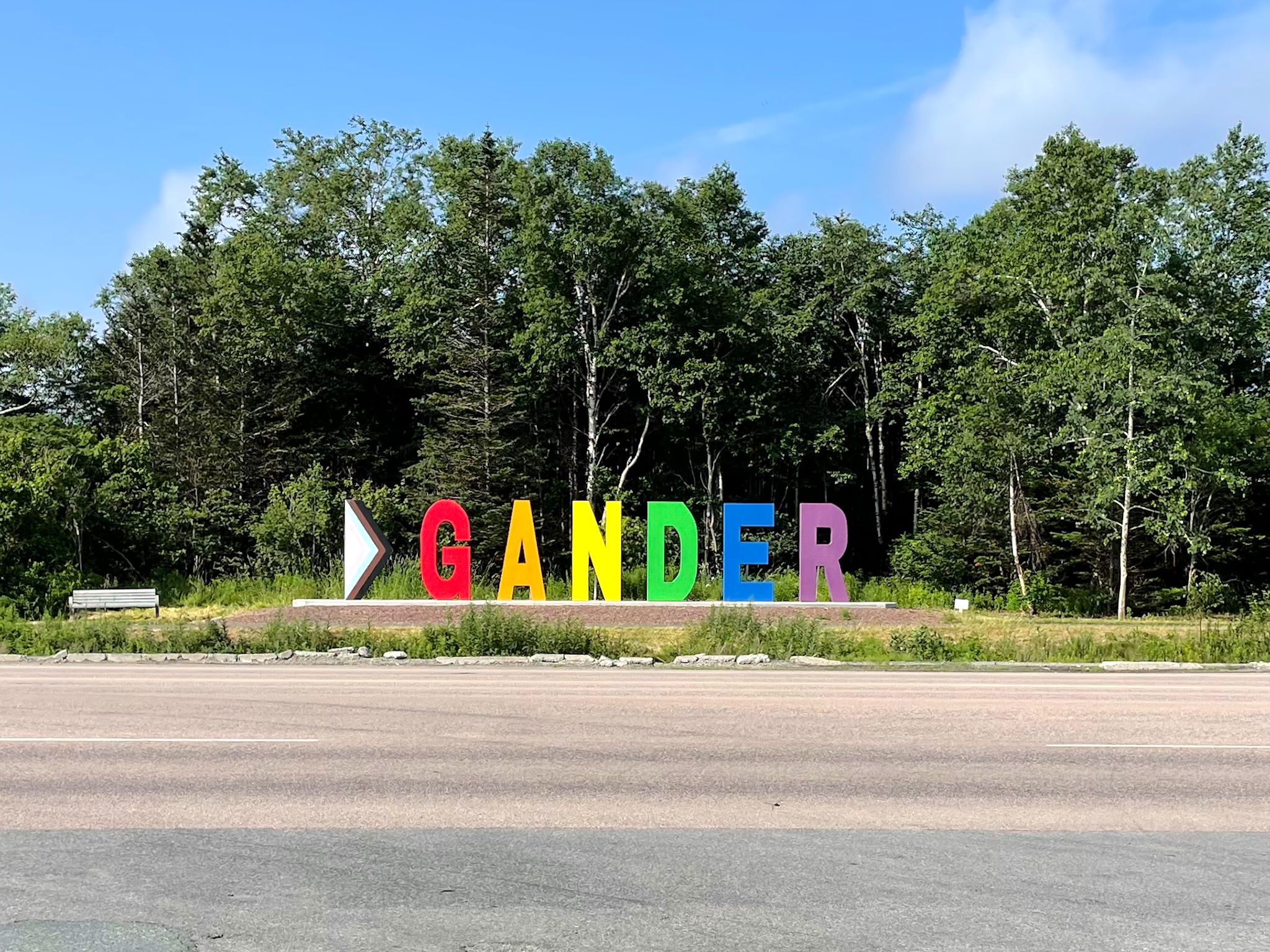
Well rested and with the truck’s vents blowing cool and conditioned air, we moved an hour on up the road to Gander. Located on a ‘Great Circle’ route between North America and Europe, Gander was built to be an airport town for refueling trans-Atlantic flights, and for a time was the largest and busiest airport in the world. It has lately become well known for its townwide hospitality when planes were unexpectedly grounded there on September 11, 2001. On that day, North American airspace was closed and all planes were required to land. Within a few hours, 38 planes landed in this town of (then) 9,300, unloading 7,000 unexpected guest from 95 different countries for an unknown duration. It ended up being 5 days. Among locals, the stayover is now known as ‘9/12,’ and the guests are called ‘Come From Away’s (CFAs). We were interested to see this historic town. Maybe we’d have a chance to talk to some of the kind people and thank them for their generosity.
We headed inland from the west coast, driving along big rolling hills, almost always with a lake or river beside the road. The sign said ‘Welcome to Grand Falls-Windsor – Perfectly Centered!’ That’s a fact. GFW is in the center of Newfoundland, and it’s the largest town in the interior. It’s also away from the natural breezes that keep things cool along the coast – a feature which, during the rare heat wave that’s been afflicting Newfoundland, made for a hot town!
The ferry dropped us off in St Barbe, about two thirds of the way up Newfoundland’s Great Northern Peninsula. It was late in the day and we decided to camp in nearby Flower’s Cove and head north in the morning.
The road to connect the settlements and resources of western and coastal Labrador – the Trans-Labrador Highway – had been in the works since the early 80’s. Dirt roads and walking trails between settlements were widened into gravel roads in sections, then paved as demand and budgets allowed. The last remaining section of gravel was paved in July, 2022 – and the road was complete!
The history of Newfoundland and Labrador is long and colorful. Here’s the super condensed version…. The earliest known inhabitants were Inuit (hunters of sub-arctic sea mammals, like whales), Innu (caribou hunters) and Mi’kmaq (seafood harvesters in the summer and forest hunters in the winter). The earliest European settlers are thought to have been Vikings, just after 1000 AD. Starting in the early 15oo’s, explorers from France, Spain, Portugal, Ireland, and England began to visit. Eventually, these folks came to be in conflict with each other and the original inhabitants in their efforts to claim portions of the newly found land in order to control resources. Perhaps the most immediately obvious of these resources was an insane abundance of great fishing. Over the centuries since, additional resources of interest have been identified all over this vast area and have included furs, forests, minerals (iron ore), and hydropower.